In the course of preparing the material for the following sketch, I was brought into very agreeable relations with many persons whose practical experience in library work proved of exceptional value to me. I wish to take this means of thanking Miss Annie Carroll Moore, Supervisor of Children’s Rooms in the New York Public Library, and Mr. C. G. Leland, Supervisor of School Libraries and member of the New York Board of Education, for every encouragement and assistance.
To Miss Caroline M. Hewins of the Hartford Public Library, Miss Frances Jenkins Olcott of the Pittsburgh Carnegie Library, Miss Caroline Burnite of the Cleveland Public Library, the Reverend Joseph McMahon, a member of the Advisory Board of the New York Public Library, Mr. Frederic W. Erb of the Columbia University Library, and to Mr. Tudor Jenks, I am indebted for general advice.
In special lines, I had the privilege of consultation with Mr. Frank Damrosch, Mr. C. Whitney Coombs, and Miss Kate Cohen for music; Miss Emilie Michel for French; and Miss Hedwig Hotopf for German.
The librarians of Columbia University, the Pratt Institute, and the Astor Library have rendered me marked service for which I am grateful.
I wish to thank the New York Outlook, Independent, and Evening Post for affording me opportunities to publish from time to time data relating to juvenile books and reading.
Finally, I wish to fix the responsibility for whatever statements are made in the way of criticism upon myself; this is only due to those whose extensive knowledge of the subject is being exerted in a professional capacity; and to those many authors whose books and papers are indicated in the bibliographical notes.
M. J. M. NEW YORK, August, 1907.
I. the Problem
Any good book, any book that is wiser than yourself, will teach you some things.--Carlyle, to an unknown correspondent, March 13, 1843.
Therfore I pray that no man Reprehende This lytyl Book, the whiche for you I make; But where defaute ys, latte ylke man amende, And nouhte deme yt; [I] pray thaym for youre sake. --_The Babees Book._
The field of children’s books is by no means an uninterrupted host of dancing daffodils; it is not yellow with imperishable gold. In fact, there is a deplorable preponderance of the sere and yellow leaf. Yet there is no fairer opportunity for the writer than that which offers itself in the voluntary spirit of a boy or girl reader. Here are to be met no crotchets or fads, no prejudices or unthinkable canons of art. Because the body is surcharged with surplus energy necessary to growth, because the mind is throwing out delicate tendrils that foreshadow its potential future, one realises how vital is the problem of children’s reading, how significant the manner in which it is being handled.
At the outset, it is essential for us to distinguish between theory, history, and practice. The field, with all its rich soil, is in need of weeding. Not so very long ago, it lay unrecognised by the library, as of sufficient importance for separate and specialised consideration. But now, with the prominence being given to children’s reading-rooms, the field needs to be furrowed. Let us not ignore the salubrious under-stratum of the past; it has served its mission in asserting the claims of childhood; it has both negatively and positively marked the individuality of childhood, in a distinctive juvenile literature. Perhaps the writers who were inspired by the Rousseau doctrine of education, and those who abetted the Sunday-school movement of the last century, were deceived in their attitude; for they considered the machinery by which they hoped to mould character, rather than the nature of the heart and soul upon which they were actually working. A right action, a large, human, melodramatic deed, are more healthy for boys and girls than all the reasons that could be given for them. In literature for children, as in life, the moral habit should be unquestioning. All leading educators and ethical teachers recognise this fact.
The whole matter simply resolves itself into a difference in viewpoint between the past and present. Smile as we must over the self-conscious piousness of early juvenile literature, it contained a great deal of sincerity; it did its pioneer work excellently well. To the writer of children’s books, to the home, where one essential duty is personal guidance, to the librarian whose work is not the science of numbers, but a profession of culture-distributing, some knowledge of the past harvests from this field would appear indispensable. For the forgotten tales of long ago, the old-fashioned stories represent something more than stained pages and crude woodcuts, than stilted manners and seeming priggishness; they stand for the personal effort and service of men and women striving with staunch purpose in the interests of childhood, however mistaken their estimates of this childhood may have been. These books, to the library, are so much fallow material as a practical circulating proposition, but they represent forces significant in the history of children’s books. I would much rather see a librarian fully equipped with a knowledge of Miss Edgeworth’s life, of her human associations, together with the inclinations prompting her to write “The Parent’s Assistant,” than have her read a whole list of moral tales of the same purport and tone.
The immediate problem, therefore, necessitates a glance at this field of children’s literature, and some knowledge of its essential details. It involves a contact with books of all grades; it calls into play, with the increasing number of libraries, and with the yearly addition of children’s rooms, a keen discerning judgment on the part of the librarian, not only as to child nature, but as to the best methods of elimination, by which bad books may be separated from good, and by which the best may preponderate. But the librarian is not the only factor; the parent and the writer also come into account. They, too, must share a responsibility which will be more fully determined later on, but which now means that they both owe the child an indispensable duty; the one in giving to the growing boy or girl most intelligent guidance along the path of fullest development; the other in satisfying this need--not in deflecting juvenile taste by means of endless mediocrity and mild sentimentalism. It is an unfortunate circumstance that the effects of mediocrity are longer-lived than the immediate evil itself.
In the problem of children’s reading we must consider two aspects; there is the bogey image of a theoretical or sociological or educational child, and also the book as a circulating commodity. There is the machinery of “The Child”; Dr. Isaac Watts shaped one; Jean Jacques Rousseau another; the Edgeworths still another, and now the psychologist’s framework of childhood, more subtle, more scientific, more interesting, threatens us everywhere. But no patent has so far supplanted the fundamental excellence of human nature. There are assuredly demarkations and successive steps in elementary education, but are not these becoming too specialised? Since we are dealing with the Boy and the Story rather than with the Scholar and the Text-book, with culture which is personal, and not with expediency, we needs must choose the human model in preference to all others.
And so it is with the choice of the librarian. In dealing with books in the bulk, there is a tendency to emphasise system above the humanising excellence of what the books contain. After all the mechanical detail is done, when the cover has been labelled, when the catalogue notation has been figured, when the class distribution has been determined, the librarian stands middleman in a threefold capacity. She is a purveyor, in the sense that she passes a book over the counter; she is a custodian, in so far as books need protection; she is the high priestess, since the library is a temple of treasures, a storehouse for our literary heritage. In any library, whether it be yours at home, with your own books upon the shelves, or the public’s, with volumes representing so much of your taxation on which you base your citizenship, the rare companionship of books is one of their humanising qualities. This is as much a truth for children as for grown-ups.
With the fear that there is an effort on the part of many to crystallise reading into a science, comes the necessity to foster a love of reading for its own sake. The democracy of books has grown larger with the cheapening process of manufacture; while the establishment of public libraries offers to every one an equal privilege. In an assemblage of many books, a certain spiritual dignity should attach itself to the utilitarian fact.
There is no definition for children’s books; the essential point is appeal, interest. As far back as 1844, a writer in the Quarterly Review very aptly claimed that “a genuine child’s book is as little like a book for grown people cut down, as the child himself is like a little old man.” Peculiarly, there is a popular misconception that an author of juveniles advances in art only when he or she leaves off penning stories or fairy tales, and begins publishing novels. On the face of it, this is absurd. Like any other gift, writing for children cannot be taught; it has to be born. If possible, with the exception of drama, it is the most difficult art to master, since its narrative will not stand imitation, since its simplicity must represent naturalness and not effort, since its meaning must be within reach, and without the tone of condescension.
Professor Richard Burton has written: “A piece of literature is an organism, and should, therefore, be put before the scholar, no matter how young, with its head on, and standing on both feet.” This injunction applies to all books. Where the classics excel is in their very fulness and honesty of narrative. Can the same be said of our “series” brand?
The writing of children’s books is more aptly phrased the writing of books for children. There was a time when such books, as a class by themselves, were unknown; yet boys and girls expanded, and perhaps remembered more of what they read than they do to-day, although they were not taught as much. There are some pessimists, not so unwise in their pessimism, who believe that if less emphasis was bestowed upon the word children, and more upon the word literature, the situation would be materially bettered.
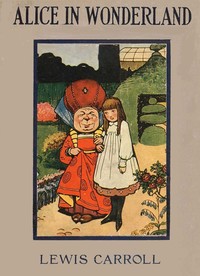
Can we recall any of our great men--literary, scientific, or otherwise--who were brought up on distinctively juvenile literature. A present-day boy who would read what Lamb or Wordsworth, Coleridge or Tennyson, Gladstone or Huxley devoured with gusto in their youth, would set the psychologists in a flutter, would become an object for head-lines in our papers. There is a mistaken conception regarding what are children’s books, in the best sense of the word. A standard which might have excellent conservative results, although it would be thoroughly one-sided and liable to false interpretation, could be based on the assertion that those books only are children’s classics which can be relished by a grown-up public. “Alice in Wonderland,” “The Water Babies,” “Peter Pan”--such stories have a universal appeal. And it is well to remember that at least five of the world’s classics, not originally written for children, have been appropriated by them: “The Arabian Nights”; “Pilgrim’s Progress”; “Robinson Crusoe”; “Gulliver’s Travels”; “Baron Münchausen.”