Public-domain ebook
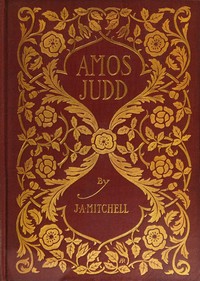
Amos Judd
English433 downloads on Project GutenbergDownload EPUB
Public-domain ebook sourced from Project Gutenberg #72058.
Public-domain ebook
English433 downloads on Project GutenbergDownload EPUB
Public-domain ebook sourced from Project Gutenberg #72058.
The opening · free to read
At the station of Bingham Cross Roads four passengers got off the train. One, a woman with bundles, who was evidently familiar with her surroundings, walked rapidly away through the hot September sunshine toward the little village in the distance.
The other three stood on the platform and looked about, as if taking their bearings. They were foreigners of an unfamiliar species. Their fellow-passengers in the car had discussed them with an interest not entirely free from suspicion, and their finally getting out at such an unimportant station as Bingham Cross Roads caused a surprise which, although reasonably under control, was still too strong for concealment. From the windows of the car at least a dozen pairs of eyes were watching them. The two men and the little boy who composed this group were of dark complexion, with clean-cut, regular features. The oldest, a man of sixty years or more, had a military bearing, and was, if one could judge from appearances, a person of authority in his own country, wherever that might be. Although the younger man seemed to resemble him, it was in such a general way that he might be either his son or no relation whatever.
But the little boy had excited a yet greater interest than his companions. Although but six or seven years old, he comported himself with as much dignity and reserve as the gentleman with the silver hair. This gave the impression, and without apparent intention on his part, that he also was an important personage. His dark eyes were strikingly beautiful and, like those of his seniors, were distinctly foreign in design.
When the train moved away the three travellers approached the man with one suspender, who filled the position of station agent, baggage-master, switchman, telegraph operator and freight clerk, and inquired if there was a conveyance to the village of Daleford. He pointed to a wagon at the farther end of the platform; that was the Daleford stage. In answer to further questions they learned that the next train back again, toward New York, left at six-thirty; that Daleford was seven miles away; that they could spend an hour in that village and catch the train without hurrying.
The only baggage on the platform consisted of two peculiar-looking trunks, or rather boxes, which the multifarious official knew to be theirs, as no similar articles had ever been manufactured in America. They were covered with designs laid on in metal, all elaborately engraved, and it was not suspected along the route that these profuse and tarnished ornaments were of solid silver. This luggage was strapped behind the stage, two venerable horses were awakened and the travellers started off. Joe, the driver, a youth with large ears and a long neck, soon gave his passengers some excellent opportunities to explain themselves, which they neglected. Aside from a few simple questions about Daleford and Mr. Josiah Judd, to whose house they were going, the conversation was in a language of which he had no knowledge. The first two miles of their route lay along the Connecticut valley, after which they climbed to higher ground. The boy seemed interested in the size of the elms, the smell of the tobacco fields, the wild grapes, and the various things that any boy might notice who had never seen their like before.
The day was warm, and the road dusty, and when they entered Daleford the boy, with the old gentleman’s arm about him, had been asleep for several miles. Coming into the village at one end, they drove down the main street, beneath double rows of elms that met above their heads in lofty arches, the wide common on their right. The strangers expressed their admiration at the size and beauty of these trees. Moreover the cool shade was restful and refreshing. No signs of human life were visible either in the street or about the white houses that faced the common, and this with the unbroken silence gave an impression that the inhabitants, if they existed, were either absent or asleep.
The driver stopped for a moment at the post-office which occupied a corner in the only store, and gave the mail-bag to the post-mistress, a pale young woman with eye-glasses and a wealth of artificial hair; then, after rumbling through the village for half a mile, they found themselves again in the country.
The last house on the right, with its massive portico of Doric columns, seemingly of white marble, had the appearance of a Grecian temple. But these appearances were deceptive, the building being a private residence and the material of native pine.
As they approached this mendacious exterior the little boy said something in the foreign language to his companions, whereupon they told the driver to stop at the door, as Mr. Judd was inside.
“That ain’t Mr. Judd’s house,” he answered. “His is nearly a mile farther on, around that hill,” and he gave the horses a gentle blow to emphasize the information. But the boy repeated his statement, whatever it was, and the younger man said, with some decision:
“Mr. Judd is inside. Stop here.”
As the driver drew up before the house he remarked, with a sarcastic smile:
“If Mr. Judd lives here, he’s moved in since mornin’.”
But the remark made no visible impression. They all got out, and while the two men approached the front door by an old-fashioned brick walk, the boy strolled leisurely through the grassy yard beside the house. The driver was speculating within himself as to what kind of a pig-headed notion made them persist in stopping at Deacon Barlow’s, when, to his surprise, Mr. Judd emerged from a doorway at the side and advanced with long strides toward the diminutive figure in his path.
Mr. Judd was a man about sixty years of age, tall, thin and high-shouldered. His long, bony face bore no suggestions of beauty, but there was honesty in every line. The black clothes which hung loosely upon his figure made him seem even taller and thinner than he really was. The boy looked him pleasantly in the face and, when he had approached sufficiently near, said, in a clear, childish voice, slowly and with laborious precision:
“Josiah Judd, the General Subahdàr Divodas Gadi and the Prince Rájanya Kásim Mir Dewân Musnud desire to speak with you.”
Mr. Judd stopped short, the bushy eyebrows rising high in astonishment. His mouth opened, but no sound came forth. The foreign appearance of the speaker, his familiar manner of addressing one so much older than himself, together with a demeanor that showed no signs of disrespect, and above all, his allusion to the presence of titled strangers caused the American to suspect, for a few seconds, that he was the victim of some mental irregularity. He pushed the straw hat from his forehead, and looked more carefully. The youthful stranger observed this bewilderment, and he was evidently surprised that such a simple statement should be received in so peculiar a manner. But Mr. Judd recovered his composure, lowered the bushy eyebrows, and drawing his hand across his mouth as if to get it into shape again, asked:
“Who did you say wanted to see me, sonny?”
A small hand was ceremoniously waved toward the two strangers who were now approaching along the Doric portico. Coming up to Mr. Judd they saluted him with a stately deference that was seldom witnessed in Daleford, and the General handed him a letter, asking if he were not Mr. Josiah Judd.
“Yes, sir, that’s my name,” and as he took the letter, returned their salutations politely, but in a lesser degree. He was not yet sure that the scene was a real one. The letter, however, was not only real, but he recognized at once the handwriting of his brother Morton, who had been in India the last dozen years. Morton Judd was a successful merchant and had enjoyed for some years considerable financial and political importance in a certain portion of that country.
DEAR JOSIAH: This letter will be handed you by two trustworthy gentlemen whose names it is safer not to write. They will explain all you wish to know regarding the boy they leave in your charge. Please take care of this boy at least for a time and treat him as your own son. I am writing this at short notice and in great haste. You have probably read of the revolution here that has upset everything. This boy’s life, together with the lives of many others, depends upon the secrecy with which we keep the knowledge of his whereabouts from those now in power.
Will write you more fully of all this in a few days. Give my love to Sarah, and I hope you are all well. Hannah and I are in excellent health. Your affectionate brother,
MORTON JUDD.
P. S. You might give out that the boy is an adopted child of mine and call him Amos Judd, after father.
These words threw a needed light on the situation. He shook hands with the two visitors and greeted them cordially, then, approaching the boy who was absorbed in the movements of some turkeys that were strolling about the yard, he bent over and held out his hand, saying, with a pleasant smile:
“And you, sir, are very welcome. I think we can take good care of you.”
But the child looked inquiringly from the hand up to its owner’s face.
“Mr. Judd wishes to take your hand,” said the General, then adding, by way of explanation, “He never shook hands before. But these customs he will soon acquire.” The small hand was laid in the large one and moved up and down after the manner of the country.
“Don’t they shake hands in India?” asked Mr. Judd, as if it were something of a joke. “How do you let another man know you’re glad to see him?”
“Oh, yes, we shake hands sometimes. The English taught us that. But it is not usual with persons of his rank. It will be easily learned, however.”
After a word or two more they took their seats in the wagon, the boy at his own request getting in front with the driver. They soon came in sight of the Judd residence, a large, white, square, New England farmhouse of the best type, standing on rising ground several hundred feet from the road, at the end of a long avenue of maples. Clustered about it were some magnificent elms. As they entered the avenue the driver, whose curiosity could be restrained no longer, turned and said to the boy:
“Did you ever see Mr. Judd before?”
“No.”
“Then how did you know ’twas him?”
“By his face.”
He looked down with a sharp glance, but the boy’s expression was serious, even melancholy.
“Ever been in this town before?”
“No.”
“Did Mr. Judd know you was comin’?”
“No.”
The book keeps going
Reading is free forever. Sign up and watch scenes appear while you read.



Scenes Storieta drew for other classics.
New illustrated classics
Once or twice a month: the latest books to get full character casts, scene art, and free comic editions. No account needed.