Public-domain ebook
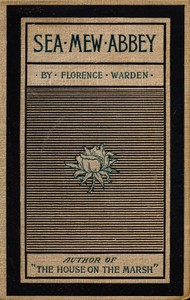
Sea Mew Abbey
Language: en426 downloads on Project Gutenberg
Subjects
In: Novels
Public-domain ebook sourced from Project Gutenberg #72089.
Public-domain ebook
Language: en426 downloads on Project Gutenberg
Subjects
In: Novels
Public-domain ebook sourced from Project Gutenberg #72089.
The opening · free to read
About a quarter of a century ago, under a bright May morning sun, the English Channel Squadron steamed into the harbour of the French town of Harbourg, with flags half-mast high. The Captain of one of the vessels had lost his young wife that morning.
Until the very hour of her death, the poor fellow had persisted in believing that she was getting better, that the weakness which had been growing for months on the fragile little lady, the paleness of her delicate cheeks, the feebleness of her sweet voice would pass away. And now they had indeed passed away--into waxen death, and the twenty-year-old wife lay peacefully in the little state cabin, while her husband, stunned by uncomprehending grief, stood beside her with her baby in his arms, not hearing its soft babble of inarticulate sounds, not seeing anything but that horrible, agonising, still image of the woman he had frantically loved.
“Speak to mamma, baby, wake her, wake her!” he had cried when, noticing how still and white his wife had grown, and refusing to own the truth, he had rushed out of the cabin, snatched the child from its nurse, and held out its little warm arms towards its mother. But the white, thin arms had lost their tenderness, and lay still; the cold mouth met that of the child with no loving kiss; and as the great brown eyes stared fixedly and without meaning at the ceiling, where the reflection of the sparkling blue water outside danced and shimmered, the man’s heart was torn by a pang of maddened comprehension, and a black pall was cast for ever, for him, upon the whole world.
Six hours later, when the sun was declining, and a fresh breeze was blowing from the sea, and the angelus was sounding from the chapel of the grey-walled convent, whose turrets rose up high upon the cliffs above the town, a stranger rang for admission at the convent-gate. The little sister who peeped at him through the wicket and then slowly opened the door, was rather alarmed by his appearance, and found the foreign accent in which he asked to see the Mother-Superior difficult to understand. But she would not have dared deny him admittance, for there was something in his curt tone and manner which would have made refusal of any demand of his impossible to the meek nun.
As the Gothic-pointed outer door clanged to behind them, and the stranger stepped in out of the shining sunlight into the darkness of the white-washed cloisters, a little cry rose up from the burden he carried in his arms, and the woman’s heart went out in an instant to the hidden morsel of humanity.
“Holy mother!” cried she, “it’s a child! Let me see it, monsieur.”
The stranger’s hard features did not soften, but a light came into his eyes as he drew aside the shawl which covered the child and showed a weird, pale little face, with great frightened dark eyes.
“She has no mother?” whispered the sister, with quick apprehension and sympathy.
“God help her! no,--unless,” and the man’s hoarse voice trembled,--“unless she finds one here.”
The sound of sweet singing from the little chapel began to be heard, muffled, through the cloister walls, and then it swelled louder as the chapel door opened, and another dark-robed woman peeped out, hearing the strange footsteps and a man’s voice.
“Come,” said the portress briskly, “this way, monsieur, you shall see the Mother-Superior yourself.”
The smell of the white lilac came in from the quiet garden as they passed through the cloister, and entered a great, square, bare-looking room, with a floor polished like glass, high white-washed walls, a round table, and a regiment of rush-bottomed chairs placed stiffly against the wainscoting. A very large plain bookcase containing brightly-bound religious and devotional works, a gloomy-looking oil-painting of a former Mother-Superior, and a black stove standing out from the wall, completed the furniture of the convent visitors’ room.
After some delay, the Mother-Superior came in. She was an elderly lady with a face of intellectual type, to which the habit of her Order gave a look of some severity. The stranger took in every detail of her appearance with a searching look, and opened his business abruptly.
“I am in great trouble, madam,” he began, in a harsh voice, “where to find a home for my little girl. And as I was wondering, down in the harbour there, what I should do with her, I saw your walls looking down over the water, and heard your bells, and I thought perhaps she might find a shelter here. I am a sailor, and I have--no one to trust her with.”
His voice got out of his control on the last words. The Superior looked perplexed, but not yielding. As he unfolded the shawl which was wrapped round the child, she gently shook her head.
“We couldn’t undertake the care of a child as young as that,” she said, not unkindly. “She can’t be more than two.”
“That’s all,” said her father.
“Her mother----” began the Superior gently.
“Died this morning,” said he hoarsely.
“Oh!” The lady uttered this exclamation in a low voice, and bent at once over the child, taking its little hand tenderly. “I am afraid my sombre robe may frighten her,” she said.
But the child did not draw back, only looked wonderingly at the lined face, at the snowy linen and the thick black veil.
“Is she of our religion?”
“No.”
“But you of course wish her to be brought up a Catholic?”
“No.”
The good Mother looked up in surprise.
“Then what induced you to bring her here?”
“Where women are I expected to find kindness and mercy for my motherless child.”
“You are English, monsieur?”
“Yes.”
“And you would trust Catholics, Frenchwomen, as much as that?”
“I have been a traveller, madam, and I am no bigot.”
The Superior, with her face wrinkled up with deepest perplexity, looked from him to the child, who had stretched out her tiny fingers for the rosary.
“You see this omen. Does not that frighten you?”
The stranger hesitated, and looked down upon his little daughter, who was clasping the crucifix with delight. Like most sailors, of high and low degree, he was superstitious.
“One must risk something,” he said at last bluntly. “And if I’m ready to risk that, surely you might give way.”
“I would if I could. My heart yearns to the poor little creature. But she would be very unsuitably placed here. Have you no friends, no relations, who would take charge of her?”
He laughed shortly.
“Plenty. I am not a poor man, madam; I did not use that as an inducement to you, for it’s not money-bought kindness I want for my--my poor wife’s child. But you could name what sum you like for her keep, education, anything.”
“I had not thought of that, monsieur,” said the Superior, with more dignity. “We take older girls to educate, but----”
The book keeps going
Reading is free forever. Sign up and watch scenes appear while you read.



Scenes Storieta drew for other classics.
New illustrated classics
Once or twice a month: the latest books to get full character casts, scene art, and free comic editions. No account needed.