Public-domain ebook
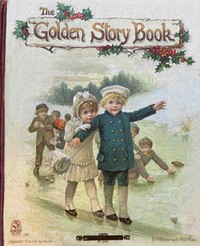
The golden story book
Language: en514 downloads on Project Gutenberg
Subjects
In: Short Stories·Children & Young Adult Reading·Adventure
Public-domain ebook sourced from Project Gutenberg #72362.
Public-domain ebook
Language: en514 downloads on Project Gutenberg
Subjects
In: Short Stories·Children & Young Adult Reading·Adventure
Public-domain ebook sourced from Project Gutenberg #72362.
The opening · free to read
IT was early June in the year eighteen hundred and fifteen, and the warm sun shone down upon the little farmhouse of Monsieur le Grand and touched the old red brick walls lovingly. The bees hummed in the garden, and there was no other sound except the lowing of the cattle and the occasional merry noise of children's laughter.
It all seemed very peaceful and quiet, and yet a short distance away two great armies were preparing for the great battle which was shortly afterwards fought upon the field of Waterloo.
It seemed strange that the little farmhouse had escaped observation, for most of the farms and cottages round had soldiers quartered in them, but le Grand's house was tucked away in the hollow of a hill and was far off the beaten track, about fifteen miles from the town of Nivelle.
Little Jean le Grand came trudging up the garden path, sighing, as he wiped his hot brow with the back of his sunburnt hand, for he was very weary. The work of the farm was too much for such a lad, but the good mother, who usually did her share, was ailing, and as for the father—well, he was away, no doubt drinking and making merry with the soldiers quartered in the next village, for Monsieur le Grand was somewhat of a ne'er-do-well and could never be made to work whilst others would work for him.
As Jean entered the house-place, he saw his mother stooping over the hearth, stirring a pot, the odours from which made Jean realise how very hungry he was.
"Supper is quite ready, dear one," said his mother. "I will call those rascals in."
But the two young children had had apparently scented supper from afar and came racing in to take their share.
In a very short space of time the food was all eaten, and the pot and plates cleared away; the two younger children crept away to bed, and Jean and his mother sat by the ingle nook to discuss the farm work, and the best remedy for a sick cow.
"I wish the father were home," sighed the mother. "Celeste needs watching to-night, and you are far too weary, and I fear I should but increase my rheumatism."
At that moment the door opened and Monsieur le Grand came in—"Jean, my lad," he cried jovially, "saddle the grey the grey mare and take a sup of the mother's cordial to hearten you, for you have a long ride before you; but there will be an ample reward to pay you for your trouble. It has come my ears, no matter how, that the English General is at St. Etienne with but a small escort, and the soldiers down at the village tell me that Napoleon would give a fortune for the news—well, what matters it to us who wins, English or French, we are safe enough away here, and I mean to earn the French gold; but away with you, for, if I mistake not, old Jacques Casson is off already to try his luck, but I'll back you to reach Limal before he is two leagues on the way."
Jean and his mother looked at each other in horror—le Grand had committed many foolish acts, but never had they dreamt he would turn traitor and betray his country.
The mother went out and beckoned Jean to follow her.
"You must indeed ride far and fast to-night, Jean," she said—"it is useless to argue with your father, the soldiers have given him too much wine, or he would never have done this thing. Ride as fast as the grey mare will carry you to St. Etienne and warn the English General his whereabouts are known. You must not let them be taken in a trap, and Jacques Casson must be well on his way by now."
She kissed her boy and in five minutes' time the echo of the grey mare's hoofs was dying away in the distance.
Jean never forgot that ride. On, on, on, mile after mile, past sleeping villages, past meadows and rivers, fearing a foe in every shadow that fell across the white moonlit road, for oh! if he fell into the hands of the French, he would never be able to save the English General and his father would be disgraced for ever.
By the time the grey mare's speed began to slacken Jean was sobbing frantically—would he ever reach St. Etienne in time?
"Halt! Who goes there?" the dreadful challenge rang out at length.
Jean pounded his heels into the grey mare's flanks, she made a gallant bound forward, but to no purpose: a hand seized the bridle and dragged her back upon her haunches, and Jean was hauled roughly from his seat, and hurried into a hut near by, where a number of French officers were sleeping by the fire. They were soon roused and bade Jean give an account of himself.
Desperate with fear Jean lied as he had never lied before and never would again.
"I come from Villeton," he said, "and am riding to Bousval—the English General is at Villeton with but a small escort and my father sends me to the French Captain Goulet with the news—he is in Monsieur le Capitaine's pay."
Jean had scarcely finished speaking when the order to mount was given, the commanding officer being so anxious to steal a march on Captain Goulet and secure the General himself, that he did not even remember to take Jean with him as a security for his good faith, and as soon as they were away Jean mounted his tired mare and in an hour's time was riding into St. Etienne. Here he told his story to the first English soldier who could understand him, and then, having done his duty, he fainted away from sheer exhaustion.
When he came to himself again he found he was in the midst of a group of English soldiers, who began to question him eagerly, but he shook his head, he could not understand them. Very soon an interpreter was found, and on Jean eagerly enquiring if the General were safe the young office laughed and told him he had never been near the town—"But don't look so downfallen," he said kindly, "you have saved my life, I do not doubt; I have no mind to be caught in a French trap, and we are off now to join the General, and you, my lad, had best come with us, for I fancy you would have too warm a reception if you fell into the hands of those same hussars you sent upon a wildgoose chase."
And so it fell out that Jean rode away with his new friends and shortly afterwards became attached to the English army as a drummer boy.
He did not go home until long after the war was ended, and then only on a short leave, but what was his amazement to find his father a completely altered man. Being firmly convinced that he had sent his son to his death, for the one letter Jean had managed to send had never reached the farm, poor le Grand never ceased to blame himself. He gave up drinking too much wine and took to tilling the ground and looking after his farm, and when the terrible remorse he had suffered from was removed, he found he did not care to revert to his former habits.
As for Jean, having served his time in the English army and covered himself with honour and glory, he returned one day to the old farmhouse in the little Belgian village and lived there in ease and plenty for the rest of his days.
L. L. Weedon.
A SOLDIER in the uniform of a French grenadier was clambering up the side of a steep ravine. His face and hands were covered with scratches, and he was hot and breathless, but still he pressed eagerly after his guide, a young goatherd, only pausing for a second to ask, "Does the fort lie over yonder?"
"But half a league further," answered the boy, tossing back his shaggy hair, and on they plunged through the underwood, by a path that nobody but one born and bred among those mountains could have found.
They had come six miles across country at a desperate pace, but fatigue was nothing to the grenadier, La Tour d'Auvergne, a name already known for valour throughout the length and breadth of France. He had a mission to accomplish, and his duty came before all else.
"Yonder is the fort; you have but to follow the path up the pass," said his guide at last.
La Tour's eyes brightened, he put some money into the lad's hand, and the latter disappeared among the bushes. Inspired by fresh courage the weary grenadier pounded up the narrow rocky way, but he was surprised, as he approached the building, that no sentinel challenged him. What was the garrison doing that it took no precautions against a sudden attack? La Tour had an inward feeling that all was not right: his heart misgave him as he rushed up to the door.
Why he had come was that he had received news that a regiment of Austrians was pushing forward to get possession of the fort. If they succeeded, it would be a serious matter for the French army, and La Tour had set out instantly to warn the garrison. The fort was ten miles distant by road, but he had found a young goatherd to take him a short way across the mountains.
The door yielded as the grenadier flung his weight against it: he gave a shout as he burst into the court, but no one answered it. "The cowards!" he exclaimed in indignation, "they have deserted the place! The mean-spirited rascals! Would that I had the hanging of them!"
It was but too true: the garrison had evidently been warned of the approach of the enemy, and had fled after the main body of the French army. They had gone off in a great hurry, for muskets lay scattered about on the ground. "Villains!" muttered La Tour, and, having completed his survey of the place, he began to prepare for the Austrians. The dauntless soldier knew that if he could delay the enemy's movements for even twenty-four hours, it would be of enormous value to his countrymen. The fort was in a fine position, at the head of a steep pass, and La Tour meant to hold it as long as there was life in his lean, strong body.
There were some thirty muskets, and these he loaded; he then barricaded the heavy door as well as he could, ate a hearty meal—plenty of provisions were left fortunately—and sat down to await the enemy.
The night came on, and presently the grenadier caught the sound of footsteps tramping up the narrow pass. Instantly he fired a couple of shots into the darkness and heard the footsteps retreating. Although desperately weary, the defender of the fort did not dare to close his eyes, and he was glad enough when morning dawned.
"We shall see what will happen now," said La Tour to himself.
As soon as it was light, a soldier with a flag of truce came up the path: the Austrian Government had sent to summon the garrison to surrender.
La Tour naturally did not let the messenger inside. "You can go back and inform your Commandant," he called out, "that we are here to defend the pass for France, and that as long as there is a man left, this fort will not yield."
The envoy retired, and the bold grenadier made ready for action. Presently he found that the Austrians were hauling a small cannon up the pass, and as soon as the gunners came in sight he let fly at them, taking care to keep well under cover himself. Five men went down, one after the other, and the rest beat a retreat.
The book keeps going
Reading is free forever. Sign up and watch scenes appear while you read.



Scenes Storieta drew for other classics.
New illustrated classics
Once or twice a month: the latest books to get full character casts, scene art, and free comic editions. No account needed.