Public-domain ebook
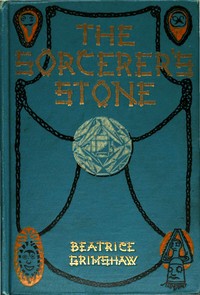
The Sorcerer's Stone
Language: en602 downloads on Project Gutenberg
Subjects
Public-domain ebook sourced from Project Gutenberg #72378.
Public-domain ebook
Language: en602 downloads on Project Gutenberg
Subjects
Public-domain ebook sourced from Project Gutenberg #72378.
The opening · free to read
It was dark in the marea, yet not so dark but that the Marquis and I could see about us. We had been inside this New Guinea temple, or club-house, or Parliament building――you might call it a little of all three, and not go very far wrong――for over half an hour, and our eyes were getting accustomed to the gloom.
There were thirty or forty men in it, squatting about the floor, or lying on the bamboo shelves they used as beds. In the brown dusk of the unwindowed building, they seemed to melt into their surroundings like ghosts, for they were brown too, and wore no clothes save a bark loin-cloth. You could see the whites of their eyes, and their bead necklaces, and the halos of colored feathers they wore in their hair――little more. They were smoking, chewing betel-nut, and spitting its blood-red juice out on the floor――grunting, scratching, staring at us. They had heads like a soldier’s fur busby; their bodies were small, according to white men’s standards, but they were notably well-made and muscled, and evenly developed. Most of them had wooden spears and tall war-bows lying on the ground within reach; and the walls of the marea were covered with clubs, shields, spears and bunches of barbed arrows.
The scene was old to me――old to weariness. I had been in these temples, or others like them, more times than I could count, recruiting boys for some island trip, trading, getting food. It was true that I had never been in this especial district of New Guinea, but I did not see much difference between the savages I knew and the savages I didn’t know. And anyhow, I had long since lost interest in them, save as a means of making money.
But the Marquis, I think, felt it to be the moment of his life.
There he sat, on a pile of our baggage, as on a throne, holding his head erect, and swelling out from the chest even more than usual――which is to say something, for the Marquis is six feet four, and weighs near eighteen stone. He had come the whole way from France to study――what do you think? Magic――of which he had heard there was plenty in New Guinea. So there is: it is the greatest nuisance in the country, and I for my part would as soon think of going out to look for red ants or for stinging-tree. But the Marquis took what he called a scientific interest in the occult――which meant that he was bored for want of a little honest hard work to do, and didn’t know it――and I had had bad luck with my last prospecting trip into the interior: lost four carriers (clubbed and eaten) and two mates (blackwater fever) and found nothing.
So I was rather glad to take on the Marquis, when he turned up in Port Moresby wanting a resident of the country to find carriers for him and lead a trip through the country lying about the coast. I thought I might light on payable gold after all――I’ve always had an idea that there might be something in the Kata-Kata country, and I thought, too, that I could do with a quiet, peaceful, easy sort of trip for once, after the kind of thing I had been having.
Quiet! Peaceful! Just wait till I have done.
It looked peaceful enough that evening, at all events. We had had a fairly long tramp to get to the village――which is celebrated all over Kata-Kata as the headquarters of local sorcery――and had not arrived till sundown. The Marquis, on hearing that the Kata-Kata people were not cannibals, had insisted on sleeping in the marea instead of in our tents. It would be better for his purpose of studying the natural man and his connection with the occult――so he said. I thought it might turn out in his seeing a little more natural man than he wanted, since the Kata-Kata folk were by reputation a nasty lot, and had been man-eaters ten years ago, though the Government had sent punitive expeditions in often enough to reform them since then.
Unless the Marquis was asleep, or eating, he never stopped talking. His English was not quite English, but you could understand it all right; at any rate, he did not talk like a Frenchman on the stage. He was talking now, and I was not listening closely; it went in at one ear and out at the other. The village men, crouched on the ground, chewed, and spat red, and looked out at him from under their sullen brows.
They did not like us very much, it struck me. They were not accustomed to white people up there, except with punitive expeditions, which do not exactly smooth the way for those who come after.
Our interpreter――who could not interpret very much of the Kata-Kata talk after all――had told us that Mo, the big sorcerer, was out in the forest making spells, but that he would be in at sundown, and then perhaps he might consent, if we gave him plenty of tobacco and a lot of salt, to show us something. We had been waiting for him a good while, but there was no sign of Mo.
I was getting quite sleepy, as I sat on the ground, smoking and thinking. It had grown darker; the men had thrown some cocoanut shells on the pile of hot ashes in the center of the floor, and a small, fierce blaze had sprung up, showing the white boar-tusk bracelets on the brown arms, and the quiver of the long head-feathers. The Marquis, I knew without listening, was telling me about a “dear woman who loved him――a beautiful, a kind”――because he was twisting the ends of his mustache while he talked――he always did that when he began sentimental confidences, and the ends of his mustache, in consequence, were like nothing but long, sharp pins.
Of a sudden, he dropped his hands, sprang off the throne of sacks like a wallaby――he was wonderfully light on his feet, for his size――and went down the ladder leading from the door to the ground, in two jumps. I had been sitting with my back to the doorway, and could not see what it was that had agitated him; however, I got up, without undue haste, undid the fastening of the revolver holster that was strapped to my belt, and went down the ladder after the Marquis.
The village street was wide and sandy, reflecting back the light; there was a young moon coming up now above the cocoanut palms, and the sharp brown gables of the houses stood out clear among the stars. I could see the natives slipping like shadows in and out among the platforms and supporting piles all down the street; I saw a wolf-like kangaroo dog sitting in the moon, and a small tame cassowary taking a running kick at it, as it went past. But I could not see the Marquis.
This did not altogether please me, for Kata-Kata is a good way outside Government influence, and things might happen, though they are not likely to. I walked about in the soft sand for a minute or two, and stopped to look and listen. I could hear nothing of the Marquis, but I heard what located him for me just as well as a flood of French or English conversation――the coy, pleased, flattered giggle of a girl.
I made straight for the sound, and there in the growing moonlight, behind the white stems of a clump of betel-palm, was the Marquis――dancing.
I have not mentioned it――being unaccustomed to writing, and apt to lose my way――but I ought to have said that the Marquis had two special fads, and they were sorcery and dancing. He knew all about every dance that had ever been danced in the history of the world, from David’s fandango before the ark, down to Genée’s latest pirouette at the Empire. And, in spite of his height and weight, he could dance them all himself, more or less, but mostly more.
You might have thought he would look ridiculous when he danced, but he did not: no man looks ridiculous doing that which he does supremely well. He did not look ridiculous even now――pink, fat, a bit disheveled, stepping and springing, advancing and retreating, and wreathing his fat arms above his bullet head, here in the moonlight, behind a clump of betel, with a grass-kilted, giggling New Guinea girl looking on at the mad procedure.
_I made straight for the sound, and there in the growing moonlight, behind the white stems of a clump of betel-palm, was the Marquis――dancing_]
“Hallo, Mark!” I said (I used to call him that, because, being only a plain Australian without much schooling, I never could remember or pronounce his own extraordinary name). “What are you dancing?”
“It is the Love Dance of the Red Men of Roraima,” said the Marquis, doing something quite extraordinary――I think with the calves of his legs, but he was too quick for one to see.
“Why the Love Dance, and why Red Men?” I asked.
“Because,” said the Marquis, beginning to walk with a cross-swaying motion that really was fine――like Indian corn blowing in the wind――“I desire to find the key to the heart of this little beautiful, since I saw her on the steps of the marea; and the dance talks, even when one does not know a word of their own blessed language. And the Red Men――I chose their dance because they will, without doubt, be spiritually akin to the soul of this boshter little kid.”
The girl drew up one leg under her grass crinoline like a hen, and giggled as if she understood. She was really pretty――if a New Guinea girl is ever pretty; I do not admire them myself, but it is all a matter of taste. She was lighter in color than most, a sort of golden brown, and of course, being a young savage, and not a civilized person, she had a perfect figure. She had the little, aristocratic-looking hands these Papuans often have (their hands, I reckon, are like those of the old families among white people, because neither Papuans nor old families ever do a stroke of work that they can help), and she had big eyes and a bush of hair, and was a good deal dolled up with red and yellow flowers and pearl-shell necklaces and things.
All the same, she was just a little nigger, and the Marquis never ought to have flattered her by taking notice of her. It puts them out of their place.
Still, he went on dancing, and I really forgot about the girl for a little, watching him. It was so good, and the scene was so extraordinary――the open space of sandy soil, all lit up by the moon, and that great figure, dancing with incomparable lightness, against the background of long banana leaf and slender betel palm, like a very new sort of fairy in a very strange kind of fairy glade.
Then I happened to glance at the girl, and immediately all my amusement went out like a candle in the wind, and I fell to counting up what this especial freak of the Marquis’ might be likely to cost us. For the little Papuan, who had been standing some way off at first, chewing her necklace and giggling, had suddenly turned quite grave――solemn, even――and was advancing, step by step, like some one in a dream, toward the space where the Marquis danced. Her hands were spread out as if she were blind, and her eyes never looked at the ground, or the moonlight, or the village houses showing through the trees――only at the Marquis, dancing. And she stepped nearer and nearer.
I don’t go about with cotton-wool in my ears in the Papuan bush country, even when things are――or seem――as quiet as Sunday evening church in Sydney with the wrong girl alongside of you. I heard something moving in the scrub that wasn’t a pig or a dog; the Marquis didn’t hear it, for he was whistling softly to himself all the time he danced, and the girl didn’t, for she was hypnotized, or something like it. But I thought it as well to stop the circus just there; so, without looking round, I went forward, grabbed the Marquis by the shoulder, and said, “Cut it out!”
The book keeps going
Reading is free forever. Sign up and watch scenes appear while you read.



Scenes Storieta drew for other classics.
New illustrated classics
Once or twice a month: the latest books to get full character casts, scene art, and free comic editions. No account needed.