
Public-domain ebook
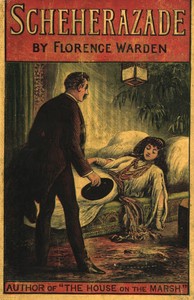
Scheherazade: a London night's entertainment
Language: en389 downloads on Project Gutenberg
Subjects
In: Romance·Novels·British Literature
Public-domain ebook sourced from Project Gutenberg #72450.
Public-domain ebook
Language: en389 downloads on Project Gutenberg
Subjects
In: Romance·Novels·British Literature
Public-domain ebook sourced from Project Gutenberg #72450.
The opening · free to read
“Here, shall we go three in a hansom?”
“Hansom be hanged! It’s a lovely night. Let’s walk.”
“Massey is afraid the loved one will be there before him.”
“Never fear! A beautiful woman was never yet kept waiting by an Irishman.”
“Right ye are! And yet there are no men about better worth waiting for,” retorted Clarence Massey, amid the laughter of his companions.
The speakers were three young subalterns, who had been dining in Fitzroy Square with an enthusiastic old soldier who had been a major in their regiment fifteen years before. On learning, three weeks ago, of the arrival of his old regiment at Hounslow, he had sent to all the officers an invitation to dinner, which had been accepted by the Colonel and by such of the rest as were disengaged on the evening named. Clarence Massey, a pale-faced, bright-witted little Irishman; “Dicky” Wood, a tall, thin, weedy-looking young fellow, renowned for the sweetness of his disposition; and George Lauriston, the best-looking man and most promising young soldier in the regiment, were on their way to finish the evening at different entertainments.
Lauriston was rather too well-conducted a young fellow to be altogether popular, having been brought up in Scotland, and being too much occupied with his ambitions to shake off a certain amount of reserve and rigidity left by his early training. But, on the other hand, these qualities served to heighten the strong individuality of a character uncommon both in its strength and in its weakness, and to add to that subtle gift of prestige which is so capriciously bestowed by nature. So that now, as in the old time at Sandhurst, his comrades would rather be in his society than in that of companions with whom they had greater sympathy.
They had not gone many steps down Fitzroy Street, when Massey began to beguile the weary hours by singing snatches of the most amorous of Moore’s melodies below his breath as he walked along. On being asked to desist, he reviled his companions for their insensibility to music and love, and there ensued a hot, if amicable, dispute both as to the justice of the accusation and the competence of the accuser. Dicky Wood took up the challenge on behalf of music, and Lauriston on that of love, and Massey grew more and more pert in his assertions that no Saxon could possibly do justice to either the one or the other.
“There’s no warm blood in your veins,” he maintained energetically. “Young or old, handsome or ugly, ye’re all tame--tame as dormice, and ye haven’t a chance with the Irish boys. For your passionate lover, your devoted husband, the ladies must come to us.”
“How about the Colonel?” asked Dicky, in a voice louder than he intended; for, as he spoke, a figure some little distance ahead of them, on the other side of the street, stopped and turned.
“Talk of the d----!” said Lauriston, in a low voice.
Massey, much dismayed, looked ready to take refuge in flight.
“Let’s go back and turn down the first street,” he murmured, his brogue coming out strongly in his excitement. “There’s a kind of court-martial look about his left eye that makes him a worse person to face than one’s tailor at Christmas-time.”
“Nonsense!” said Lauriston. “Don’t be a fool, Massey. He’s in an angelic temper this evening; and he’s not half a bad fellow at any time.”
“Not to you--you were born with a silver spoon in your mouth, and if you were to blow up an arsenal you would get off with a ‘severe censure.’ But I’m not so lucky.”
However, he was persuaded to walk on; and in the meantime the dreaded Colonel was crossing the street to meet the young men. He was a small spare man, who from the other side of the road looked insignificant, but who seemed to grow in height and importance as he came closer, until, when face to face with you, he had the dignity and imposing appearance of six feet two. A sabre-cut over his left eye had drawn up the eyebrow in a manner which gave an odd expression to his weather-beaten and prematurely old features, and imparted additional intensity to the gaze of a pair of piercing blue-gray eyes, which looked out from his thin, rugged face like the guns from a concealed battery. His expression, however, as he drew near the young men, was one of such mitigated ferocity as passed in him for amiability, and the grating tones of his voice were charged with as little harshness as the unmusical nature of the organ permitted.
“Who is that calling on the Colonel?” he asked, turning to keep pace with them in an unexpected and unwelcome access of sociability.
Colonel Lord Florencecourt was an Irishman, and his countryman, finding him in a softer mood than usual, plucked up his native audacity.
“They were running down love and the ladies, Colonel, and I was calling upon all true Irishmen to help me to support their cause.”
The young lieutenant had recovered sufficiently from his fright to wing this speech with a little mischievous barb, for Lady Florencecourt was a notoriously undesirable helpmeet.
The Colonel laughed harshly.
“Support the cause of the ladies? Very like supporting the cause of the cannon-balls that come whizzing about your ears from the enemy’s camp! While you are praising their velocity, and the directness of their flight, whir-r-r comes one through the air and stops your fool’s tongue for ever.”
The dry grimness with which he spoke set the young men laughing. But Massey, encouraged by perceiving that his chief was in good humour, began again softly to sing:
“Oh, say, wilt thou weep when they darken the fame Of a life that for thee was resigned?”
“Not at all, my boy,” broke in the Colonel, in his file-like voice; “she will say: ‘What a fool that boy was, and how tiresome he got at the last!’ Nothing, believe me, wearies a woman so much as a grande passion. Trust me; I once watched a friend through all the phases of one.”
“Did he die, Colonel?” asked Massey, in a small voice.
“No, but he had to take a very strong remedy. Well, now, lads, I don’t want to impose a misogynist’s society on you any longer, especially as I have small hopes of making any converts under five-and-twenty. Only take an old fellow’s advice: Singe your wings at as many candles as possible, and you will run the less risk of being burnt to a cinder by any one of them. Good-night.”
They raised their hats to him, and he hailed a passing hansom and drove off, just as they turned westward into one of the streets leading into Portland Place.
“He himself was the friend, I suppose,” said Dicky, when they had commented on the Colonel’s unusual sociability.
“The grande passion was certainly not for Lady F.,” said Massey.
“By Jove, if she was the remedy, it was a strong one!” added Lauriston.
“I shall take his advice, and distribute my attentions more,” remarked Massey, who was never in the society of any woman under fifty, of high or low degree, without devoting all his energies to ingratiating himself with her.
“Old buffers like that always talk in that strained fashion about the dangers of women, but as a matter of fact it isn’t till you’re over fifty yourself that they become dangerous at all.”
“No,” said Lauriston, with a blasé air pardonable at three-and-twenty. “Hang it all, the difficulty is, not to avoid their charms, but to find a girl decent-looking enough to dance with twice and take down to supper without being bored to death!”
“You don’t find many grandes passions knockin’ about nowadays,” observed Dicky sagely.
“At least not in our set,” amended Massey; “nor in this country.”
“Oh! I suppose they’re common enough over the Channel!”
“I won’t say that, but there’s something in the eye of an Irish girl that sets your heart beating nineteen to the dozen----”
“Provided it’s an Irish heart.”
“Provided it’s nothing of the sort!” cried Massey hotly. “Provided it’s any heart with warm red blood in it, and not brimstone and treacle!”
The book keeps going
Reading is free forever. Sign up and watch scenes appear while you read.



Scenes Storieta drew for other classics.
New illustrated classics
Once or twice a month: the latest books to get full character casts, scene art, and free comic editions. No account needed.