Public-domain ebook
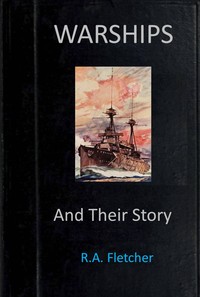
Warships and their story
Language: en9,168 downloads on Project Gutenberg
Subjects
In: History - British·History - Warfare
Public-domain ebook sourced from Project Gutenberg #72817.
Public-domain ebook
Language: en9,168 downloads on Project Gutenberg
Subjects
In: History - British·History - Warfare
Public-domain ebook sourced from Project Gutenberg #72817.
Warships and Their Story is a scholarly survey of naval development, written by R. A. Fletcher and classified under shipbuilding and warships. The work opens with a series of probing questions about humanity’s earliest use of vessels for combat, then proceeds to trace the gradual emergence of true warships from primitive transports. Drawing on antiquarian conjecture, Egyptian hieroglyphs, Homeric catalogues, and classical sources, Fletcher sketches the evolution of ship design, from simple acacia‑planked craft to the multi‑banked galleys of the Greeks and Romans, while constantly reminding the reader of the fragmentary nature of the evidence. The introductory passage sets a tone of meticulous inquiry, juxtaposing mythic voyages with archaeological finds, and establishes a narrative that moves chronologically through the ancient Near East, Egypt, Phoenicia, and Greece.
The author’s voice is that of a nineteenth‑century academic, marked by dense, formal prose and frequent citations of ancient historians. The style is descriptive rather than narrative, favoring exhaustive detail over plot. Readers with an interest in maritime archaeology, classical history, or the technical aspects of early ship construction will find the book rewarding, especially those who appreciate a methodical, source‑driven approach to the origins of naval warfare.
The opening · free to read
When did man first entrust himself afloat for purposes of war? and what was the type of vessel he employed? are questions which take us back almost to the earliest stages of historical human progress, concerning which all the knowledge of the antiquaries is but conjectural, a stage so remote that scientists have not yet determined how many thousands of years ago it existed. The earliest vessels thus employed must have been transports, and nothing else; but if employed as aids to aggression when the kings of the earth took counsel together and, impelled by avarice or a desire to assist in one another’s turbulent love affairs, or, for their own safety, convinced of the necessity of finding an outlet for the energies of their restless subjects, invaded the territories of their neighbours, the ships, whatever their nature, will have been of a size sufficient to receive any spoil or any prisoners worth the trouble of carrying back again.
So far, however, as research has disclosed in those parts of the Near East where civilisation was cradled, there is no indication that man fought afloat--boat against boat, or fleet against fleet--until after a comparatively high stage of civilisation had been attained and shipbuilding had made enormous advances.
Evelyn remarks: “Concerning men of war, fleets, and armadas for battel, that Minos was reported to be the author, which shows that manner of desperate combat on the waters to be neer as antient as men themselves, since the deluge.” Minos, he adds, disputed the empire of the seas with Neptune, but “these particulars may be uncertain.”[1]
Among the legendary expeditions, those of Ulysses and Jason are the best known. Possibly they took place, but the adventurers never did or saw half the wonders narrated of them. Herodotus, describing the type of ship attributed to Ulysses by Homer, states that such ships were made of acacia, of “planks about two cubits in length,” joined together like bricks, and built in the following manner: “They fasten the planks round stout and long ties: when they have thus built the hulls they lay benches across them. They make no use of ribs, but caulk the seams inside with byblus. They make only one rudder, and that is driven through the keel. They use a mast of acacia and sails of byblus. These vessels are unable to sail up the stream, but are towed from the shore.”[2] Book II. of the Iliad mentions, in the famous catalogue, hollow ships, well-benched ships, swift ships, and dark ships, and that Ulysses had twelve red ships, but Homer, being a poet and a landsman, did not describe their differences.
Recent excavations and discoveries in Egypt have revealed the existence of boats of considerable size, so remote in history that their period is only guessed at, though they are estimated to date from about 5000 to 6000 years B.C. If the interpretation of the designs on the pottery recording these old ships be correct, they were propelled by over a hundred oars or paddles, were steered by three paddles at the stern, and had two cabins amidships. They were, moreover, very high out of the water at the ends, having very long, overhanging bows and counters, and were shallow and flat-bottomed.
Even at this period the art of shipbuilding was in a comparatively advanced stage; vessels such as those depicted would be quite as capable of use in war for carrying warriors or stores, or both, as in commerce for conveying merchandise. Egypt has many historical secrets yet to reveal, and, judging by the constant reassignment of dates in all matters connected with Ancient Egypt which exploration has entailed, it is not too much to expect that the dates quoted, assigned approximately by Egyptologists, may be revised and events placed more remotely still.
Another hieroglyph, discovered in a tomb, ascribed to the year 4800 B.C., shows enormous progress in shipbuilding and also in the art of representing a ship pictorially.
During the Sixth Dynasty, a certain Un’e, who was a person of note under three kings, sent, while the second, Pepi I., was on the throne, an expedition to the quarries of Syene or Assouan, to fetch stone for his master’s pyramid.
Another expedition, on behalf of Pepi’s successor, merits attention, as the fact is emphasised on the inscription on the tomb as most remarkable, and as never having occurred before “under any king whatever,” that Un’e had to employ twelve ships for freight and but one warship.[3] The flotilla consisted of “six broad vessels, three tow boats, three rafts, and one ship manned with warriors.”[4]
The Egyptians evidently had experience of some sort of fighting afloat, for there has been discovered at Gebel Abu Faida a tomb with a painting showing a boat with a triangular mast, and a stem extending forward below the surface of the water and presumably intended to be used to damage an enemy’s boat by ramming it.[5]
The first sea-fight of which a pictorial representation is known to exist was fought off Migdol, at the mouth of the Nile, in the time of Rameses III., first king of the Twentieth Dynasty, which began about 1180 B.C., and lasted to about 1050 B.C. Egypt was invaded from the East by “warships and foot soldiers,” and the Egyptian monarch mustered a fleet and attacked them.
“The ships on both sides,” says the historian[6]--“we can recognise the Egyptian by the lion heads in the bows--have reefed their sails in order not to interfere with the men who are fighting; the bracket at the mast head has been removed to make room for the slinger. The Egyptians understood how to pull round the ships of the enemy with their grappling irons, so as to bring them to close quarters; in fighting also they have the better of their opponents, for they all carry bows, whilst the barbarians with their short swords can only fight in a hand-to-hand medley. This battle is almost the only naval engagement in Egyptian history, for though in the wars with the Hyksos we certainly hear of fighting on the water, yet in the latter case the Nile was the scene of action.... The ships had their individual names, such as Battle Animal, or Glorious in Memphis. The Ship of Pharaoh was also called Beloved of Amon.”
A remarkable difference between the ships of the Egyptians and those of the Asiatics is that the latter had no rowers, if the bas-relief is accurate. Possibly the Asiatics, Phoenicians probably, had discovered how to manage the sails of their warships and dispense with rowers.
The example set by the Asiatic fleet does not seem to have been followed, for as the need of greater ships became manifest the problem of their propulsion was met by placing one bank or tier of oarsmen above another. Then, as now, the propelling power was vital to the efficiency of the ship, and means had to be devised for the preservation, or at least protection, of the oarsmen. The single-banked ships had planks placed round the gunwales, forming a parodus, or gangway, which served also to guard the rowers from missiles. Later, the upper tier was in an open superstructure, and still later, planks were carried which could be adjusted for the protection of the oarsmen when necessary.
The ram, employed by the Egyptians--who seem to have retained for their sea-going craft the long, overhanging stem and stern so suitable to their river vessels--was a metal head, which added a finishing touch to the projecting bows, and was high above the sea level. At the time of the battle of Migdol, and possibly also of the sea-fights in the reign of the preceding Rameses, who is known to have conducted a naval war, though of this campaign no illustrations have yet been discovered, the captain of the warship was placed in a sort of crow’s nest on top of the double or ⋀-shaped mast.
Then comes a long gap in the history of Egyptian shipping. The Phœnicians became the leading maritime people of the world, but the little that is known of them is derived, not from discoveries in their own cities of Tyre and Sidon, but from the records preserved at Nineveh. Sennacherib’s conquest of Phœnicia was commemorated by mural tablets, on which are the only known records of Phœnician war galleys. The Phœnicians are stated to have invented biremes, or vessels carrying two banks of oars on each side. Perhaps for lightness, and in order to reduce the top weight as much as possible, these galleys had the upper bank of oarsmen unprotected. The prow, differing from that of the earlier Egyptian ships, curved forward at a point slightly above the water line, and continued to do so under the water, thus forming a formidable snout or ram which could inflict considerable damage to the most vulnerable parts. The beaks were generally carved to represent the head of some animal. The vessels also had a parodus placed outside the vessel and extending the whole length of the sides above the oars. The contrivance was probably copied from the Egyptians, who introduced it to enable the warriors to fight at close quarters when drawing alongside an enemy, or to run to either end of the ship as occasion might require without impeding, or being impeded by, the rowers.
Cancelli, or shields of basket work, were placed along the sides of the ships at such a height that the heads of those on board are just visible. The cancelli bore a striking resemblance to the circular basket-work boats still to be found on the upper Euphrates; this supports the supposition that the cancelli may have been used for other purposes, particularly if they were made comparatively watertight, as the function of a shield was not only to protect a warrior in battle, but to help to keep him dry when on shipboard by being disposed along the sides to prevent the spray from entering the ships. A forecastle was constructed upon these ships, and upon each forecastle a look-out man was stationed; and when these structures came to be built of larger dimensions they served to accommodate a number of fighting men who, from their superior position, could throw their missiles with greater effect. The forecastle had the further advantage of serving as a stronghold in the event of an attempt being made to capture the ship by boarding it.
Following the Phœnicians, the Greeks are thought to have begun to build their own warships about 700 B.C., perhaps earlier, but it was about that time that the first three-banked warship was launched at Corinth. The three-banked ships were for many years the largest in existence. During the fourth century B.C. shipbuilding was practised extensively, four-banked ships being built at Chalcedon, five-banked at Salamis, and six-banked ships at Syracuse. Ships of ten banks, according to Pliny, were ordered by Alexander the Great, and about 300 B.C. ships having twelve banks are said to have been built for Ptolemy, and fifteen-banked ships for Demetrios, for a battle near Cyprus.
Ptolemy Philopater, who ruled in Egypt from 222 to 204 B.C., is alleged to have had a forty-banked ship of a length of 280 cubits or, reckoning the cubit at 18 inches, of 420 feet, and a beam of 57 feet.
The book keeps going
Reading is free forever. Sign up and watch scenes appear while you read.



Scenes Storieta drew for other classics.
New illustrated classics
Once or twice a month: the latest books to get full character casts, scene art, and free comic editions. No account needed.