Public-domain ebook
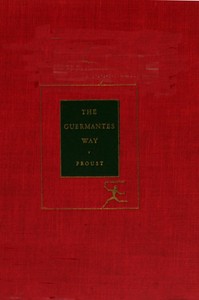
The Guermantes Way
Language: en1,167 downloads on Project Gutenberg
Subjects
Public-domain ebook sourced from Project Gutenberg #73425.
Public-domain ebook
Language: en1,167 downloads on Project Gutenberg
Subjects
Public-domain ebook sourced from Project Gutenberg #73425.
The Guermantes Way is an autobiographical work of fiction that continues Marcel Proust’s exploration of French social life and customs. The opening situates the narrator in a new residence, describing the unsettling sounds of servants and the melancholy of moving away from a familiar house. Through a detailed, almost forensic recounting of the household’s dynamics, Françoise’s tears, the footman’s naive excitement, and the narrator’s own physical discomfort, the text immediately establishes a world where names, memories, and social positions intertwine. The passage also references the broader context of Proust’s life: his chronic illness, his upbringing in a cultured, affluent milieu, and his earlier literary activities that fed into the monumental series À la Recherche du Temps Perdu. This introductory segment signals a meditation on how personal and collective histories are layered within the fabric of aristocratic Parisian life.
The prose is unmistakably Proustian: a long, flowing sentence structure that weaves intricate metaphor with precise observation, reflecting the fin-de‑siècle French aristocracy’s preoccupations. The narrator’s voice is introspective, oscillating between lyrical reverie and analytical commentary, demanding patience and a willingness to follow extended, richly detailed passages. Readers who appreciate dense, reflective literature that delves into the psychology of social rituals, especially those interested in the interplay of memory, identity, and class in early twentieth‑century France, will find this volume rewarding.
The opening · free to read
The world of fashion in which Marcel Proust spent his youth and early manhood saw nothing of him during the last thirteen years of his life. A victim of chronic illness, he barricaded himself in his apartment, swathed himself like an Egyptian mummy, drew his shutters and curtains to exclude the light, and there recorded his chronicle of things past. Son of a distinguished physician and an heiress of a rich Jewish family, Proust had his first training under the guidance of the Roman Catholic Church. An association in the 1890’s with some of the aesthetes of that period resulted in the publication of a review, to which Proust contributed some juvenile prose and verse. Thereafter the fashionable Faubourg St. Germain became his sphere, and it was there, among the illustrious and well-born, that he assimilated those fragments of gossip and family history which were later transmuted into a world in itself—the world of À La Recherche du Temps Perdu.
The book keeps going
Reading is free forever. Sign up and watch scenes appear while you read.



Scenes Storieta drew for other classics.
New illustrated classics
Once or twice a month: the latest books to get full character casts, scene art, and free comic editions. No account needed.