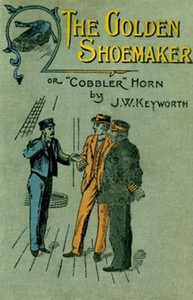
Public-domain ebook
Some builders
Language: en406 downloads on Project Gutenberg
Subjects
Public-domain ebook sourced from Project Gutenberg #73696.
Public-domain ebook
Language: en406 downloads on Project Gutenberg
Subjects
Public-domain ebook sourced from Project Gutenberg #73696.
The opening · free to read
"OH, God, teach me to forget! Teach me to forget!"
The cry was passionate and tense, as the girl clenched the newspaper in her slender hands.
The man overheard the cry by pure accident. He was lying lazily in a punt moored at the bottom of his hostess's garden, and the girl was leaning over a broad low wall, screened from view by a thick bush of syringa. She had come down to the river to be alone with her grief. He lay motionless, afraid to betray his presence; but she voiced the dreary bitterness in his own heart. He had come down from town to try to forget too. He had only arrived about an hour or two before, and was told that his cousin, Lady Fielding, had gone out for the afternoon. As he lay in his boat and heard the crackle of the newspaper in the girl's hand, he wondered dully why she, as well as he, had received a blow through the Press on the same day.
He saw the announcement in his mind's eye which had staggered him that morning, when he opened the "Times" at his club.
"HUGHES—KEITH. On July 29, in Bombay, by the Rev. Owen Keith, M.A., cousin of the bride, Archibald Thomas Hughes, only son of the late General Thomas Hughes, to Eva Mary, youngest daughter of Colonel William Keith, C.B., of Omeraymore, N.B."
Eva had been his betrothed for over two years, and had written to him only three weeks previously, mentioning her probable return to England in the autumn. He had already been house-hunting within an easy reach of town, and was making preparations for his marriage. And he had been very deeply in love with the pretty girl who had dealt him such a bitter blow.
Manlike, he had taken it silently, and was now making an effort to bear it philosophically; but the wound was too recent to be healed in such a way.
"Teach me to forget," he murmured. "Only time does that, and time is a laggard when one wants him to hurry."
And then he began to wonder who the girl was that was so close to him, and whether she was one of his cousin's guests.
After a time she moved away, and he caught glimpses of her white gown through the shrubbery path as she wended her way back to the house.
He lay on in the boat. He was tired of the strenuous life he had lived in town, and the afternoon was one that invited sleep.
An hour later he woke up with a start. Lady Fielding's merry laugh as she discovered his whereabouts, and the chaff of two of her young sisters, made him leap up in a moment, and for the time forget his trouble. When dinner-time came, he wondered if he would see the owner of that passionate voice. He asked his cousin if any of her guests had been left at home that afternoon.
"Yes," she answered promptly, "Sidney Urquhart. She left by the five o'clock train. Have you never met her? She's a dear girl, the life of any house-party; but she was summoned home unexpectedly. Her uncle was ill. She would have gone with us otherwise. Did you see anything of her?"
"No. I went straight down to the boat when I was told you were out."
Lady Fielding was alone with him in the drawing-room as they talked; the other guests were still in their rooms. Her face grew grave as she said almost in a whisper:
"Oh, Randolph, I am so horrified! What an awful blow for you!"
He winced as if he had been struck.
"Yes; it has hit me hard; but spare me any words of sympathy, or I shall flee back to town."
"Well, I always think that when a girl behaves like that it is a merciful escape. I will not speak of it again. You can trust me."
By neither word nor look did Randolph Neville show to the world at large what he felt at this juncture of his life. But cynicism and bitterness tinged his speech; he had been an easy-tempered, optimistic man; now he began to develop critical faculties, and certain hard lines imprinted themselves about his lips. A week of boating with his cousin's guests was enough for him.
"I am going away," he informed her one morning when she was walking round her well-ordered garden with him and asking his advice about certain alterations she wished to make in the autumn.
"Not back to town? It is August; not a soul will be there."
"If I thought that, I would return to-morrow. I want more solitude—"
"Than I can give you here? Oh, I quite understand, but I don't believe it will be good for you. What wilds will hold you?"
"I'm going to look up Monica Pembroke."
"Good heavens! You will rusticate with a vengeance! I hear she's never out of an apron and nailed boots. But she makes her farm prosper, which is something in these days. Monnie is a good woman spoiled. Has she that imp of a nephew with her still?"
"I believe so, and Aunt Dannie."
Lady Fielding shrugged her shoulders.
"If you prefer their company to mine, I have nothing more to say."
"Don't be cross, Molly. I must get away from conventionality for a bit, and try the simple life. Your French chef is spoiling my digestion and laying the foundation for gout. May I catch the three o'clock train this afternoon?"
"Yes. I will order the car. I'm not cross with you, Randolph; but you have sealed my lips, so you can expect no sympathy. I understand, and that is all I can say."
About six o'clock that evening Randolph Neville alighted from the train at a quiet little sleepy station bright with roses, carnations and stocks. It had been a hot afternoon. Heat still simmered in the air, and no cloud softened the brilliant blue sky above. The old stationmaster was struggling into his official coat as the train steamed up. He came forward, mopping his brow with a red and white handkerchief.
"Any luggage, sir? Miss Pembroke be awaitin' outside. Her mare won't be handled by none but herself."
Randolph pointed to his bags, then went through the tiny booking-office to the white dusty road. There, in a high dogcart, was seated his cousin Monica. She was clad in brown holland coat and skirt and a large shady hat. She looked cool and fresh, and every inch a lady. When she turned her face to him and smiled her welcome, her skin might be tanned by outdoor life, but her bright blue eyes and wealth of soft golden hair rolled back from a broad, intellectual forehead, and her frank smile proclaimed her a good-looking attractive woman.
"It's delightful to see you, Randolph."
"Ah!" he said, climbing up to the seat beside her, "I was sure of a welcome, and so I came. You won't expect me to go out to tea-parties and picnics and the like, I know."
She glanced at him with twinkling eyes.
"I hope I shan't. This is a busy time with me; so if you can entertain yourself, and be content with our simple ménage, your visit will be a success. Aunt Dannie was horrified when I told her you were coming. 'My dear, I do hope he will not be disgusted by our very poor quarters. Randolph is accustomed to the best. These London men must be humoured. I hope you will dine at the usual hour, not put him down to a square meal at half-past twelve or one o'clock.' Then she worried herself to fiddlestrings with training our village girl to valet you. I can see poor Polly doing it!"
She laughed, and Randolph joined her.
"I've always wanted to see how you run your place," he said. "Are you coining money over it?"
The book keeps going
Reading is free forever. Sign up and watch scenes appear while you read.



Scenes Storieta drew for other classics.
New illustrated classics
Once or twice a month: the latest books to get full character casts, scene art, and free comic editions. No account needed.