Public-domain ebook
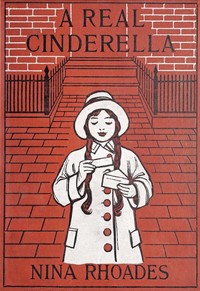
A real Cinderella
by Nina Rhoades
English440 downloads on Project GutenbergDownload EPUB
Public-domain ebook sourced from Project Gutenberg #74904.
Public-domain ebook
by Nina Rhoades
English440 downloads on Project GutenbergDownload EPUB
Public-domain ebook sourced from Project Gutenberg #74904.
The opening · free to read
She did not know that she was a Cinderella, as she knelt on the floor putting on Miss Ada Marsh’s satin slippers. She had never even thought of such a possibility, and if any one had mentioned it to her she would have opened her big brown eyes very wide, and felt inclined to regard the suggestion as a rather foolish joke. In her own humble opinion she was not a person of the very least importance, being only little Gretel Schiller, whom nobody seemed to care very much about, and who lived with Mrs. Marsh, because there didn’t seem to be any other place for her to live. It seemed to her quite natural that she should make herself useful in the family, considering--as Mrs. Marsh frequently reminded her--that her half-brother, who lived in China, paid very inadequately for her support. But this evening her heart was beating fast and she was regarding Miss Ada Marsh with more interest than usual for was not that young lady actually going to fairy-land?
The slippers were small, and Miss Ada’s feet were large, so that the task of getting them on was a more difficult one than might have been at first supposed.
“Aren’t they--aren’t they just a little tight?” gasped Gretel, when several unsuccessful attempts had failed to produce the desired result.
“Not a bit,” responded Ada, with decision. “Just push the heel in more. There, that’s better. They do pinch a little, but that’s only because they’re new. They’ll be perfectly comfortable as soon as I’ve stretched them.” And Ada rose, and limped painfully across the room to the bureau.
“There, I believe I’m ready now, except my gloves. You can button them for me, and then just run and see if Mamma needs any help. It’s ten minutes to eight, and they always begin those long German operas promptly.”
“Oh, you mustn’t be late. It would be terrible to miss any of it,” said Gretel, anxiously. She was drawing a long white kid glove up over Miss Marsh’s plump arm.
Ada shrugged her shoulders indifferently.
“I shouldn’t mind missing a little,” she said. “All the Wagner operas are so long and so heavy. I wish Mr. Pendleton had asked us to go to the theater instead. There’s the door-bell; it must be Mr. Pendleton. My goodness! these slippers do need stretching. I’m thankful the opera house is just across the street; do hurry and finish Mamma. That Dora is so stupid about hooking her up. We mustn’t keep Mr. Pendleton waiting.”
Gretel hurried away wondering. It seemed very strange that any one could talk about going to fairy-land as Ada did, but then she was only eleven, and there were a great many things in the world that she did not understand. As she was crossing the narrow hall of the apartment to Mrs. Marsh’s room, Dora, the maid-of-all-work, opened the front door, and a young man in a dress-suit stepped in, and greeted the little girl good-naturedly.
“Good evening, little Miss Gretchen,” he said, with a smile. “Are your cousins ready? Your name is Gretchen, isn’t it?”
“My name is Margareta Schiller,” said Gretel, drawing herself up with the little air of dignity that always amused grown-up people. “They call me Gretel, not Gretchen. Ada’s nearly ready, and I’m going to see if I can help Mrs. Marsh with the hooks; but they’re not my cousins.”
“Not your cousins, eh? Why, I thought--” But Mr. Pendleton did not say what he thought, for at that moment Mrs. Marsh’s door opened, and that lady appeared, carrying her evening wrap over her arm.
“Ah, Mr. Pendleton, just in time,” she said, smiling, and speaking in what Gretel always called “her company voice.” “Gretel, darling, run and tell Ada, Mr. Pendleton is here. We must not lose a moment; it would be too sad to miss that beautiful overture.”
As Gretel turned away to do as she was told, Mr. Pendleton followed her rather curiously with his eyes.
“What a pretty child,” he remarked in a low voice to Mrs. Marsh. “I supposed she was a relative of yours, but she says she is not.”
“No, she is not a relative, but it was a most natural mistake for any one to make. It is rather complicated to explain. My dear husband was a cousin of Gretel’s mother’s first husband. She is an orphan, poor little girl, and her only relative--a half-brother--has been living in Hong-Kong for several years. I give her a home, and Ada and I do all in our power to make her happy, but in our straitened circumstances it is scarcely possible for us to be as generous as we should like.”
Mrs. Marsh sighed, and Mr. Pendleton looked sympathetic, and murmured something about being sure the little girl had a very happy home, but just then Gretel reappeared, followed by Ada, who was still struggling with the last button of her glove.
“Good night, Gretel dear,” said Mrs. Marsh, sweetly, as she stepped into the elevator. “Don’t sit up too long reading fairy stories, but go to bed early, like a good girl.”
“Ada wants me to sit up till she comes home,” began Gretel, but on receiving a warning glance from Miss Marsh, she grew suddenly pink and did not finish her sentence.
“Good night, Miss Margareta,” said Mr. Pendleton, pleasantly, as he followed the others into the elevator. “Your time will come, too, some day, and we shall have you going to the opera before we know it.”
Then the elevator door closed, and Gretel was left standing alone in the hall. But unlike the Cinderella of fairy-tale fame, she did not sit down among the ashes to cry. On the contrary, she smiled quite brightly, as she closed the door of the Marshes’ apartment, and hurried away to the parlor, the windows of which looked down on Broadway, and over at the great opera house just across the street.
Gretel was still smiling when she pushed aside the window-curtains, and flattened her face against the pane. To watch the people going into fairy-land was one of her favorite amusements.
“I wonder whether I really ever shall go,” she said to herself a little wistfully. “I don’t quite see how I can, for of course nobody will ever take me, and it costs so much money to buy a ticket, even for the standing-up place. But, oh, if I should--it would be something to be happy about forever!”
It was very interesting to watch the long line of carriages and motor-cars depositing their occupants at the doors of fairy-land. Gretel watched them eagerly, but for the first time a little doubt had crept into her mind.
“I used to think they must all be so happy,” she said, reflectively, “but Ada didn’t seem to care much, and I don’t believe Mrs. Marsh did, either, though she pretended to. Father said a person must have a soul to love music, and I don’t believe Mrs. Marsh or Ada have souls--or at least not the kind he meant.”
Just then some one came into the room and turned up the light. It was Dora, the maid-of-all-work. For the first moment she did not see Gretel, who was hidden by the curtains of the window, and going over to the center table, she lifted the lid of a candy box, and was just about to help herself to a caramel when she caught sight of the little girl, and flew back hastily, with a muttered ejaculation of annoyance. But Gretel was too much absorbed to notice what the maid was doing.
“Come and watch them go in, Dora,” she said, eagerly. “There are more carriages and automobiles than ever to-night, I think. That’s because it’s ‘Lohengrin.’ Father loved ‘Lohengrin’ best of all the operas; he used to play it for me. I know the ‘Swan Song,’ and ‘Elsa’s Dream’ and the wedding march. I can play little bits of them myself. Did you ever go to fairy-land, Dora?”
“Fairy-land!” Dora repeated, laughing. “What a funny question! Of course I didn’t. There isn’t any such place really; it’s just in stories.”
“I didn’t mean to call it that,” explained Gretel, blushing. “I meant to say the opera. Father and I used to call it fairy-land because he loved it so, and I always call it that to myself. Father took me there once, and it was so beautiful. I’m sure the fairy-land they tell about in books couldn’t be any more beautiful. We sat away up in the top gallery, so it didn’t cost so very much. It was Father’s birthday, and he thought he would give us both a treat, but he was sorry afterwards, because a friend of his came the next day to ask to borrow some money, and he hadn’t any to give him. Father was so kind; he was always giving his money away to people. Mrs. Marsh says that was why there wasn’t any more money left for me when he died, but I’m glad he was like that; all his friends loved him so much.”
“Has your father been dead long?” Dora asked, with a glance at the child’s shabby black dress.
“He died a year ago this winter, just after Christmas. He was very ill on Christmas, but he would get up and light the Christmas tree. You see, Father was German, and in Germany every one has a Christmas tree. We always had one, even when there wasn’t much to put on it. I didn’t know how ill Father was, and I cried because he wouldn’t sit up and tell me stories. You see, we lived all alone in the studio, and there wasn’t anybody grown-up to take care of Father, and make him stay in bed when he was ill. But the day after Christmas he was so much worse that he couldn’t get out of bed at all and then Fritz Lipheim came and brought a doctor.”
“Who was Fritz Lipheim?” inquired Dora, who was beginning to be interested, and had seated herself comfortably on the sofa.
“He was a German, too,” said Gretel; “almost all Father’s friends were German. Fritz played the violin beautifully, but he wasn’t nearly as clever as Father.”
“What did your father do?” Dora wanted to know.
Gretel’s eyes opened wide in astonishment.
“Why, don’t you know?” she demanded incredulously. “I thought everybody knew about Father. He was Hermann Schiller the great pianist. I don’t believe anybody in the world ever played the piano like Father. He used to play at concerts, and crowds of people came to hear him. He might have been rich, only all his friends were so poor he had to keep giving them money. Everybody loved him. My mother loved him so much that she gave up her beautiful home, and all the money her first husband had left her, just to marry him and take care of him. She wouldn’t let him give away all his money, but she died when I was only four, and after that there wasn’t any one to take care of Father but me.”
“And what relation are you to Mrs. Marsh?” inquired Dora, who had been in the family only a few weeks.
“I’m not any relation at all to her. Mr. Marsh was a cousin of my mother’s first husband, Mr. Douane, but I never knew her till after my father died. You see, when the doctor told Father he was going to die, he was dreadfully worried, because he didn’t know what was going to become of me. He asked Fritz Lipheim to telegraph to my half-brother in China. My brother was very kind. He telegraphed back that Father wasn’t to worry, and afterwards he arranged with Mrs. Marsh to have me live with her. I have to be very grateful, Mrs. Marsh says, because if he hadn’t been willing to support me, I would have had to go to an orphan asylum. The Lipheims would have taken care of me, only they are very poor, and sometimes they don’t have enough money to pay the rent, so when Mrs. Marsh came and said I was to live with her, they were very much relieved. That was the day after Father’s funeral, and I was so very unhappy I didn’t care where I went.”
The book keeps going
Reading is free forever. Sign up and watch scenes appear while you read.



Scenes Storieta drew for other classics.
New illustrated classics
Once or twice a month: the latest books to get full character casts, scene art, and free comic editions. No account needed.