Public-domain ebook
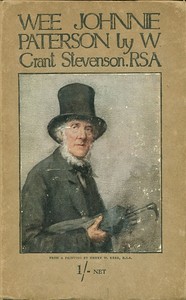
Wee Johnnie Paterson, & other humorous sketches
Language: en355 downloads on Project Gutenberg
Subjects
In: Short Stories·Humour·British Literature
Public-domain ebook sourced from Project Gutenberg #76637.
Public-domain ebook
Language: en355 downloads on Project Gutenberg
Subjects
In: Short Stories·Humour·British Literature
Public-domain ebook sourced from Project Gutenberg #76637.
The opening · free to read
Mrs. Johnstone was a woman who had a bad habit of being unable to tell one story at a time; she was always branching off with parenthetical observations. One day she came to me in a state of great excitement and said, "Isn't this an awfu' thing that's happened to wee Johnnie Paterson?"
"I haven't heard about it," I said. "What is it?"
"Weel, I'll tell ye hoo it happened, John--tuts, excuse me ca'in' ye John--that's my man's name, ye ken; an' when a wummin's been mairrit for three-an'-twenty year--ay, it's a lang time! though I couldna wish a kinder or a better man than John--no--imphm; an' d'ye ken, we've seen some gey ups an' doons since I was mairrit. D'ye ken, I mind when the sugar was a shillin' the pund an' the loaf was eleven-pence--imphm; ay, bit that's no what I was tellin' ye though. What was't I was sayin', again? Ouay, aboot wee Johnnie Paterson. I'm sorry for the laddie, though he's a wild laddie tae. I'll tell ye hoo it happened: I was jist gaun awa' doon for a penny wuth o' soor milk tae the bairns an' John--for he's rale fond o' a drink o' 'soor dook,' as he ca's 't. He says he wudna gie a drink o' soor dook for a' yer beers; an' I'm share it's a great blessin', an' a hantle cheaper. There's Tam Wud's wife: I dinna ken hoo she manages to bring up her bairns, for Tam never gangs hame wi' his wages sober on a Setterday nicht; but I'm thinkin' the grocer kens, puir man! an' d'ye ken that's a thing I wudna like tae dae--no--imphm. Aweel, ay, bit that's no what I was gaun tae tell ye though. What was't again? Ou ay, aboot wee Johnnie Paterson, puir laddie! D'ye ken, I'm rale sorry for the laddie's mother tae. I'll tell ye hoo it happened: I was jist gaun awa' doon for the penny wuth o' soor milk, as I was sayin', tae Mrs. White, puir body! for d'ye ken, I aye like tae get my milk fae Mrs. White, for she deserves great credit for the way she's brocht up her family since her man was killed, seven year since, an' left her wi' five sma' bairns. Puir Tam White! he was comin' hame yae day wi' a cairt o' gress for the kye, an' disn't yin o' the wheels come aff, an' here was Tam landit on the croon o' his heid on a stane, an' he was fund lyin' deid--through pure laziness--ay, for if he hadna been sittin' on a loadened cairt he couldna a' been cowpit aff, ye ken. Aweel, ay, bit that's no what I was gaun to tell ye though. What was't I was--ou ay--aboot wee Johnnie Paterson. I'll tell ye hoo it happened: here am n't I gaun awa' doon for the pennywuth o' soor milk, as I was sayin', an' I had my wee bit bairn wi' me, an' it began tae whine an' greet, an' I couldna think what was wrang wi't, for it's a guid bairn for usual; an' when I lookit at the shawl that's roond it, isn't here a preen stickin' in't, and ye couldna expec' the bit bairn tae be guid, an' me makin'a preen-cushion o't. Ay! it's as guid a bairn's ever I had, an' I've had five; but three o' them's deid. Yin deid wi' its teeth, an' yin deid wi' its inside, an' yin deid wi' its granny, but it's a rale healthy place this though; they tell me it's eleven hunder feet aboon the level o' the sea. But I'm thinkin' that's jist a kind o' guess wark, for there's nae sea here tae measure fae; ay, ye'll find it a quiet place this, but d'ye ken it's naething tae the shepherd's hoose up the water; they're seven miles fae onybody, an' their wee bit lassie--a bairn twa year an' a half auld--she never had seen onybody in her life but her faither an' her mother, an' yae day there was a man gaun fishin' up the water, an' when she saw um she ran awa' into the hoose an' cries, 'Mother! there's something comin' up the water the same shape's my faither.' Ay, ye'll find it an aufu' difference fae Edinburgh. I never was in Edinburgh but yince. Me an' John--that's my man, ye ken--gaed awa' in tae see oor auldest laddie Johnnie, a sojer up at the Castle yonder; an' when we gaed awa' up, here he's walkin' up an' doon at the front door, an' I says, 'What are ye walkin' aboot there for, Johnnie? Wull they no let ye in?'"
"'Let me in! wummin; I'm walkin' here for a century.'"
"So John--that's my man, ye ken--he says, 'Are ye no comin' doon tae the Lawnmarket for a refreshment?'"
"'Mun,' says he, 'I canna leave my post.'"
"'Ta, gie that laddie a penny tae haud yer gun.'"
"Aweel, we gaed awa' doon tae the Lawnmarket, an' d'ye ken there was the awfu'est row ever ye heard tell o' when we gaed back, for leavin' the Castle in chairge o' a wee laddie. Ay, bit that's no what I was gaun tae tell ye though. What was't I was sayin', again? Ouay, aboot wee Johnnie Paterson. I'll tell ye hoo it happened. I was gaun awa' doon for the pennywuth o' soor milk, as I was sayin', an' jist as I was gaun roond by the back o' the auld quarry--d'ye ken, I aye said they should pit a palin' roond that place--here's a' the bairns comin' up greetin,' an'--is that a gig comin' up the road? That'll be the doctor's cairrage, I wager ye. I'll awa' doon an' see what he says is wrang wi' um."
And that is all I ever heard about the "fearful accident."
'Boys will be boys'; it is a great pity, but it is an evil we have to face. There is a great difference between the boys of last generation and the present,--not in favour of the latter. They have all the faults of their fathers, with new ones added. It is rather hard on the men of to-day, that when they were boys they were scarcely allowed to speak "in company," and now they never get a chance if there is a boy present.
With the improvement in education, the boy of to-day knows all about everything, and he is eager to make his elders as wise as himself. I have just had a week's experience with one of these walking encyclopædias, and my head is a jumble of statistics, chemistry, and general information, imparted from my nephew, who has been living with us. The first night he came I thought I would interest him by developing some photographs taken on a cycling tour. It did not strike me at the time that being a boy of to-day he knew everything, and I had at once to change the role of instructor for that of pupil. I was just about to start explanations of the process, when he said, "Yes, I know; Franky Scott in our class takes photographs; do you prepare your own plates?" "No," I said, "I buy them." "Oh! you could make them cheaper; I'll tell you how it is done. Nitrate of silver and bromide of potassium throw a white precipitate on the plate; the nitrate, being sensitive to light, receives a black impression of anything thrown on it; and if you want to know any more about it, I'll write to The Boys Own Paper." To preserve my dignity I had to pretend that I knew all about it, but hadn't time to prepare plates. I am sure, however, that before the week was over he saw through me, and felt that if he only had me under his care for a month or two he could make something of me.
Two ladies, who had come from Ayr to see the Exhibition, called on us, and in the course of conversation one asked when we were going to visit them at Ayr. But before I could reply the "encyclopedia" said, "Ayr, on the river of that name, celebrated in connection with the----"
"Hold your tongue," I broke in; but I heard him mumbling, "Poet Burns; population 24,000."
When they spoke of going to the Forth Bridge he set off again. "Its greatest span is 1710 feet, height above water 361 feet, while its total length is 2766½ yards."
He seemed delighted when it was arranged that he should go to the Exhibition with the ladies; and so was I, as I was not going. No doubt he was thinking of the amount of information he could give them, acting as guide; but he was rather crestfallen when he came home and told me that he stupidly, at their request, took them to the Women's Section, and could not get them out. He wanted to explain dynamos to them.
I remember when I was his age my ambition was to be an engine-driver, but he says he would like to be a professor of chemistry.
I think teachers nowadays make a mistake in adding logic to their subjects for study; there is more than enough of it inherent in boys. One night his mother was telling him how bad he had been, and asked if he would try to be good. Of course he promised.
"Well, will you begin to-morrow?"
"Oh! that's awfully soon," he said.
Ages may come and go, but boys will remain the same as far as anything bad is concerned. Give a boy an apple, and he will not enjoy it to the full till he finds another boy beside whom he can eat it, the other boy's envy bringing out its full flavour.
The other day I was going to Glasgow; and having no desire to go via Queensferry on the North British line, I went to the Caledonian Station. As I had a few minutes to spare, I was looking through the railings to the Lothian Road, when my attention was drawn to a boy dropping a copper into the tin dish of a blind man who was reading the Bible. The reading suddenly stopped; but before the man could put his hand in the dish the penny was quietly withdrawn, dangling at the end of a string. The operation was repeated, and the third trial convinced the man that he was being "sold." "There he's coming again!" said the boy. The man grasped a heavy stick, and just as a minister was passing he received a firm broad cut across the middle of his vest. As soon as he recovered he looked about for a policeman to give the man in charge, but I hurried down and explained to him. I may have been mistaken, but I thought I recognised him from a sketch I had seen as one who had taken a prominent part in the Queen's Park Demonstration, and I strangely seemed to forgive the boy, who however had not waited for pardon.
My nephew was not long in the house till he had examined everything, and among other things he fished out an old album with a musical box attached. I had put it aside some years ago as broken. "Put it out of the way," I said, "it's useless." But this only added to his curiosity: he took it to another room, and soon brought it back, playing at a furious rate, as if glad at being released, and anxious to make up for lost time. I hate musical boxes. One never knows what they are playing, and, like boys, they seem anxious to exhibit all they know. An explanation of what had been wrong was given to me in a tone which showed my informant saw that mechanics was another thing I knew little of. The disconnecting action of the swivel had--something or another, I forget what; but all that was required was--something else. I said I had never bothered about it, which was quite true; but I am sure he felt I could not have mended it if I had tried.
The pace of the tunes gradually got slower, and what at first seemed to be a hornpipe was now like a dead march. Then it seemed to be going to sleep, and a note only came out now and then, and it slept, but not for long; he had found that the key of the dining-room clock fitted it, and he wound it up again.
"Oh! take it away," I said; and he went off to the next room, but no doors could keep out the sound.
A happy thought occurred to me: I would give him a pistol to keep him quiet. (When I was a boy I was the envy of all my companions, being the possessor of a shilling muzzle-loader. But here was a breech-loading Tranter: how much greater would be his delight!) I called him and said, "There's a pistol and a box of cartridges; go out to the garden and see if you can shoot a crow." I expected he would receive it with delight, but he looked at it with the air of a connoisseur and said, "Franky Scott has a pin-fire." I explained that this was a later and better invention, and he seemed pleased that he would be able to "take the bounce" out of Franky Scott when he saw him. He seemed to be having good sport, judging by the number of shots he was firing, and it was not much of an improvement on the musical box. When he came in to dinner he said it was a "stunner." He did not shoot well at first, but after a little he could strike the label on a box, and some of the bullets went right through.
The book keeps going
Reading is free forever. Sign up and watch scenes appear while you read.



Scenes Storieta drew for other classics.
New illustrated classics
Once or twice a month: the latest books to get full character casts, scene art, and free comic editions. No account needed.