About this book
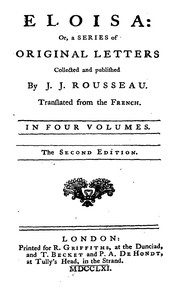
Eloisa, or, A Series of Original Letters is an epistolary work by Jean‑Jacques Rousseau that unfolds as a sequence of intimate missives between a young woman and her lover. The opening letters already reveal a preoccupation with the loss of “native simplicity” in their correspondence, a shift from sincere, passionate exchanges to strained, artful dialogue. The narrator laments the erosion of genuine feeling, contrasts past “Halcyon days” with present “violent emotions, disquieting fears,” and sketches a tangled web of familial constraints, secret meetings, and the anxiety of social scrutiny. The letters move from philosophical reflection on love’s purity to practical schemes for clandestine encounters, establishing a psychological portrait of desire caught between personal honor and societal expectation.
The prose is unmistakably eighteenth‑century French, translated into English with a formal, ornate cadence that mirrors the period’s emphasis on rhetoric and moral introspection. Rousseau’s voice oscillates between earnest confession and rhetorical flourish, offering a blend of psychological depth and social commentary. Readers who enjoy nuanced explorations of love, gender dynamics, and the inner life of characters, especially those drawn to the intensity of letters as a literary form, will find this work compelling. It appeals to admirers of classic French fiction, scholars of epistolary narrative, and anyone fascinated by the tension between private passion and public decorum.