Public-domain ebook
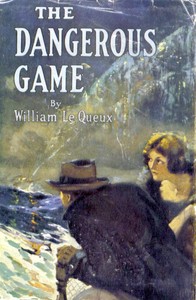
The dangerous game
Language: en4,524 downloads on Project Gutenberg
Subjects
Public-domain ebook sourced from Project Gutenberg #78029.
Public-domain ebook
Language: en4,524 downloads on Project Gutenberg
Subjects
Public-domain ebook sourced from Project Gutenberg #78029.
The novel opens on the sun‑lit promenade of Corfu, where the celebrated writer Charles Seton Darville, described in the catalogue as a detective, mystery and spy author of the nineteenth‑century English fiction tradition, spends his winter mornings drafting a new romance. Darville, a globe‑trotting bachelor famed for his under‑world knowledge, is introduced amid a cast of expatriates: the married Mrs Caborn, her enigmatic husband George, and a host of social acquaintances. The opening scene details his routine of early rising, cigarette‑smoked contemplation, and a flood of fan letters, before a mysterious, bold‑handed missive from “Edris Temperley” triggers a sudden, private turmoil that propels him into a web of intrigue. The narrative quickly shifts from leisurely seaside strolls to a covert investigation of a sudden departure, hinting at the “dangerous game” of deception that will unfold.
Written in the brisk, descriptive prose of late‑Victorian adventure tales, the book blends the author’s self‑aware wit with a plot that hinges on secret codes, telegrams and the shadowy motives of travelers. Its tone is simultaneously genteel and suspenseful, reflecting the era’s fascination with travel, high society, and espionage. Readers who enjoy atmospheric settings, a protagonist whose public fame masks private obsession, and a story that weaves romance with a detective’s puzzle will find this work engaging. Those appreciative of period‑specific dialogue and the blend of social satire with a subtle mystery will be most drawn to its pages.
The opening · free to read
They had already been there nearly two months, and a friendship had sprung up between them. Both were there for the winter warmth and sunshine. The man was a bachelor and a thorough-going cosmopolitan, who spent his whole life in continuous travel, while the woman was married to a rather good-looking man about five years her senior, whose actual nationality was somewhat obscure, but who was probably a Greek, though he spoke English almost perfectly, as so many educated Greeks do.
The thick-set Englishman, smiling and care-free, was one of the most popular of English novelists, whose name was known in every country throughout the world, Charles Seton Darville. In every bookshop and bookstall on the five continents his works were sold, for they were translated into many languages, even into Arabic and Chinese. In order to obtain the correct local color for his books he was a constant wanderer to and fro across Europe, meeting many people and having many adventures in all sorts of odd corners of the Continent.
The British Prime Minister had once said of him that he knew more of the underworld of Europe than any living Englishman. Certainly Seton Darville turned his unique knowledge of men and matters to good account, as witness the high pitch of excitement with which his books were always written and his descriptions of places and peoples. Hence they sold by the hundred thousand, and brought him in a very considerable income.
He was, however, a very lonely man. Though merry and easy-going to a fault, a careless wanderer who journeyed to and fro with scarcely a single care, he was possessed of a certain little idiosyncrasy which his friends never suspected, for there was another more serious and more strenuous side of his life that he never revealed. The public regarded him as a popular and prosperous novelist--hence he was ever welcome in London society, and hostesses were constantly seeking him out and begging him to grace their tables and their dances.
Because of his awful loneliness amid the vortex of society he had, years before, adopted as his daughter, Rene, a little girl left penniless and alone. Upon her the strong, self-willed man had showered all his affections, and petted her as his own child. But now, ungrateful perhaps for all he had done for her, she had married, and left him again with that terrible loneliness which his friends never suspected.
In such a mood, he was that morning killing time by chatting with little Mrs. Caborn, who, dressed ready to go out, was awaiting her husband. There had been a ball at the Casino on the previous night, and they were discussing it. From where they stood there was presented through the long windows a fine view of the harbor and the azure sea sparkling in the morning sun. Of all the islands in the Adriatic, Corfu is the most picturesque and beautiful, calm and glorious, with its riot of flowers, a veritable paradise for those seeking sunshine and peace.
Darville always rose early. Since the first flush of dawn across the sea he had been writing in his room, busy upon a new romance which he had contracted to write five years before. The popular novelist is always full up with contracts from eager publishers who vie with one another in the matter of increased royalties and who give him commissions years ahead. The scenes of this forthcoming book were laid in Italy, but he had resolved to write it in that sea-girt paradise, away from the bustle of modern life and the distractions of his friends.
After a few moments a rather tall, thin-faced man, with a small, dark mustache, a pair of beady eyes and features unmistakably foreign, joined them. He was George Caborn, the woman’s husband. Though he bore an English name he was undoubtedly a Southerner, but that was explained by the fact that his grandfather had been an English merchant who had settled in Athens.
“Hulloa, Darville!” he exclaimed merrily. “You’re up early!”
“Yes,” laughed the novelist. “I went to bed at four, and up at six. I’ve been busy writing ever since.”
“We’re going for a stroll; will you join us?”
Darville accepted the invitation, and for an hour the trio strolled along the sea road, with its wonderful profusion of palms, aloes, oranges, wild geraniums and other flowers in full blossom, even though it was winter.
After lunch the novelist, as was his habit, ascended to his room with his five-day-old English newspaper, and, throwing himself into a deep arm-chair, lit a cigarette. But, instead of reading, he lay back with his eyes fixed upon the blue sea, engrossed in thought.
He was puzzled by Joan Caborn, whom he had first met at winter sports at Wengen, in Switzerland, the previous winter. At the same time he held her foreign-born husband, whom he had not seen before this winter, in considerable contempt. The Anglo-Greek seemed to neglect his wife in favor of a stout, flashily-dressed widow named Madame Texardis, hence he and Joan Caborn had been thrown much together, and frequently went for walks alone.
Darville, constant traveler that he was, had had many adventures with women. He was of a type that appealed to them, and yet actual affection he had never experienced. He who wrote so constantly about Love jeered at it, and in his own heart declared that, because he had never experienced the symptoms, it was a non-existent disease. He had declared one day in the Savage Club that Love was only the bacillus of Lust.
That afternoon, examining his own heart and analyzing his feelings, visions of the past arose of a pretty young society woman in London who had been his friend ever since her schooldays, and who now had married a wealthy peer and was one of the leaders of an exclusive and somewhat go-ahead set. On her marriage, a year before, their many years of intimate friendship had ended, and that was the secret of his terrible loneliness and why he drifted hither and thither caring for nothing and for nobody.
He was aroused from his reverie by a page-boy who brought his letters, which had arrived by that day’s mail-boat from the mainland at Brindisi. They were in one large registered envelope, having been forwarded by his secretary in London. He drew a sigh when he saw the bulk of the packet. His trusted secretary had already dealt with all he could, and had sent on the remainder for him to see himself.
As he drew them out, he found the usual budget that every popular novelist daily receives. Invitations, piteous begging letters, polite applications for autographs, flattering letters from unknown readers, bundles of press-cuttings, requests to send autographed books for bazaars, and copious effusions from cranks of all sorts and both sexes. One by one he glanced at them and cast them on the floor beside him.
Suddenly he came to one unopened. The envelope, in an unusually bold feminine hand, was addressed to his club in London. He tore it open eagerly and read its contents. The letter was signed “Edris Temperley.” It began, “Dear Mr. Darville,” and stated that she was leaving London for winter sports in Switzerland as usual, and expressed a hope that they would meet at the Palace Hotel at Wengen as before, and she also expressed a hope that they would all have as good a time as last season, and that Mrs. Caborn would be there again.
He read it through twice, and then slowly tore it up. Afterwards he sat pale and motionless for some minutes.
“No!” he muttered. “True, I love Switzerland, but I can’t go to Wengen again. If she were not there, I’d go. But what is the use? It would only be painful to me--far too painful. I won’t reply. It is best so.”
And, rising, he paced the room, his countenance hard-set and grave, his eyes sad, his clenched hands trembling. Receipt of that letter, at that most inopportune moment, had recalled a brief but sweet romance of a year ago amid the Alpine snows, with its ski-ing and tobogganing, its peals of youthful laughter, and the joie de vivre. But all thought of the gay, handsome English sports-girl, with the dark, shingled hair, he wished to cut out of his life. Indeed, he had tried not to recollect her, until now her letter had revived the sweet little romance of the previous winter, and how it had suddenly ended when one day she had admitted to him that she had been engaged but it had been broken off; that her late lover was returning to London in a few weeks, and there was every prospect of a reconciliation.
Her words came as a severe blow to him, but he concealed his feelings, and a week later had left Wengen, determined to think no more of her. That letter, however, instantly revived all his recollections and longings. He remembered how independent and yet how sweet she had been; how open and straightforward, as an open-air girl should be; and how he had found that their ideas and ideals were all exactly in common.
“Folly! Sheer folly!” he muttered to himself, as he stood looking out across the shimmering sea. “No. To go to Wengen this year would only bring unhappiness to us both. She is, no doubt, happy. Why should I step in and try to attain the impossible? Love! Bah--I’m a fool! Yet there is no love. Poor little Rene--and she has left me--married, and now I’m forgotten!” he added, choking down a sob.
Tears welled in his eyes as he stood there, a great popular figure in the world, yet nursing his heavy sorrow in secret. In public he laughed happily, with his devil-may-care mannerisms, and presented a brave heart and a never-ceasing bonhomie towards the world.
For fully ten minutes he remained with knit brows and serious face, as, torn by his emotions, he stood motionless with hands still clenched. Then, gathering up his letters, he tossed them into his leather dispatch-case, locked it securely, and, taking a light coat, ordered a car and went out for a run across the beautiful island to the opposite shore where the gray, rocky coast of wild Albania lay upon the horizon.
He halted at a small rural wine shop and drank a couple of glasses of the excellent red wine made upon the island, and later on, drove back to the town in the glorious, golden sunset.
That night, on entering the big salle à manger of the hotel, he noted that Mrs. Caborn was sitting alone. She beckoned to him and said:
“Do come and sit here, Mr. Darville. My husband has left for Italy. He had an urgent telegram this afternoon, and was just able to catch the mail-boat!”
“Gone?” exclaimed Darville in blank surprise which he failed to conceal. His exclamation was indeed one of consternation.
“Yes,” she replied looking up at him with a rather strange expression. “Are you very sorry?” she asked in a low, appealing voice.
“Of course not,” he laughed, instantly recovering his surprise. “How long are you to be alone?” he inquired, smiling, as he seated himself in her husband’s place at the little table à deux.
“Oh! about a fortnight, I think. He suggested I should stay, as he has to travel on business up to Milan and Zurich, and he thought, if I remained here, I should be more comfortable than traveling continuously, as he is sometimes forced to do.”
The book keeps going
Reading is free forever. Sign up and watch scenes appear while you read.



Scenes Storieta drew for other classics.
New illustrated classics
Once or twice a month: the latest books to get full character casts, scene art, and free comic editions. No account needed.