By what strange circumstance does a little Parisienne find herself in the midst of the Australian bush?
For the very simple reason that my guardian, Mr. Deslandes, is the happy owner of a big station, Gwylata, on the banks of Lake Alexandrina, in South Australia. “L’oncle aux millions,” as my school-mates used to call him, whose arrival in Paris was the signal for a short but intoxicating whirl of pleasure when the head of the little orphan was somewhat turned with boxes at the “Opera,” at the “Comédie Française,” suppers in “chic restaurants,” visits to grands couturiers, where I found myself the delighted possessor of frocks very much too smart for a school girl, and one never-to-be-forgotten time--a delirious fortnight at Cannes and Monte-Carlo.
“Come, come, little girl; breakfast will be quite cold,” calls my uncle. I glance at my precious luggage, piled up on the verandah, as the big lumbering vehicle starts noisily on its journey.
Unfortunately, in returning to my seat I indulge in a “pirouette,” to the intense astonishment of an old servant, who nearly lets fall a tray as she glares disapprovingly at me.
“Well, Meg, says my uncle; you have come for your mistress’ breakfast. Has she an appetite this morning?”
Taking up the laden tray, the old woman throws me a spiteful glance, and mutters between her teeth, “French dancing girl!”
Perhaps it is just as well that my uncle is a trifle deaf, the dear man, and does not hear the remark.
“Now you have seen the real mistress of Gwylata, Jeannette, ‘Old Meg,’ who directs everything here and holds us in ‘the path of virtue’ with an iron hand--Meg, your aunt’s faithful maid for thirty years, and now the right hand of Molly, who has given the reins into her hands completely.”
“She abuses the confidence”; I say it with conviction.
“Oh, no! Under a thorny exterior there beats a kind and devoted heart. She would suffer martyrdom herself and sacrifice everybody for Molly, and, above all, for Hector.”
The Reverend Hector Armstrong is the son of my aunt by a former marriage, and inherits her religious feeling (for she is awfully pious, my dear Aunt Molly, I have heard). In charge of the Murray mission, he has established his headquarters at Gwylata and thrown himself into the heroic task of saving the souls of the benighted settlers scattered along the course of the great Australian waterway.
My eighteenth birthday! My aunt has just asked for me. I find her in the little morning room, where, reclining on a lounge, she passes the greater part of her days.
After some affectionate inquiries about my comfort, she says:
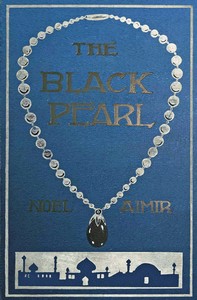
“I want to give you a black pearl which I have been keeping in trust. It belonged to your mother, and will have a double interest for you when you know its history. I have had it attached as a pendant to a string of pearls of my own, which will look much better on your white neck than in my casket.”
I open the box which she hands me, and cannot repress an exclamation of wonder and admiration. In it lies a necklace composed of exquisite pearls, some white and milky, others gleaming opalesquely in tints merging from grey to rose.
But the gem of the collection is the pendant--a black pearl as large as an olive, and perfect in form and lustre.
“Oh, aunt! It is fit for a queen!”
“My dear child,” she resumes with her delicate melancholy smile, “I have no daughter to wear them. Pearls are feminine, it is said, and want light, heat and the magnetism of soft, warm flesh, or they lose their colour and die.”
“Then I’ll wear them every day,” I return, kissing her.
“This black pearl belonged to a Begum,” adds my uncle, who had entered a few minutes before. “It belongs to you now by right as the descendant of the Hindoo princess. It is the only souvenir which remained to your mother of her great ancestress, the Begum Jeanne, wife of Dupleix, from whom she was so proud to have descended. You are named after her, Jeanne.”
I take the necklace into my own room, and gaze at it long, thinking of the woman whose memory has been treasured so carefully in our family. When quite a child I loved to hear my mother recount the exploits of the famous Dupleix, his fighting in India, his disappointment and despair when abandoned by all save the Begum, the intrepid companion, whose confidence and devotion lightened his darkest hours.
Is this strain of Hindoo blood in my veins responsible for the anomalies of my character, for the struggle which sometimes ensues between totally dissimilar qualities of my being? The dreamy disposition of the Oriental mingled with the vivacity of the Frenchwoman; the love of light, flowers and perfumes; the desire of being loved and caressed which made me spend whole hours in my mother’s lap, the need of devoting myself to someone or something; the keen suffering I experience when I find myself in a chilly atmosphere of indifference. Is all this simply atavism, the Indian princess living again in the Frenchwoman of the twentieth century?
It’s a little soon to express an opinion, but I believe I shall like this Australian life, all liberty, sunshine and fresh air. How amusing are its contrasts of primitive simplicity and old-world elegance, superimposed upon a solid background of English custom! Wherever on our planet two or three Englishmen have planted their flag, it becomes immediately a little corner of Old England--the same customs, same food, same dress despite the differences of climate. In the unconscious pride underlying the belief that all customs are perfect because they are English, there is betrayed a certain strength of character and will which refuses to be influenced by environment. Sometimes it is pushed to extremes and becomes exceedingly funny.
Last Monday, Daisy, the daughter of the intendant--manager, as he is termed here--took me to Wellington in her dog-cart, a smart little turnout which she drives in dashing style. (I shall certainly have to learn to ride and drive.)
We had to make purchases at the “Store,” where everything is stocked, from a morsel of cheese to a flamboyant hat.
On the road, I remarked a cottage where the wife was doing the family washing, hanging the clothes on ropes suspended between gum trees, which apparently serve many purposes. A little further on was another cottage and another washing display. Arrived in the township we saw every back yard decorated with sheets, shirts and various small things, white, blue and red, waving gracefully at the will of the summer wind.
“What a coincidence!” I murmured, wonderingly, to Daisy.
“But,” said she, quite simply, “it’s Monday, isn’t it?”
“You don’t mean that Monday is dedicated to washing as Sunday to rest?”
“Certainly. There would be a fine to-do with the servants if a mistress wanted them to wash on any other day. She would be regarded as eccentric and suspected of all sorts of misdemeanours.”
I could not help laughing at the idea of all the clean linen of Australia hanging on the line at the same hour of the same day throughout the Continent.
“If the inhabitants of Mars could see us, Daisy, this sudden white blossoming might well puzzle them. I am sure that a Martian savant ere this has discovered the cause, and explained it as a ceremony celebrated in honour of our satellite.”
Despite my laughter, there remained at the back of my consciousness a certain admiration for the sentiment of order and voluntary submission to established custom--the only domination these independent people will acknowledge.
The Reverend Hector
Qu’on vante en lui la foi, l’honneur, la probité Qu’on prise sa candeur et sa civilité Qu’il soit doux, complaisant, officieux, sincère, On le veut, j’y souscris.... BOILEAU.
Oh, dear! How well I understand the feelings of the Athenian who voted for the banishment of Aristides. The poor man was so tired of hearing him called “The Just” that he must have welcomed this means of getting rid of him.
Not that I wish to exile the Reverend Hector.
For one thing, it would not be of any use. Absence does not stop the everlasting pæan of praise, for as it is, he is scarcely ever at home.
He has not returned from the mission station since my arrival, consequently I know him only by reputation.
But what a reputation!
From my aunt I can understand it.