Public-domain ebook
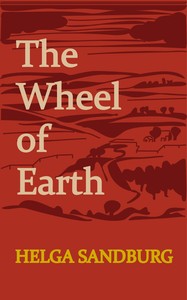
The wheel of earth
Language: en8,669 downloads on Project Gutenberg
Subjects
Public-domain ebook sourced from Project Gutenberg #78102.
Public-domain ebook
Language: en8,669 downloads on Project Gutenberg
Subjects
Public-domain ebook sourced from Project Gutenberg #78102.
The Wheel of Earth is a piece of mid‑century fiction that centers on the daily rhythms of a Kentucky farm, seen through the eyes of sixteen‑year‑old Ellen Gaddy. The opening scene places Ellen gathering tart June apples beneath an alder tree, her hands coarse from labor, her hair braided yellow, and a dog named Jack at her heels. From there the narrative expands to describe the farm’s aging structures, the lineage of the Gaddy family, and the chores that fill Ellen’s afternoons, feeding goats, tending chickens, and navigating the expectations of a mother who avoids sunlight after a long illness. The prose sketches a vivid tableau of rural life, grounding the story in concrete details such as the almanac’s gestation table, the hand‑cut nails of the 1870 barn, and the chorus of hawks circling the fields.
Written in a straightforward, descriptive style typical of 1950s American regional literature, the novel’s voice is both lyrical and matter‑of‑fact, blending poetic observations of nature with the practical concerns of farm work. Its pacing is deliberate, allowing readers to linger on the textures of the landscape and the inner world of a young woman on the cusp of adulthood. Those who appreciate richly detailed settings, coming‑of‑age stories, and a glimpse into mid‑western agrarian culture will find this book engaging, especially readers drawn to strong female perspectives and the quiet drama of everyday life.
The opening · free to read
Ellen Gaddy was gathering tart stunted June apples into a peck basket. Drifts of cloud were passive in the blue dome above, where hawks were wheeling. The late afternoon sun was warm on her tanned neck. The dog came up barking, stood close to her, tongue slavering, eager. She patted him and he went to curl under a tree. “There, Jack.” He was half shepherd, sensible in the ways of the farm. Ellen was his choice among the humans so he was restless apart. His limpid eyes were fixed on her as she hunted in the tall grass. Her hands were small and coarse, and in wiping sweat from her face she had left careless dark streaks. She was sixteen, the cups of her breasts hung firm, her belly was small. She wore her yellow hair in braids. Her mouth was facile, somewhat obstinate, and her forehead was high, its creamy texture darkened by the season’s sun. A tiger swallowtail like a falling yellow leaf was drifting by. She sighed to it, “Bear me good news.”
The old brook that fed the farm’s pond was near the orchard. Pebbles lying in the uneasy clear water were glossed, tangled twigs and leaves were forced downstream in complaining whirlpools, marsh grasses along the bank strove for footing in the cruel plashing current. Ellen was shaking tree branches, the fruit rattling about her. Today Penny was due to drop her kid. She had looked it up in the almanac. Gestation Table, She-Goat, 151 days. The kid will follow me, making small noises, wanting to play.
A question of smoke was rising from the yellow farmhouse over the hill, set among black gums, hackberries and locusts. The red barn and outlying sheds held the crest of the rise, settling more firmly with each passing year. Occasionally Anton Gaddy, Ellen’s father, must shore up a door frame or strengthen a sagging rafter, but the buildings would stand long after the people. The barn had been hammered together with hand-cut nails and wood pegs by Ellen’s grandfather in 1870. Some of the outbuildings had been raised in 1846 by his father, a Frenchman who had homesteaded this tract in the year of the Irish potato famine. Back of the yellow house, crowded about by dayflower weeds, were two beehives that would mount tall in summer as the hive supers, one at a time, were stacked upon those laden with combs of honey. There too lay rows of vegetables that Ellen and her younger sister, Frankie, kept clean. Maria Gaddy, their mother, never undertook outdoor chores unless the day were pale or clouded, for she had been sun-struck ten years ago, in 1915, “I dassn’t go out but for Sunday mass,” Maria would claim; “it makes me queer to feel the sun.”
In the valley below the hill was the orchard where Ellen was gleaning apples. Back of it stretched the small woods, where gray squirrels were hunting wild berries and mushrooms. They did this daily in the span of hours from sunrise until mid-morning, and from mid-afternoon until sunset. And overhead red-shouldered hawks would circle, sharp eyes searching branches and boles. A large male squirrel was aware now of a vixen fox crouched in hunger below his tree limb. His black eyes glittered and he lifted his paws, prating at her. He forgot his foes in the sky for a moment. The long wings of a wheeling hawk folded, like a stone it dropped. Ellen raised her gray eyes, watching it rise from the woods, prey dangled in its talons. The other hawks were screaming, “Kee-yoo. Kee-yoo!”
Ellen’s mind was on her young goat. She had warned her, “Now don’t walk under the horses’ heads or for a fact you’ll go eleven months.” Sam Offut had told her that. “So they warn a ooman with child hereabouts, Ellie. See, it takes a mare that long to have a foal and she’s got a power in her when she’s carrying.” Ellen didn’t believe him—Sam told many tales. Penny’s time was up and she was seeking a place to drop it. This morning Ellen had seen that her tail was sunken so there were sockets on either side, and the young sagged low. “There. Maybe she’s freshening now.” Ellen snatched the two baskets of June apples, running in her long skirt through high grass into a new-turned field, up the hill toward the barn. Her bare feet sank into the red soil leaving huge tracks. The dog was yapping, caught in the game.
In a corner of the woodshed she had made a stall, nailing bars and hanging a gate with a latch that the goat could not open. It blatted as she set down her baskets and opened the gate. She knelt beside it in the wheat straw to feed it an apple. Her father’s hired girl, Penny Dougherty, had given her the brown animal, then but a yearling, before going away last summer. Ellen had named it after the girl. It slobbered, chewing on the crisp fragrant fruit. Then it snuffed her forehead and ear, began to lick her face, making soft stuttering sounds. Ellen ran her hand along the curves of the slender horns. It shook its fine-boned head. She stroked the beard. “Say, I’d love a little doe, Penny.”
Ever since Penny Dougherty went away Ellen would sit talking to the namesake goat. Her father had hired Penny last summer to help his wife during a sick spell. Then Penny had left them, married Luke Dougherty, gone to the town of Weems Crossroads way off in Illinois. Because she sang so much, Anton Gaddy had dubbed Penny “that roaring ooman.” But Ellen had grieved over the end to the short friendship. She would sing the songs she had picked up from Penny, gay tunes, meaningless, and lengthy ballads that told of sudden death and unfulfilled love.
I dreamed of my true love last night All in my arms I had her Her yellow hair like strands of gold Came rolling down my pillow
Ellen was lonely. Her mother gave her small heed. Her father, as well. He had turned from her at birth, waiting for a son. Then when Ellen’s sister had been born and Anton learned from his wife that she would be barren thereafter, he named the baby Frankie, and fastened himself upon it forthwith. His voice was heard now, overriding the gentle tune, “Girl, where you at? You got the apples? It’s time to feed.”
“Coming, Pa.” At the corncrib she took an armful of ears and shelling them, fed a flock of ducks and geese, the first of her chores each late afternoon. They were free to roam the barnyard, making nests and raising young at will. One wing was clipped every so often to keep them in the safety of the yard. Heads bobbing, the fowl were shoveling the grain with flat bills. The white ducks made a nasal chatter, a gray gander lowered its head and wove its long neck like a snake, hissed and raised its wings at Ellen. “Don’t you squall at me.”
She kept back one ear of corn, went to the plowed field she had raced through earlier. There she gave a call and from the pond came an answering beat of wings. A Muscovy duck was flying up the hill. It circled Ellen, flapping to a halt at her feet, gathering its wings. Its red-wattled head was cocked to one side. She scattered the corn. “Why don’t you come to the barnyard and be tamed, you wild one?” It was watching her with a wary eye, eating the yellow grain greedily.
She looked off at the Kentucky farmland stretched before her. Orange clouds were assembling behind the brush line of tiny trees. The square fields were hemstitched with stone walls and rail fences. Near the barnyard a black gum was rearing gaunt limbs. When a crested redbird’s dark silhouette dipped through the fragrant orange air into its ragged branches, she was shaken by the sudden beauty. She turned quickly, saying to the feeding duck, “I don’t know. Seems I hate every enduring thing.”
She fed chickens that congregated in the stony yard. She filled their water bucket from the pump, watched the speckled hens dip their beaks and up their heads to let the water run down. She collected brown eggs in a fold of her dress, from boxes nailed along the cobwebbed wall. A hen pecked her wrist as she reached under it for heated eggs. The bird’s breast was hot, bare where it had plucked feathers to line its nest. “You’re broody. Sam’ll put you under the pump to break you up.”
She went up the stairs to the farm kitchen and counted the eggs into a basket. “The hens are laying good, Ma. I’m just one short of four dozen. I’ll trade them tomorrow at Love’s store.”
Maria Gaddy was turning from the stove. “I allow you can get me a length of lace too, Ellie. I need a new collar for mass. My old one’s sleazy.”
Ellen’s mother wore her gray-streaked hair in a tight knot. Her body was warped and thin and stiff. It had turned from what it might have been. Her breasts were flattened and she had swathed herself in a long-sleeved, high-necked print dress that came to her ankles. Her stockings were wrinkled above run-down button shoes. Maria lived in continual retreat. She had been given to her husband with the awesome dowry of fifteen hundred dollars. With it Anton had bought his rights to this farm from his only living brother, Garland. Maria spoke now, “Go get some new water, girl.”
Ellen emptied the blue-enameled pail into the sink. The kitchen was roomy. There was a kerosene stove for summer use and a huge range for winter heat and cooking. A black-painted iron sink stood at the side away from the windows. There was no running water but a drainpipe took away the waste. Fresh water was supplied by a well a hundred feet from the house, to which Ellen went. She drank from the dipper before returning. The family was proud that the water from this well was always sweet and cold. At the windowed end of the kitchen was a long table of red oak that had been dressed with ax and adz long ago by Anton’s father, Jules. The surface was whitened from lye-scrubbing, uneven from the years’ wear. On it was a blue dish of poplar honey, a bowl of salt, a milkglass jar of knives, forks and spoons stacked handles down. A pantry was adjacent to the kitchen, where staples were kept—sacks of flour and meal, curd cheeses that hung in cloths from the rafters, milk that stood in pans and jars to be skimmed, and cream that ripened in a churn. More supplies were stored in the cellar. There dusty shelves were holding jars of jelly, jam, ketchup, honey, red and yellow tomatoes, chard and collard greens, peaches, fried chicken and beef. On the lower shelves were tins of lard. From the ceiling dangled strings of dried apples and quinces. On the dirt floor of a bin, potatoes left from fall softened and rotted in the musty darkness. Root crops of salsify and parsnips lay neglected.
From the parlor came the familiar sound of Frankie practicing the piano, scales and exercises rippling. Ellen carried a can of kerosene from the porch where Sam had placed it to the parlor to replenish the lamps. Over the fireplace a velvet cloth was framed, on it depicted the Golgotha crucifixion in brilliant primary colors. An overstuffed sofa, Maria’s knitting basket at the end, was along one wall. The chairs included a doweled high-backed rocker. A round table bore on its lace-covered surface statuettes of the Virgin Mary and Joseph, a worn Bible, a lamp with painted forget-me-nots trimming the bowl, besides dog-eared farm journals, the 1925 Farmer’s Comprehensive Almanac, and a silver-banded reading glass. Braided rugs were scattered over the oak floor, once smoothed with broadax. On a wall was a tinted daguerreotype of a stunted wiry man with heavy chin and thick lips, Jules Gaddy. Beside him posed his red-haired wife Nell, whose long face, high forehead and determined mouth resembled her granddaughter Ellen’s. While Jules had been rearing this house, the couple had lived in an outbuilding that now served for a pigstall. Back of the piano hung a representation of the bleeding Sacret Heart. Nell Gaddy had placed it in that spot long years ago, saying to Jules, “Now there, little feist, it’ll stay.”
The book keeps going
Reading is free forever. Sign up and watch scenes appear while you read.



Scenes Storieta drew for other classics.
New illustrated classics
Once or twice a month: the latest books to get full character casts, scene art, and free comic editions. No account needed.