Public-domain ebook
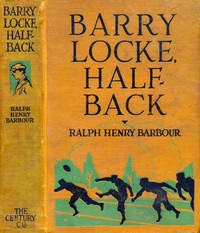
Barry Locke, half-back
Language: en7,191 downloads on Project Gutenberg
Subjects
Public-domain ebook sourced from Project Gutenberg #78118.
Public-domain ebook
Language: en7,191 downloads on Project Gutenberg
Subjects
Public-domain ebook sourced from Project Gutenberg #78118.
The novel is a juvenile sport story that follows fifteen‑year‑old Barry Locke as he arrives by train in the small Connecticut town of Wessex, hoping to begin a new term at Broadmoor School. The opening places Barry on the platform, his brown eyes bright with anticipation, while the bustling crowd of boys and the clatter of the train fade into the background. He is greeted by his friend Clyde, who quickly assumes the role of guide, ushering Barry through the town’s streets, past a modest farmhouse, and into a modest boarding room that falls short of the dormitory he expected. The narrative is rooted in the everyday details of travel, friendship, and the disappointment of a less‑than‑ideal lodging, setting up a story that will trace Barry’s adjustment to school life and the football field.
Written in a straightforward, early‑20th‑century style, the prose captures the earnest voice of a young protagonist discovering a new environment. The language is plain yet descriptive, with a focus on dialogue and the inner thoughts of a shy but eager teenager. Readers who enjoy period school tales, light adventure, and stories that blend the social world of a boarding school with the emerging popularity of football will find this book appealing. It offers a glimpse into the values and concerns of its time, friendship, loyalty, and the excitement of sport, making it a pleasant read for fans of classic juvenile fiction and early athletic narratives.
The opening · free to read
“Wessex! Wessex! Change for Sanborn Mills, Mount Sippick, and Alden! _We-e-essex!_”
The station threw a welcome shadow and the train stopped. Barry descended, his brown eyes alight, a smile, slightly shy, already curving his lips. Others, crowding about him, sent him deeper into the shade of the platform, his gaze still questing. At least a score of boys had alighted, and these, mingling with almost as many previous occupants of the platform, made for sound and confusion. Friends parted since June sighted one another with loud hails and plowed determinedly toward a reunion, heedless of all between.
No one, however, took notice of the fifteen-year-old boy who, puzzled and disappointed, still viewed the fast thinning throng. He was worth notice, too. Very straight he was, and rather slender; although the slenderness suggested the process of development rather than the lack of it. He had brown hair, and eyes that may have been intended to match it but didn’t because they were very much warmer in tone. Rather arresting eyes they were, and perhaps the best feature of a countenance which, while in no way suggesting the classic beauty of Apollo, was undeniably attractive. The nose was a perfectly good nose, but you had to stop there; and the mouth was all right, too, and had a nice smile; and there was the usual chin and forehead, and a coating of tan, and――well, that’s about all there is to tell――and I haven’t made you see John Barry Locke as he really looked, after all.
I fancy it was Barry’s expression rather than his features that made folks warm to him and want to know him and do nice things for him, and expressions are difficult to portray in print. Perhaps the simplest way to describe him is to say that Barry looked, in his boyishly eager yet shy fashion, as though he were ready to like everybody else! Yes, I think that was the secret of his attraction――just friendliness. And yet there was something beyond that, too; something promised in those deep-brown eyes that looked at one so straightly. Maybe it was loyalty.
The last flivver had honked off into silence and the afternoon’s event, the arrival and departure of the four-eighteen train, had passed into history. Barry gave up his quest and followed the route taken by the others, along the platform to the corner of the station and thence across an area of sun-smitten gravel to the main thoroughfare of Wessex. His suit-case wasn’t heavy, and he wasn’t going to mind the walk; only, he didn’t understand why Clyde hadn’t met him as he had promised. And then, quite abruptly, Clyde was there.
Clyde was rather warm of face and a trifle breathless, a condition that caused him to voice his greeting in tones of resentment rather than apology:
“Well! Got here, eh? Gosh, but it’s warm! How are you?”
“Great,” answered Barry, with an enthusiasm the other considered quite uncalled for. “What time did you get here, Clyde?”
“About a quarter-past two. We had a flat, and lost ten minutes, I guess. That new chauffeur of Dad’s is a dumb-bell. All thumbs.”
“Dumb-bells are like that,” chuckled Barry. Clyde Allen glanced questioningly at him and then frowned. Barry had an irritating way of making jokes that Clyde didn’t fathom. The boys were proceeding unhurriedly along Main Street, Barry still in possession of bag and overcoat. Clyde had made a none too emphatic reach for the suit-case, but Barry had shaken his head and tightened his grasp on it. Now the latter asked:
“How far is this room of mine, Clyde?”
“Oh, just a little way. Not quite out to the school. You understand how it was about the other place, don’t you?”
“Why, yes, I guess so,” replied Barry. “Anyhow, it’s all right. I mean――oh, of course I’m disappointed, Clyde, because I did want to get into a dormitory, but if I can’t, I can’t.”
“Sure!” agreed the other, with evident relief. “Anyhow, you aren’t missing anything. Lots of the fellows would be glad to be where you are. Being outside gives you a heap more――more freedom. And Mrs. Lyle’s is the best of all the private houses. Gosh! I was disappointed, too, old top, when Hal sprung it on me! I thought of course he was going in with Pete Johnston, but Pete fixed up a deal with another chap so he could get into Meddill, and so――well, Hal had no place to go and the least I could do was to tell him to stay. I thought of course you’d be able to get on the campus. But everything’s chockablock this fall. A whole bunch of chaps have had to go outside, I hear.”
“Are there any other fellows at Mrs. Lyle’s?”
“Yes, I believe she said she had two others. You’ll like it there. She’s a good scout――Mrs. Lyle. I knew a fellow who was there last year and he was crazy about it.”
“Is he there now?” asked Barry.
“No, he’s in Dawson this year. He’s in the First, and of course First-Class fellows want to be on the campus. Last year, you know, and――and all that.”
“I suppose so,” Barry responded. “Well, I dare say I’ll get along fine at Mrs. Lyle’s, Clyde, and you mustn’t bother about me.”
“Sure! And you must use our room like it was your own, Barry. Hal said I was to tell you that. Lots of times you won’t want to go back to Lyles’ between recitations, and you can come up to Forty-two and make yourself at home.... That’s the Town Hall over there. Looks like a relic, doesn’t it? And that’s the Methodist church.”
“Sort of a pretty town,” said Barry.
“Well, yes, but it’s a dead old hole. Only one movie, and that’s upstairs over the post-office! But the school’s all right. Corking lot of fellows. I’ll take you around to-morrow and show you the ropes. It’s a bit late to-day. Say, why didn’t your folks bring you over in the car? I was sure surprised when you ’phoned me yesterday that you were going by train.”
“Dad had to go to Hudson on some business and needed the car. He wanted me to take it, but I didn’t see any sense in that. Besides, the train was pretty good fun. I hadn’t been on one for a couple of years.”
“I haven’t, either. I’ve got no use for them. Give me an auto every time. Say, I shouldn’t be surprised if there weren’t any railroad trains pretty soon! Almost every one has some sort of a car. Oh, well, for long trips, like out to Chicago, or to San Francisco, maybe. But I guess we’ll be doing that by airships before long.... You can see Croft Hall now, if you look past the end of that barn. Dawson’s this side of it, but it’s behind the trees. The Lyles’ house is beyond this one. This is Stimson’s. He’s our math instructor.”
Barry wasn’t following Clyde’s chatter very closely. For one thing, the lightest suit-case will become a burden toward the end of three quarters of a mile, and an overcoat on a warm day is no comfort, even if hung over the arm. Besides, Barry found more interest in the scene than in his friend’s remarks. There were times when he thought Clyde’s talk a trifle vapid, and this was one of them. He always tried to banish that thought, however, for he liked Clyde, and, too, owed him a debt of gratitude. They had left the town well behind and were going southward on a well-paved road beside which, at intervals, modest houses, usually flanked by barn and stable, stood back of neat shaded lawns.
On the right stretched a wide meadow. Now and then Barry caught the glint of sunlight on the surface of a little river that wound through it, and, far ahead, a cluster of farm buildings well away from the road dozed in the shade of four giant elms. What interested him more, though, was the white dwelling that presently emerged to view beyond the end of an old red barn.
As they neared it Barry experienced a sense of disappointment. It was two stories in height, and the peaked roof presented so many warped and broken shingles that it was difficult to credit it with efficiency. But the white paint was fresh, there were flowers about the low veranda across the front, and the windows, between their green blinds, were hung with clean muslin curtains. Rather a box of a house, thought Barry, and one promising few luxuries. Not that he demanded luxuries, exactly; but, until a few days since, he had looked forward to being in Dawson Hall, and this was very unlike what he had pictured Dawson to be.
There was a somewhat decrepit picket fence in front, and a gate which obligingly swung inward or outward, but creaked complainingly either way. A short brick walk between narrow beds of salvia and geraniums and flaming nasturtiums led to the open doorway. It also led to a boy who sat on the edge of the low porch and, clasping a knee in a pair of very brown hands, unwinkingly observed their approach. However, when they had traversed half the walk he spoke.
“Hello, Allen,” he said.
“Hello,” answered Clyde; and then, as Barry dropped his suit-case and reached for his handkerchief, he added perfunctorily: “This is Mr. Locke, Mr. Jones. You fellows might as well get acquainted. Didn’t know you hung out here, though, Jones.”
The boy on the porch arose and shook hands with Barry. He had hair that was neither brown nor red but some shade between, a lean, deeply tanned face, two very blue eyes, and a smile that Barry liked immensely. But the smile vanished when the youth dropped again to his seat and replied to Clyde:
“That’s strange, I’ve been here some time.”
“Oh,” said Clyde, in the tone of one dismissing an unimportant topic. “Well, we’d better find Mrs. Lyle, Barry.”
“She’s gone to town,” said Jones. “Locke’s room is in front, on this side.” He pointed a thumb over his left shoulder. “You can’t miss it.”
“I’ll go up with you,” said Clyde. “Oh, by the way, what about your trunk? Did you give your check to the man at the station?”
“I was speaking to Locke,” answered Clyde, shortly. Barry saw the scowl that accompanied the words, and wondered. Jones nodded imperturbably.
“My error,” he murmured. His gaze returned to the road.
Clyde led the way inside, along a narrow hall, and up a stairway. He was muttering to himself, but Barry caught fragments. “Fresh bounder” was one of them. Evidently Clyde and the brown-skinned youth downstairs were not very friendly. Clyde seemed to have regained his equanimity, however, by the time they reached the second floor. There were four doors in sight, one at the head of the stairs, one, that of the bath-room, half-way along the hall, and two more after the stair-well had been passed. That to the right was barely ajar, the other stood wide. Clyde, in advance, paused impressively on the threshold and waved a hand.
“Here you are,” he proclaimed congratulatingly. “How’s this, old top?”
Barry looked past him over a shoulder. There was a protracted moment of silence. Then, rather haltingly, rather faintly, Barry replied:
The book keeps going
Reading is free forever. Sign up and watch scenes appear while you read.



Scenes Storieta drew for other classics.
New illustrated classics
Once or twice a month: the latest books to get full character casts, scene art, and free comic editions. No account needed.