Public-domain ebook
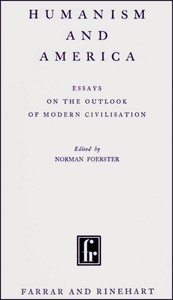
Humanism and America: Essays on the outlook of modern civilisation
Language: en4,645 downloads on Project Gutenberg
Subjects
Public-domain ebook sourced from Project Gutenberg #78119.
Public-domain ebook
Language: en4,645 downloads on Project Gutenberg
Subjects
Public-domain ebook sourced from Project Gutenberg #78119.
Humanism and America is a scholarly collection of essays that surveys the intellectual climate of the twentieth‑century United States through the lens of a “humanist” outlook. The book opens with a lyrical reference to Masefield’s poem, using the metaphor of a “long headache in a noisy street” to frame a critique of modern disillusion, the erosion of traditional values, and the rise of skeptical attitudes toward religion, democracy and progress. From this vivid opening the author moves to define “humanism” as a disciplined study of mankind that separates man from nature and the divine, then traces the development of the movement in America by profiling its leading figures, Irving Babbitt, Paul Elmer More, and their followers, while situating their work within a broader historical tradition that stretches from ancient Greece to the Renaissance.
The prose is dense, argumentative, and steeped in the rhetorical style of early‑twentieth‑century American criticism. It combines erudite historical survey with polemical commentary, employing a formal, sometimes impassioned voice that reflects the period’s concern with cultural decline and the search for renewed values. Readers who enjoy intellectual history, philosophy of culture, and the debates surrounding modernism and classicism will find the book rewarding, especially those interested in the interplay between American and European thought and the legacy of figures such as Babbitt and More.
“Life’s a long headache in a noisy street,” sang the poet Masefield in The Widow in the Bye Street seventeen years ago. Since then, we have all come to live in Main rather than Bye Street, and our headache has grown apace despite the best efforts of the physicians of the age. The noise and whirl increase, the disillusion and depression deepen, the nightmare of Futility stalks before us in the inevitable intervals when activity flags. Heroically or mock-heroically we distrust or reject such stimulants and anodynes as religion, moral conventions, the dignity of manners, the passion for beauty, and even our recent faith in democracy, in liberalism, in progress, in science, in efficiency, in machinery. At length revolt and scepticism themselves have ceased to be interesting. The modern temper has produced a terrible headache. …
Keep reading free · chapter 1 needs no account