Public-domain ebook
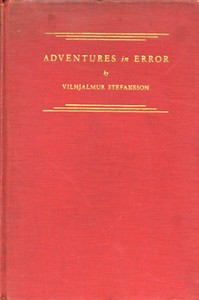
Adventures in error
Language: en1,398 downloads on Project Gutenberg
Subjects
Public-domain ebook sourced from Project Gutenberg #78443.
Public-domain ebook
Language: en1,398 downloads on Project Gutenberg
Subjects
Public-domain ebook sourced from Project Gutenberg #78443.
The work is a sweeping philosophical essay that opens by questioning the very possibility of unifying the sciences. Drawing on the legacy of Bacon, Comte and other thinkers, the author argues that attempts to standardize knowledge are doomed because facts constantly outpace the systems that try to capture them. He illustrates this with vivid examples, from the changing understanding of human skin physiology to the mutable description of a “red cow”, to show how observation and experiment are inherently unstable. The passage then pivots to a proposal: only the immutable truths of mathematics, defined by agreement rather than observation, can provide a reliable foundation for all other fields. From this premise the author proceeds to examine how definitions, such as the literary ostrich or the “good Christian”, function as stable concepts that avoid the pitfalls of empirical error.
Written in a dense, early‑twentieth‑century style, the text combines rigorous argument with a touch of sardonic humor. Its voice is that of a learned skeptic who delights in exposing contradictions while still yearning for a coherent system of thought. Readers who enjoy the interplay of philosophy, epistemology and cultural critique, particularly those accustomed to the argumentative vigor of classic essays, will find this book both challenging and rewarding.
The opening · free to read
It is said that Bacon considered all knowledge his province. But the sciences of today are so many and complex that a single Baconian view of them is no longer possible, and perversions of thought and action result because our intellectual horizon has been narrowed to a part of the field. From a realization of this have come various attempts to co-ordinate the sciences to permit a unifying view of the whole. Comte made one of these a century ago in his Positive Philosophy. There have been many since.
But if we pause to state clearly the case against the standardization of knowledge, the essential absurdity becomes so patent that we have to recall the numerous failures to convince ourselves that anyone was ever foolish enough even to try it.
Consider for instance the physiology of the human skin or the composition of a dust nebula. In these fields, among others, the accepted facts of a dozen years ago have become the error and folklore of today. You standardize knowledge, and while you are at the job the knowledge changes. Long before the thing can be done adequately it has ceased being worth doing at all.
Then why are we continually attempting this hopeless task? Partly, let us say, from irrepressible human optimism, which leads us to think that any desirable thing is possible. Partly, also, because of unclear analogizing from fields that seem related but are not. One of these analogies is from business. If you have on hand, on July 1st, a pair of socks, assuming honest and successful management, you will have them still on hand on August 1st, or else cash in your till to correspond. But, in spite of unlimited honesty and efficiency, you have no guarantee that an idea on hand on July 1st may not have been simply removed by August 1st without any equivalent remaining. You may have discovered that month, for instance, reasonable assurance that the moon is not made of green cheese, without being able to get any clear idea as to what it is made of.
The reader may here jump to the conclusion that we are arriving at a philosophy of pessimistic hopelessness. That is not the way of the true philosopher. His ideal is the tabula rasa. He sweeps away the systems of others, that he may build his own on a smooth foundation.
Realizing simultaneously the insatiable craving of the human mind for order and the impossibility of bringing order into the chaos of knowledge, we appear to be faced with a dilemma no less distressing than insoluble. But on looking deeper we find the dilemma apparent only. This will become clear when we consider the essential nature of knowledge.
The thoughtless among us may speak, for instance, of a red cow, and naïvely imagine we could prove our point with the testimony of a witness or two. But the philosophers have long ago made it clear that a cow would not be red but for the presence of someone to whom it looks red. Having established that point, the deeper of the philosophers go on to prove that the cow would not only not be red, but would not even exist, were it not for the presence of someone who thinks he sees a cow. In our argument the position is even stronger than this, for we have two lines of defense. First, we agree with the philosopher that you cannot prove of any given cow that it is red, or even that it exists; and then we point out that an idea is so much less stable than a cow that, even were the philosophers wrong about the cow not being red, they might easily be right about an idea not being right, or not existing.
Take an example: The philosophers of the Middle Ages demonstrated both that the earth did not exist and also that it was flat. Today they are still arguing about whether the world exists, but they no longer dispute about whether it is flat. This shows the greater lasting power of a real thing (whether it exists or not, for that point has not yet been settled) as compared with an idea, which may not only not exist, but may also be wrong even if it does exist.
We have now come in our discussion to the point where we see the absurdity of supposing ourselves to have any knowledge, as knowledge is ordinarily defined--or at least we would have come to that point but for lack of space which prevents us from making the subject really clear. However, it doesn’t matter from a practical point of view whether you have followed this philosophical reasoning. Perhaps you are not a philosopher. In that case, and in the homely phrase of the day, I ask you, what’s the good of an Englishman’s learning, first, that all Americans speak through their noses and, secondly, why they do so, when he has to find out eventually that they do not? What’s the good, again, of knowing that central Australia is a desert and that certain principles of physiography make it so, when you may have to listen to an after-dinner speech by someone telling that it is not a desert?
Such things do not always go in triplets of (1) so it is, (2) why it is, and (3) it is not--but that is a common order.
The reader may here protest that we are not getting much nearer our promised emancipation from the dilemma between our passion for system and the impossibility of systematizing knowledge. We have hinted above that the solution lies in finding a new basis for knowledge, and this we now proceed to do.
So long as you believe in them, the nasality of American speech and the desert nature of central Australia are fragments of knowledge capable of being arranged in a system. The trouble comes when you discover that they are “untrue.”
This gives the solution of our problem. We must have knowledge that is incapable of being contradicted. On first thought this seems impossible, but on second thought we realize that such facts do exist in the domain of mathematics. Two and two make four.
But why do two and two make four? Obviously because we have agreed that four is the name for the sum of two and two. That principle has been applied in mathematics to such advantage that it is rightly called the science of sciences; and this is the principle which, now at length, we propose to apply to all knowledge. Through it every science will become a pure science, and all knowledge as open to systematization as mathematics.
The trouble with facts, outside mathematics, has been inherent in the method of gathering information. We call these methods observation and experiment, and have even been proud of them--not realizing their clumsy nature, the unreliability of the findings, the transient character of the best of them, and the essential hopelessness of classifying the results and thus gratifying the passion of the human intellect for order and symmetry in the universe.
Take an example: A man comes from out-of-doors with the report that there is a red cow in the front yard. Neglecting for the moment the philosophical aspect of the case--as to whether the cow would be red if there were no one to whom she seemed red, and also the more fundamental problem of whether there would have been any cow at all if no one had gone out to look--neglecting, as I say, the deeper aspects of the case, we are confronted with numerous other sources of error. The observer may have confused the sex of the animal. Perhaps it was an ox. Or if not the sex, the age may have been misjudged, and it may have been a heifer. The man may have been color-blind, and the cow (wholly apart from the philosophical aspect) may not have been red. And even if it was a red cow, the dog may have seen her the instant our observer turned his back, and by the time he told us she was in the front yard, she may in reality have been vanishing in a cloud of dust down the road.
The trouble lies evidently in our clumsy system of observing and reporting. This difficulty has been obviated in the science of mathematics. A square is, not by observation but by definition, a four-sided figure with equal sides and equal angles. No one has denied that and no one can, for the simple reason that we have all agreed in advance that we will never deny it. Nay more, we have agreed that if anyone says that a square has three or five sides we will all reply in a chorus: “If it has three or five sides it is not a square!” That disposes of the matter forever.
Why not agree similarly on the attributes of a front yard?--making it true by definition that, among other things, it contains a red cow. Then if anyone asserts, for reasons of philosophy, color-blindness, or the officiousness of dogs, that there is no red cow in the yard, we can reply, as in the case of the square: “If it does not contain a red cow, it is not a front yard!”
The author feels at this point a doubtless unwarranted concern that he is not being taken seriously. Or perhaps the plan proposed is not considered practical. But the proof of the pudding is in the eating. The thing has been tried, and successfully--not in the systematic way now proposed, but sporadically. Some instances are well-known and convincing.
Take the assertion that a Christian is a good man. If you attempt to deny this on the ground that Jones, a deacon in the church, ran off with some public funds, your stricture is at once shown to have been absurd by the simple reply: “If Jones was a thief, he was not a Christian.” A Christian is, not by observation but by definition, a good man; if you prove that a certain man was not good you merely show that he was not a Christian. Thus we have established that a Christian is a good man. It is like a square having four sides.
But if someone asserts that a Bolshevik, a Conservative, or a chemist is a good man, you can soon confute him; for the members of these classes have neglected to define themselves as good. Thus their attributes have to be determined by observation and experiment. It is highly probable that evidence could be brought against many Bolsheviks, and even some Conservatives, to show that they are not good men. At any rate we have here no such clarity of issue as in things that are true by definition--as the four-sidedness of a square or the goodness of a Christian.
Through some experience of arguing this case in the abstract I have learned that its essential reasonableness can best be established from concrete examples. Let us, then, take cases at random from various fields of knowledge.
Consider first the ostriches of Africa. These birds have been studied in the wild by sportsmen and zoologists, and as domestic animals by husbandmen who tend them in flocks like sheep. There are accordingly thousands of printed pages in our libraries giving what purports to be information upon their habits. Besides being indefinite and in many other ways faulty, this alleged information is in part contradictory.
Having studied the bird of Africa, let us turn next to the ostrich of literature, philosophy, and morals. Instead of confusion, we now have clarity and precision. This is because the ostrich of literature exists by definition only. He is a bird that hides his head when frightened. You may too precipitately object that men would not accept universally this definition of the ostrich of literature if it did not also fit the zoological ostrich. The answer is that the definition has never received any support from zoologists, hunters, or owners of the domesticated birds, and yet it has been accepted universally throughout Europe since Pliny’s time (about 50 B.C.). It has survived all attacks from science and from the bigoted commonsense of those who did not recognize its true nature. Like the definition of a four-sided square or a good Christian, it has survived because it was useful. Can you imagine any real attribute more instructive than the head-burying of the ostrich-by-definition? As a text for moralists, as an epithet that politicians use for their opponents, as a figure of speech generally, what could serve as well? Our literature is richer, our vocabulary more picturesque through this beneficent bird of hypothesis. He has many inherent advantages that no real bird could have. Since his habits are defined we need not waste time studying him first hand, nor in trying to adjudicate at second hand between books about him that disagree. Since he never existed as a beast he is in no danger of the extinction that is said to threaten the lion and swan.
The book keeps going
Reading is free forever. Sign up and watch scenes appear while you read.



Scenes Storieta drew for other classics.
New illustrated classics
Once or twice a month: the latest books to get full character casts, scene art, and free comic editions. No account needed.