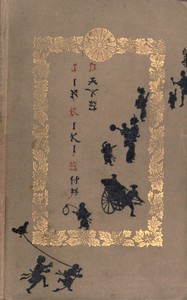
About this book
The work is a first‑hand sociological survey of rural Japan, written by the English journalist‑turned‑agricultural observer J. W. Scott after a six‑thousand‑mile tour of villages, temples, farms and government offices in the early 1910s. The opening pages explain how the author, motivated by a wartime need for practical knowledge of Japanese small‑holding agriculture, set out in 1915 to record the lives of peasants, schoolteachers, officials and even an Ainu chief. He describes his method of note‑taking while riding basha, walking paddy paths, and sleeping in futons, and he acknowledges the gaps in his coverage, most notably the omission of Kyushu. The narrative is framed as a corrective to the “pro‑Japanese” and “anti‑Japanese” romanticism of contemporary travel literature, aiming instead to reveal the foundations of a nation whose modern strength rests on its agrarian backbone.
Scott’s voice is that of a diligent, slightly self‑critical Victorian scholar, blending personal anecdote with detailed observation. The prose is dense, reflective, and peppered with the occasional scholarly footnote, giving the book a measured, almost diary‑like quality. Readers interested in early‑20th‑century East Asian history, comparative agriculture, or the social anthropology of village life will find it rewarding, as will those who appreciate a meticulous, travel‑inflected account that privileges the everyday over the spectacular.