The opening · free to read
PREFACE.
And lo! the book, from all its end beguiled, A harmless wonder to some happy child.
LORD LYTTON.
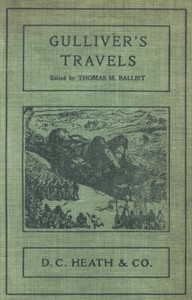
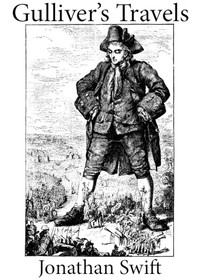
Gulliver's Travels was published in 1726; and, although it was by no means intended for them, the book was soon appropriated by the children, who have ever since continued to regard it as one of the most delightful of their story books. They cannot comprehend the occasion which provoked the book nor appreciate the satire which underlies the narrative, but they delight in the wonderful adventures, and wander full of open-eyed astonishment into the new worlds through which the vivid and logically accurate imagination of the author so personally conducts them. And there is a meaning and a moral in the stories of the Voyages to Lilliput and Brobdingnag which is entirely apart from the political satire they are intended to convey, a meaning and a moral which the youngest child who can read it will not fail to seize, and upon which it is scarcely necessary for the teacher to comment.
For young children the book combines in a measure the interest of Robinson Crusoe and that of the fairy tale; its style is objective, the narrative is simple, and the matter appeals strongly to the childish imagination. For more mature boys and girls and for adults the interest is found chiefly in the keen satire which underlies the narrative. It appeals, therefore, to a very wide range of intelligence and taste, and can be read with profit by the child of ten and by the young man or woman of mature years.
This edition is practically a reprint of the original (1726-27). The punctuation and capitalization have been modernized, some archaisms changed, and the paragraphs have been made more frequent. A few passages have been omitted which would offend modern ears and are unsuitable for children's reading, and some foot-notes have been added explaining obsolete words and obscure expressions.
As a reading book in school which must be adapted to the average mind, these stories will be found suitable for classes from the fifth or sixth school year to the highest grade of the grammar school.
THOMAS M. BALLIET.
CONTENTS.
VOYAGE TO LILLIPUT.
The book keeps going
Keep reading, and see it illustrated
Reading is free forever. Sign up and watch scenes appear while you read.
Scenes Storieta drew for other classics.