About this book
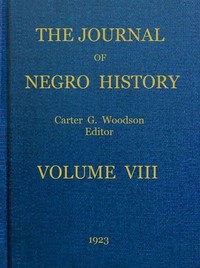
The Journal of Negro History, Volume 3 (1918) is a scholarly periodical that gathers a variety of articles, letters, and book reviews concerning African‑American experience. The volume opens with a dense excerpt of Thomas Jefferson’s correspondence on emancipation, complete with extensive footnotes that cite the Ford edition of Jefferson’s writings. This introductory passage situates the reader amid early‑19th‑century debates over slavery, then shifts to brief narratives of individual Black men, such as a slave boy who risked severe punishment to learn to read, a Dartmouth student who became a Baptist pastor, and a self‑made carpenter in Ohio. The section concludes with a contemporary review of Thomas Jesse Jones’s 1916 survey of Negro education, highlighting the stark disparities in funding and resources. The material is presented in a formal, citation‑heavy style typical of early twentieth‑century academic journals.
The voice is that of an erudite, documentary‑oriented editor, employing a measured, often didactic tone and dense scholarly apparatus. Its language reflects the period’s reverence for primary sources and a commitment to chronicling Black achievement within a historiographical framework. Readers who appreciate rigorous historical research, primary‑source analysis, and insight into the intellectual climate of the 1910s, particularly scholars, graduate students, and history enthusiasts interested in African‑American studies, will find this volume a valuable, if demanding, addition to their reading.