About this book
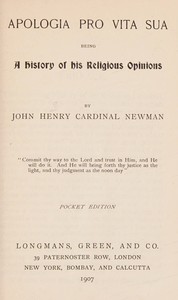
Apologia pro vita sua is John Henry Newman’s autobiographical defence of his theological journey, written after his conversion from Anglicanism to Roman Catholicism. The work opens with a meticulous examination of the historical foundations of the English Reformation, citing papal bulls of 1564 and the 1571 Convocation to argue that the Articles of Religion were deliberately vague, leaving “large questions on which the controversy hinges” unresolved. Newman then turns the analysis inward, recounting the storm of reaction his Tract 90 provoked, the personal vilification he endured, and his reluctant resignation from the Anglican establishment. The narrative proceeds to trace the inner turmoil of 1839‑1841, when he felt compelled to recount the “great revolution of mind” that led him to abandon his former ecclesiastical home.
The prose is dense, scholarly, and reflective, characteristic of mid‑19th‑century theological discourse. Newman’s voice combines rigorous historical argument with a candid, almost confessional tone, revealing both intellectual precision and emotional vulnerability. Readers who appreciate the intricacies of doctrinal debate, the history of the Catholic Church, and the personal dimensions of religious conversion will find this work rewarding. It especially suits scholars of ecclesiastical history, students of apologetics, and anyone drawn to the complex interplay of faith, reason, and personal conscience in Victorian England.