Public-domain ebook
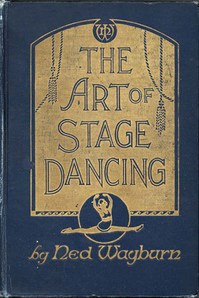
The Art of Stage Dancing The Story of a Beautiful and Profitable Profession
by Ned Wayburn
Language: en11,378 downloads on Project Gutenberg
Subjects
In: Art·How To ...
Public-domain ebook sourced from Project Gutenberg #27367.
Public-domain ebook
by Ned Wayburn
Language: en11,378 downloads on Project Gutenberg
Subjects
In: Art·How To ...
Public-domain ebook sourced from Project Gutenberg #27367.
The Art of Stage Dancing is a practical guide written by celebrated choreographer Ned Wayburn, published in 1925 under the auspices of his own studio. The book opens with a conversational greeting that bypasses a traditional preface, immediately positioning the work as a “cheery and stimulating” invitation to students, teachers, and anyone who has enjoyed a Wayburn production. From that point the author promises a first‑person account of his lifelong experience, blending personal anecdotes with straightforward instruction. The contents outline a sweeping curriculum, ancient dance history, modern stage techniques, foundation work, tap, acrobatic and ballet methods, costume design, health, and even stagecraft, suggesting a comprehensive resource for those who want to understand both the art and the business of American theatrical dance.
Wayburn’s voice is informal yet authoritative, reflecting the optimism of the Roaring Twenties and the didactic tone of a seasoned practitioner sharing his craft. The prose is plain, occasionally self‑deprecating, and peppered with references to his famous pupils and productions. Readers who appreciate historical insight into early‑20th‑century American theatre, dance teachers seeking a period‑specific methodology, or anyone fascinated by the evolution of stage performance will find the book engaging and informative.
The opening · free to read
NED WAYBURN STUDIOS OF STAGE DANCING, INC.
Made in U.S.A.
GREETINGS!
Someway I don't care for the word "Preface." As I think the matter over, I'm not sure that I ever read a preface to any book; and this fact suggests to me that possibly others would pass by this page in my book if I dubbed it by that much-worn and very trite word. So I've hailed you all with a much more cheery and stimulating title for my opening page; and perhaps, in consequence, some may read it.
My Greetings are specially extended to certain chosen groups of people: First, to all students of the past, the present, and those hoped for in the future; second, to the hundreds of teachers of the art of dancing who esteem my original methods of instruction sufficiently to care about what I may print on the subject; and third, to a public that has sat "in front" at any or many of my productions, and enjoyed them, and is, in consequence, interested to know something about the hard work, the thought and the skill, necessary to bring about such pleasing results.
Lest so narrow a limit to my Greetings may be misunderstood, on second thought I will extend my Greetings to that world of people who love life and beauty and happiness; who appreciate honest effort to make living more enjoyable and brighter; who love laughter and smiles and the good things that go with them.
And if all that kind of people will read and appreciate my book, I shall not miss the others.
But still, to them, as well as to you, I extend
Greetings!
I have never before attempted authorship, and this volume is simply a spontaneous outpouring of my personal love and knowledge of a great art that has filled my years with joy and happiness, and some renown in the theatrical world.
To have been one modest part of an instrument that has piped to pleasure many millions of my fellows, is surely justification for personal satisfaction. How this playing has been done, how it is being done today in greater degree than ever before, is what I have in mind to tell a curious public.
And so I became an author for this once, and what you may discover that I lack in literary ability, let me trust you will find compensated for in the plainness and simplicity of the facts, incidents and reminiscences that I relate. If not the manner, at least the matter is worthy of your approval.
My story is presented in the first person, and this is because I find it easiest to write from a personal viewpoint--not, I hope, as the result of any special desire to see the letter I in print. A more experienced author would be able to write this book with less suggestion of ego in its pages, I have little doubt, and so I have called this explanatory word An Apology that you may understand why things are as they are, and not demand of the tyro the same quality of literary excellence that you would be justified in expecting of the better qualified writer.
To paraphrase one of my earliest school-boy speeches,--"If this be an apology, make the most of it."
The book keeps going
Reading is free forever. Sign up and watch scenes appear while you read.



Scenes Storieta drew for other classics.
New illustrated classics
Once or twice a month: the latest books to get full character casts, scene art, and free comic editions. No account needed.