Public-domain ebook
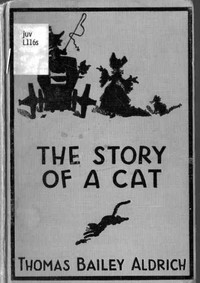
The Story of a Cat
Language: en1,741 downloads on Project Gutenberg
Subjects
In: Children & Young Adult Reading·Novels·French Literature
Public-domain ebook sourced from Project Gutenberg #27472.
Public-domain ebook
Language: en1,741 downloads on Project Gutenberg
Subjects
In: Children & Young Adult Reading·Novels·French Literature
Public-domain ebook sourced from Project Gutenberg #27472.
The Story of a Cat is a juvenile tale that blends animal affection with a touch of eighteenth‑century French society. It begins with the widowed Countess Yolande de la Grenouillère, a charitable aristocrat who, after losing her husband at Fontenoy, finds solace only in a succession of ill‑fated pets. When a street cat is cruelly tormented by boys, the countess intervenes, rewarding the rescuer and taking the gaunt animal into her home. The narrative then follows the cat’s adoption by the household, the involvement of the elderly maid Mother Michel and the duplicitous steward Father Lustucru, and the countess’s decision to entrust the cat to Mother Michel as she prepares to travel to Normandy.
The prose reflects the ornate, didactic tone of mid‑nineteenth‑century French children's literature, with a narrator who offers moral commentary through vivid description and occasional humor. The story’s gentle satire of aristocratic pretensions and its focus on the bond between an older woman and her feline companion will appeal to readers who enjoy historical settings, animal‑centric plots, and a narrative voice that balances sentiment with a wry observation of human foibles.
The opening · free to read
HOW MOTHER MICHEL MADE THE ACQUAINTANCE OF HER CAT.
There lived in Paris, under the reign of King Louis XV., a very rich old countess named Yolande de la Grenouillere. She was a worthy and charitable lady, who distributed alms not only to the poor of her own parish, Saint-Germain-l'Auxerrois, but to the unfortunate of other quarters. Her husband, Roch-Eustache-Jeremie, Count of Grenouillere, had fallen gloriously at the battle of Fontenoy, on the 11th of May, 1745. The noble widow had long mourned for him, and even now at times wept over his death. Left without children, and almost entirely alone in the world, she gave herself up to a strange fancy,--a fancy, it is true, which in no manner detracted from her real virtues and admirable qualities: she had a passion for animals. And an unhappy passion it was, since all those she had possessed had died in her arms.
The first, in date, in her affections had been a green parrot, which, having been so imprudent as to eat some parsley, fell a victim to frightful colics. An indigestion, caused by sweet biscuits, had taken from Madame de la Grenouillere a pug-dog of the most brilliant promise. A third favorite, an ape of a very interesting species, having broken his chain one night, went clambering over the trees in the garden, where, during a shower, he caught a cold in the head, which conducted him to the tomb.
Following these, the Countess had birds of divers kinds; but some of them had flown away, and the others had died of the pip. Cast down by such continuous disasters, Madame de la Grenouillere shed many tears. Seeing her inconsolable, the friends of the Countess proposed successively squirrels, learned canaries, white mice, cockatoos; but she would not listen to them; she even refused a superb spaniel who played dominoes, danced to music, ate salad, and translated Greek.
"No, no," she said, "I do not want any more animals; the air of my house is death to them."
She had ended by believing in fatality.
One day, as the Countess was leaving the church, she saw a crowd of boys hustling and elbowing each other, and giving vent to peals of joyous laughter. When, seated in her carriage, she was able to overlook the throng, she discovered that the cause of this tumult was a poor cat to whose tail the little wretches had tied a tin saucepan.
The unfortunate cat had evidently been running a long time, for he seemed overcome with fatigue. Seeing that he slackened his speed, his tormentors formed a circle around him, and began pelting him with stones. The luckless creature bowed his head, and, recognizing that he was surrounded by none but enemies, resigned himself to his hard fate with the heroism of a Roman senator. Several stones had already reached him, when Madame de la Grenouillere, seized with deep compassion, descended from her carriage, and, pushing the crowd aside, exclaimed: "I will give a louis to whoever will save that animal!"
These words produced a magical effect; they transformed the persecutors into liberators; the poor cat came near being suffocated by those who now disputed the honor of rescuing him safe and sound. Finally, a sort of young Hercules overthrew his rivals, brought off the cat, and presented it half dead to the Countess.
"Very well," she said; "here, my brave little man, is the reward I promised." She gave him a bright golden louis just out of the mint, and then added, "Relieve this poor animal of his inconvenient burden."
While the young Hercules obeyed, Madame de la Grenouillere regarded the creature she had rescued. It was a true type of the street-cat. His natural hideousness was increased by the accidents of a long and irregular career; his short hair was soiled with mud; one could scarcely distinguish beneath the various splashes his gray fur robe striped with black. He was so thin as to be nearly transparent, so shrunken that one could count his ribs, and so dispirited that a mouse might have beaten him. There was only one thing in his favor, and that was his physiognomy.
"Dear me, how homely he is!" said Madame de la Grenouillere, after finishing her examination.
At the moment she stepped into the carriage, the cat fixed his great sea-green eyes upon her and gave her a look, strange, indefinable, full at the same time of gratitude and reproach, and so expressive that the good lady was instantly fascinated. She read in this glance a discourse of great eloquence. The look seemed to wish to say,--
"You have obeyed a generous impulse; you saw me feeble, suffering, oppressed, and you took pity on me. Now that your benevolence is satisfied, my deformity inspires you with contempt. I thought you were good, but you are not good; you have the instinct of kindness, but you are not kind. If you were really charitable you would continue to interest yourself in me for the very reason that I am homely; you would reflect that my misfortunes are owing to my ugly appearance, and that the same cause,--should you leave me there in the street, at the mercy of the wicked boys,--the same cause, I say, would produce the same effects. Go! you needn't pride yourself on your half-way benevolence!--you have not done me a service; you have only prolonged my agony. I am an outcast, the whole world is against me, I am condemned to die; let my destiny be accomplished!"
Madame de la Grenouillere was moved to tears. The cat seemed to her superhuman--no, it was a cat; it seemed to her superanimal! She thought of the mysteries of transformation, and imagined that the cat, before assuming his present form, had been a great orator and a person of standing. She said to her maid, Mother Michel, who was in the carriage,--
"Take the cat and carry him."
"What, you will bring him with you, madame?" cried Mother Michel.
"Certainly. As long as I live that animal shall have a place at my fireside and at my table. If you wish to please me, you will treat him with the same zeal and affection you show to myself."
"Madame shall be obeyed."
"That is well,--and now for home!"
Madame de la Grenouillere inhabited a magnificent mansion situated on the corner of the streets Saint-Thomas-du-Louvre and Orties-Saint-Louis; there she led a very retired life, on almost intimate terms with her two principal domestics,--Madame Michel, her maid and companion, and M. Lustucru, the steward. These servants being elderly persons, the Countess, who was possessed of a pleasant humor, had christened them Mother Michel and Father Lustucru.
The features of Mother Michel bore the imprint of her amiable disposition; she was as open and candid as Father Lustucru was sly and dissimulating. The plausible air of the steward might deceive persons without much experience; but close observers could easily discover the most perverse inclinations under his false mask of good nature. There was duplicity in his great blue eyes, anger concentrated in his nostrils, something wily in the end of his tapering nose, and malice in the shape of his lips.
However, this man had never, in appearance, at least, done anything to forfeit his honor; he had been able to guard an outside air of honesty, hiding very carefully the blackness of his nature. His wickedness was like a mine to which one has not yet applied the match,--it waited only for an occasion to flash out.
Lustucru detested animals, but, in order to flatter the taste of his mistress, he pretended to idolize them. On seeing Mother Michel bearing in her arms the rescued cat, he said to himself:
"What, another beast! As if there were not enough of us in the house!"
He could not help throwing a glance of antipathy at the new-comer; then, curbing himself quickly, he cried, with an affected admiration,--
"Oh, the beautiful cat! the pretty cat! that cat hasn't his equal!"--and he caressed it in the most perfidious fashion.
"Truly?" said Madame de la Grenouillere; "you do not find him too homely?"
"Too homely! But, then, he has charming eyes. But, if he was frightful, your interesting yourself in him would change him."
"He displeased me at first."
"The beings who displease at first are those one loves the most after awhile," replied Father Lustucru, sententiously.
They proceeded at once to make the toilet of the cat, who, in spite of his instinctive horror of water, submitted with touching resignation to being washed; he seemed to understand that it improved his personal appearance. After giving him a dish of broken meat, which he ate with great relish, they arranged the hours for his meals, the employment of his days, and the place where he was to sleep.
They thought also to give him a name. Mother Michel and Father Lustucru proposed several that were quite happy, such as Mistigris, Tristepatte, etc.; but the Countess rejected them all successively. She desired a name that would recall the circumstances in which the cat was found. An old scholar, whom she consulted the next day, suggested that of Moumouth, composed of two Hebrew words which signify saved from saucepans.
At the end of a few days, Moumouth was unrecognizable. His fur was polished with care; nourishing food had filled out his form; his mustaches stood up like those of a swordsman of the seventeenth century; his eyes shone as emeralds. He was a living proof of the influence of good fare upon the race. He owed his excellent condition chiefly to Mother Michel, whom he held in affectionate consideration; he showed, on the other hand, for Father Lustucru a very marked dislike. As if he had divined that here he had to do with an enemy, he refused to accept anything presented by the steward. However, they saw but little of each other. The days passed very happily with Moumouth, and everything promised a smiling future for him; but, like the sword of Damocles, troubles are ever suspended above the heads of men and of cats. On the 24th of January, 1753, an unusual sadness was observed in Moumouth; he scarcely responded to the caresses which Madame de la Grenouillere lavished upon him; he ate nothing, and spent the day crouched on a corner of the hearth, gazing mournfully into the fire. He had a presentiment of some misfortune, and the misfortune came.
That night a messenger, sent from the Chateau de la Gingeole in Normandy, brought a letter to the Countess from her younger sister, who, having broken a leg in getting out of her carriage, begged the Countess, her only relative, to come to her at once. Madame de la Grenouillere was too sympathetic and kind-hearted to hesitate an instant.
"I depart to-morrow," said she.
At these words, Moumouth, who followed his benefactress with his eyes, gave a melancholy miau.
"Poor cat!" resumed the lady, with emotion, "it is necessary that we should be separated! I cannot bring you with me, for my sister has the weakness to hate animals of your species; she pretends they are treacherous. What slander! In her youth she caressed a kitten, who, too much excited by marks of affection, scratched her involuntarily. Was it from wickedness? No, it was from sensibility. However, since that day my sister has sworn an eternal hatred for cats."
The book keeps going
Reading is free forever. Sign up and watch scenes appear while you read.



Scenes Storieta drew for other classics.
New illustrated classics
Once or twice a month: the latest books to get full character casts, scene art, and free comic editions. No account needed.