Storieta
English
Save & sign up

About this book

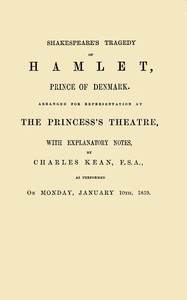
The work is a five‑act tragedy that begins not with a narrative exposition but with a full theatrical apparatus: a printed cast list, detailed stage directions, and a prefatory essay that situates the play among Shakespeare’s other great tragedies. The opening scene places the audience on the ramparts of Elsinore Castle at night, where sentries Bernardo, Francisco and Marcellus encounter a mysterious apparition that resembles the dead king. Their uneasy dialogue, the sudden appearance of the ghost, and the urgent request to inform Prince Hamlet set a tone of suspense and political intrigue, while the prefatory remarks foreground themes of revenge, succession, and familial loss that run through the drama.

Shakespeare’s language is Elizabethan English, rich in iambic rhythm, rhetorical flourish and vivid metaphor. The play’s structure, alternating public spectacle with private soliloquy, offers a blend of courtly intrigue and philosophical contemplation. Readers who enjoy complex character studies, poetic dialogue, and the moral dilemmas of power and grief will find this drama rewarding, especially those with an appetite for early‑modern drama and its layered exploration of human motives.

Characters in Hamlet

  • HamletYoung Danish prince, dark hair, solemn expression, doublet and cape, ruff collar
  • ClaudiusMiddle‑aged king, trimmed beard, crown and ermine mantle, regal bearing, doublet
  • HoratioLoyal friend, thoughtful eyes, modest Elizabethan doublet, plain collar, short hair

The opening · free to read

Transcriber's Note: This is a heavily edited version of Hamlet. It was used for Charles Kean's 1859 stage production. Phrases printed in italics in the book are indicated in this electronic version by _ (underscore). Footnotes originally appeared at the bottom of each page. For this electronic version the footnotes are collected at the end of each act. In Act I, Scene 5, the word Uumix'd has been changed to Unmix'd. A closing bracket ] was added to Act IV footnote 37 after Naked on your kingdom,. A closing bracket ] was added to Act IV footnote 50 after Venom'd stuck,. The word o'er-crows appears in Act V, Scene 3; in footnote V.81, o'ercrows appears without a hyphen. Both are as they appear in the book.

The book keeps going

Keep reading, and see it illustrated

Reading is free forever. Sign up and watch scenes appear while you read.

Illustrated scene from FrankensteinIllustrated scene from The Great GatsbyIllustrated scene from Pride and Prejudice

Scenes Storieta drew for other classics.

New illustrated classics

A new classic, drawn, in your inbox.

Once or twice a month: the latest books to get full character casts, scene art, and free comic editions. No account needed.