Public-domain ebook
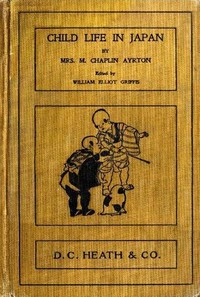
Child-Life in Japan and Japanese Child Stories
Language: en1,270 downloads on Project Gutenberg
Subjects
In: Children & Young Adult Reading·Mythology, Legends & Folklore
Public-domain ebook sourced from Project Gutenberg #28979.
Public-domain ebook
Language: en1,270 downloads on Project Gutenberg
Subjects
In: Children & Young Adult Reading·Mythology, Legends & Folklore
Public-domain ebook sourced from Project Gutenberg #28979.
This volume is a nineteenth‑century ethnographic sketch that blends travel memoir, illustrated catalogue, and a series of vignette‑like scenes of Japanese childhood. The author, Matilda Chaplin Ayrton, a well‑educated British woman who lived in Tokyo while her husband taught at the Imperial College of Engineering, recounts her observations of school life, festivals, toys, games and folk tales that she collected during her stay and later edited for an American audience. The opening pages explain how the text has been updated, Japanese terms rendered in modern scholarly spelling, obscure words omitted, and lengthy sentences shortened, so that contemporary readers can follow the “old Japan” she describes, from bamboo‑rail rides and snowball fights to the intricate customs surrounding dolls and the “Korean Lion” performance. The book is organized into seven scenes, each illustrated with detailed engravings, and includes an appendix on children’s sports by Professor William Elliot Griffis.
Written in a genteel Victorian voice, the prose reflects the era’s fascination with the exotic and its belief in cultural progress, yet it retains a warm, almost conversational tone that conveys Ayrton’s genuine affection for the children she observed. The style is descriptive rather than analytical, peppered with personal anecdotes and vivid details of everyday life, making it appealing to readers who enjoy historical travel literature, cultural anthropology, or collections of folklore. Scholars of Japanese social history, teachers seeking period material on childhood, and anyone curious about the everyday world of Meiji‑era Japan will find the book both informative and charming.
The opening · free to read
COPYRIGHT, 1901, BY D. C. HEATH & CO.
PREFACE.
Over a quarter of a century ago, while engaged in introducing the American public school system into Japan, I became acquainted in Tokio with Mrs. Matilda Chaplin Ayrton, the author of "Child-Life in Japan." This highly accomplished lady was a graduate of Edinburgh University, and had obtained the degrees of Bachelor of Letters and Bachelor of Sciences, besides studying medicine in Paris. She had married Professor William Edward Ayrton, the electric engineer and inventor, then connected with the Imperial College of Engineering of Japan, and since president of the Institute of Electric Engineers in London. She took a keen interest in the Japanese people and never wearied of studying them and their beautiful country. With my sister, she made excursions to some of the many famous places in the wonderful city of Tokio. When her own little daughter, born among the camellias and chrysanthemums, grew up under her Japanese nurse, Mrs. Ayrton became more and more interested in the home life of the Japanese and in the pictures and stories which delighted the children of the Mikado's Empire. After her return to England, in 1879, she wrote this book.
In the original work, the money and distances, the comparisons and illustrations, were naturally English, and not American. For this reason, I have ventured to alter the text slightly here and there, that the American child reader may more clearly catch the drift of the thought, have given to each Japanese word the standard spelling now preferred by scholars and omitted statements of fact which were once, but are no longer, true. I have also translated or omitted hard Japanese words, shortened long sentences, rearranged the illustrations, and added notes which will make the subject clearer. Although railways, telegraphs, and steamships, clothes and architecture, schools and customs, patterned more or less closely after those in fashion in America and Europe, have altered many things in Japan and caused others to disappear, yet the children's world of toys and games and stories does not change very fast. In the main, it may be said, we have here a true picture of the old Japan which we all delighted in seeing, when, in those sunny days, we lived in sight of Yedo Bay and Fuji Yama, with Japanese boys and girls all around us.
The best portions and all the pictures of Mrs. Ayrton's big and costly book have been retained and reproduced, including her own preface or introduction, and the book is again set forth with a hearty "ohio" (good morning) of salutation and sincere "omedeto" (congratulations) that the nations of the world are rapidly becoming one family. May every reader of "Child-Life in Japan" see, sometime during the twentieth century, the country and the people of whom Mrs. Ayrton has written with such lively spirit and such warm appreciation.
WM. ELLIOT GRIFFIS.
ITHACA, N.Y.
The book keeps going
Reading is free forever. Sign up and watch scenes appear while you read.



Scenes Storieta drew for other classics.
New illustrated classics
Once or twice a month: the latest books to get full character casts, scene art, and free comic editions. No account needed.