Public-domain ebook
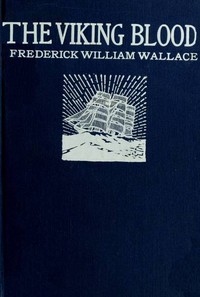
The Viking Blood: A Story of Seafaring
Language: en1,040 downloads on Project Gutenberg
Subjects
Public-domain ebook sourced from Project Gutenberg #40853.
Public-domain ebook
Language: en1,040 downloads on Project Gutenberg
Subjects
Public-domain ebook sourced from Project Gutenberg #40853.
The Viking Blood is a nineteenth‑century fictional narrative that opens amid the bustling docks of the Cape Verde Islands, where Captain McKenzie learns of his newborn son’s arrival. The opening scene quickly shifts to a domestic dispute over the child’s name, Donald versus the mother’s preferred Percival, setting up a family history that intertwines seafaring ambition with the social tensions of Glasgow’s working‑class neighborhoods. From the detailed register entry of 1876 to the boy’s early struggles with identity and class‑based teasing, the prose establishes a world where maritime life, familial duty, and the clash of Scottish and English cultural markers are already in motion.
Written in a richly descriptive Victorian style, the novel blends nautical detail with domestic melodrama, employing a voice that is both colloquial and occasionally lyrical, reflective of its 1880s publication era. Readers who enjoy layered character studies, period‑accurate dialogue, and the gritty realism of ship‑board and urban Scottish life will find the book’s blend of romance, social commentary, and seafaring adventure compelling.
The opening · free to read
Captain McKenzie received the news of his son's arrival into the world just as his ship was leaving the coaling station at Cape Verde Islands, but his wife's suggestion of "Percival" caused him to hold the ship to an anchor while he dashed off a letter protesting against the tacking of such a namby-pamby name on to a son of his. "'Donald' is the name I have set my heart on, Janet, and I won't have the name of McKenzie defiled by any such English designation as 'Percival'. I won't have any Percy McKenzies in my family." Then, to conciliate his wife, who, he felt, deserved some consideration, he added, "You may call him Percival also if you've set your mind on it, but remember, Donald comes first!" So Donald Percival McKenzie it was, and thus it is inscribed in the Register of Births for the City of Glasgow, in the County of Lanark, Scotland, in the year of our Lord, Eighteen Hundred and Seventy-six.
Though registered thus by the laws of church and state and in the mind of the father, yet the mother won her desire for a time and omitted the "Donald" when addressing, or referring to, her son. It was only during Captain McKenzie's brief home visits between voyages that young Donald Percival discovered that he had another appellation which he was expected to answer to. This discovery became a most pleasing one when the boy advanced to those years of discretion when he might fraternize with his fellows on the aristocratic "Terrace" where he resided. Glasgow youngsters, inheriting antipathies through Scotch or Irish ancestry, scorned anything savoring of "English" and the name of "Percy" could only be applied to an "Englisher" or a boy so anglicized by his "Maw" as to be only worth giving a licking to wherever and whenever met. When one's mother hails from Inverness and speaks the pure melodious English peculiar to that part of Scotland, it is difficult for a lad to disprove connection with southron antecedents--especially in the face of such circumstantial evidence as a name like Percy, and an accent free from rolling "r's" and Scottish idioms.
This was what young McKenzie had to fight against. Even though he could scrape through the language test and deliver himself of a guttural "Och, awa!" and pronounce "loch" without calling it "lock," yet the "Percy" damned him. He had attained the age of seven--a rather delicate boy, much petted and spoilt by his mother--when he rebelled. The juvenile denizens of the Terrace had jeered at him--calling him "Percy, dear!" and added injury to insult by throwing mud and profaning his white starched collar with unclean hands. "They called me a mammy's boy," he sobbed, "'n they said I was English, 'n they said English was no good 'cause they ran away from the Scotch at Bannockburn an' Stirling Bridge. I'm not English, am I, mamma?"
"No, no, dear," soothed the mother. "How dare those vulgar little scamps abuse my little pet! Don't cry, my wee lamb! I shan't let you go out and play with them any more----"
A renewed howl came from Donald Percival. "But I wanna play with them, mamma! I don't wanna be kept in! It's all your fault for calling me 'Percy'! I don't wanna be called Percy! I wanna be called Donal' same as daddy calls me. And, mamma, please don't call me Percy any more. I like Donal' better!"
There had been several incidents of this nature, and Mrs. McKenzie was now forced to address her offspring publicly by his first name. But the other died hard and practically blasted young Donald's life in the locality in which he lived. Only when the family removed to a distant neighborhood did the youngster feel free to begin life with a clean sheet.
There is a psychology in nomenclature which reflects the characters of the parents. "Percival" aptly described that of Mrs. McKenzie. As plain Janet McKinnon she grew up in the bucolic atmosphere of a small Invernessshire farm, where she had, at an early age, to help her mother milk cows, clean byres, plant and gather potatoes. In summer, she ran around barefoot; in winter she wore heavy boots and homespun stockings and red flannel petticoats. The farm was a poor one and the McKinnon family was numerous and hungry. Janet at sixteen was sent out to "service" as a maid-of-all-work in the home of a Glasgow baillie.
The baillie had made some "siller" in the scrap-iron business and hankered after the desirable municipal eminence of Lord Provost of Glasgow. As he and his wife were rather crude personages, he realized that some training in deportment and society mannerisms was necessary, and his establishment became something of a stamping ground for professors of dancing and deportment, English governesses and impecunious connections of artistocratic families. Janet, the maid, absorbed much of the atmosphere with which she was surrounded and unconsciously aped a great deal of what she saw being dinned into the baillie and his kindred.
"Bonny Janet McKinnon"--good-hearted, healthy, quick-witted, and a pretty figure of a lass, though rather proud and vain--followed the baillie in his steps up the social ladder, and while a domestic in the future Lord Provost's house, met handsome, rollicking Alec McKenzie, chief officer of the Sutton Liner Ansonia in the New York trade.
McKenzie could claim good family of ancient Highland lineage. His father was a celebrated physician and a younger brother of Sir Alastair McKenzie of Dunsany Castle. The McKenzies of Dunsany, however, were "penniless folk wi' a lang pedigree" and the knight drew but a meagre income from the bare northern crofts and moors which he owned, and were it not for the wealthy English and American sportsmen who yearly leased the place for the autumn shooting, the Laird of Dunsany would have been forced to work to keep himself and to pay the interest on his mortgages. The doctor was more absorbed in the theory than in the practice of his profession, and, after devoting enough attention to remunerative patients to provide the means for giving his two sons a good education, he retired to his laboratory and practically remained there until he died, and the proceeds from the sale of his books and instruments were just sufficient to pay his debts and bury him. The doctor's wife pre-deceased her husband by several years, and the two sons--Alexander and David--scarce knew their parents. When Dr. McKenzie died, David went into the office of a Glasgow ship broker and absorbed the hard-fisted doctrines of a parsimonious and none too scrupulous employer, while Alec went off in a sailing ship to sea.
By the time Alec had struggled to the sublimity of a chief officer's berth in a liner, where the donning of much gold braid was compulsory and the acceptance of a monthly wage of twelve pounds was scarcely in keeping with the dignity and responsibility of the position, David had scrimped and scraped enough cash together to purchase several sixty-fourths in a sailing ship and had blossomed out as a ship-owner. Through his shipping connections, David became friendly with the baillie scrap-iron merchant, and the friendship grew into intimacy when the baillie learned of McKenzie's connection with the Laird of Dunsany. With the tuft-hunting dealer in iron tooting a horn for him as "Ma freen, David McKenzie, nephew o' Sir Alastair McKenzie o' Dunsany Castle, ye ken!" the ship-broker brother prospered, while Sailor Alec sweated and mucked about at sea.
It was during one of Alec's shore spells in Glasgow that David so forgot himself as to take his seaman brother up to the baillie's mansion for dinner. The dinner was memorable in more ways than one. To Alec, who had travelled much and was quite at home in any society, the baillie and his brood constituted a comedy. Six red-headed imps of various ages surrounded the board and monopolized most of the conversation and the food. Grimy fingers were surreptitiously thrust into the preserves to be licked off under the table-cloth, and nimble juvenile digits pilfered the choice sugar embellishments of sundry cakes. The baillie sat beaming at the head of his festive board and reproved those precocious excursions with divers--"Dinna touch the jeelies, Wully!" or "Pit that cookie back on the plate, Jeanie!" while to his guests he murmured admiring asides--"Aw, the wee laumbs! They're hungry, the wee doos!" David sat stony-faced, but Alec almost exploded. "Lambs and doves are they?" he thought. "They're worse than a swarm of galley rats!"
The baillie's lessons in correct society conduct showed themselves every now and again by the occasional "Eengleesh" which he introduced into his conversation, but to Alec these utterances were a farce. "Mister McKinzie, will you partake of the toastit breed?" "Kindly pawss the mulk to your mummaw, John!" "Let the myde take an' gie ye a clean plate, Captun--the bairns have dirtied the yin you 'ave!" The latter caused the sailor to choke in his serviette and he looked up to catch the sparkling brown eyes of Janet McKinnon.
"Pardon me, sir!" she murmured demurely as she deftly replaced the "dirtied yin."
"Oh--ah--thanks awfully!" stuttered Alec, who suddenly realized that something eminently desirable in femininity was ministering to his wants. During the rest of the dinner the worthy alderman's faux pas were hugely enjoyed by at least two persons, and Alec's roving eyes shared silent amusement with those of the "myde" whenever the unconscious host delivered himself of a particularly atrocious observation.
Janet McKinnon, with her soft speech, her rosy Highland features and pretty figure attracted the simple sailor heart of Alec McKenzie. He had met many women in the manner that sailors meet them--lightly met and readily forgotten. He had murmured "pidgin" to the sing-song girls of Nagasaki and Yokohama; had bandied Yankee slang and bought drinks for the damosels of the "Barbary Coast" in San Francisco, and applauded the gyrations of the dancing houris of the Near East; but these were but diversions of the moment and had left no impression on the heart. Women of the more respectable sort he had met casually on ocean passages, but he had never allowed himself to become enamored of any. The inequality of his position as a poor sea-ranging mate; the lack of opportunity for becoming acquainted on short voyages, and drastic regulations of duty and ship-board intercourse, precluded all ideas of marrying.
On a salary of twelve pounds per month, with uniforms to buy and shore living to pay, a man cannot fraternize with his feminine equals in the social scale and Alec McKenzie never tried it. He was a handsome man, well-built, broad-shouldered, with blonde curly hair, a flowing silky moustache and clipped beard. With his light hair, tanned skin, keen blue eyes, high forehead and cheekbones and straight, determined mouth, he looked a veritable viking--a modern example of atavistic character descending from those Norse raiders who found the Scots Highlands congenial habitation for permanent residence.
Thirty-eight years of age, and celebrated as "the smartest mate that ever took a ship out the Clyde," Alec McKenzie felt that in Baillie Ross's maid he had met his affinity, and next evening he boldly called at the servants' entrance to the Ross home and inquired of the old cook who answered the door "if Miss Janet was in?" (That was the only name he knew so far.) He was ushered into the servants' parlor in the basement of the house, and Janet awaited his overtures with astonishment, not unmixed with suspicion as to his motives. Blushing and more abashed than he had ever felt in his life, he came to the point with a sailor's straightforwardness. "I saw you last night, Miss Janet, and I like you. I'd like to know you better. My name is McKenzie--Alec McKenzie--and I'm a chief officer on one of Sutton's ships. What is your name, may I ask?"
The book keeps going
Reading is free forever. Sign up and watch scenes appear while you read.



Scenes Storieta drew for other classics.
New illustrated classics
Once or twice a month: the latest books to get full character casts, scene art, and free comic editions. No account needed.