Public-domain ebook
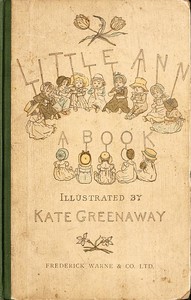
Little Ann, and Other Poems
Language: en416 downloads on Project Gutenberg
Subjects
In: Children & Young Adult Reading·Poetry·British Literature
Public-domain ebook sourced from Project Gutenberg #42947.
Public-domain ebook
Language: en416 downloads on Project Gutenberg
Subjects
In: Children & Young Adult Reading·Poetry·British Literature
Public-domain ebook sourced from Project Gutenberg #42947.
The opening · free to read
"O brother, look yonder! what clusters hang there! I'll try and climb over the wall: I must have an apple; I will have a pear; Although it should cost me a fall!"
Said William to Thomas, "To steal is a sin, Mamma has oft told this to thee: I never have stolen, nor will I begin, So the apples may hang on the tree."
"You are a good boy, as you ever have been," Said Thomas, "let's walk on, my lad: We'll call on our schoolfellow, Benjamin Green, Who to see us I know will be glad."
They came to the house, and ask'd at the gate, "Is Benjamin Green now at home?" But Benjamin did not allow them to wait, And brought them both into the room.
And he smiled, and he laugh'd, and caper'd with joy, His little companions to greet: "And we too are happy," said each little boy, "Our playfellow dear thus to meet."
"Come, walk in our garden, this morning so fine, We may, for my father gives leave; And more, he invites you to stay here and dine: And a most happy day we shall have!"
But when in the garden, they found 'twas the same They saw as they walk'd in the road; And near the high wall when those little boys came, They started as if from a toad:
"That large ring of iron, you see on the ground, With terrible teeth like a saw," Said their friend, "the guard of our garden is found, And it keeps all intruders in awe.
"If any the warning without set at naught, Their legs then this man-trap must tear:" Said William to Thomas, "So you'd have been caught, If you had leapt over just there."
Cried Thomas in terror of what now he saw, "With my faults I will heartily grapple; For I learn what may happen by breaking a law, Although but in stealing an apple."
SOPHIA'S FOOL'S-CAP.
Sophia was a little child, Obliging, good, and very mild, Yet lest of dress she should be vain, Mamma still dress'd her well, but plain. Her parents, sensible and kind, Wish'd only to adorn her mind; No other dress, when good, had she, But useful, neat simplicity.
Though seldom, yet when she was rude, Or ever in a naughty mood, Her punishment was this disgrace, A large fine cap, adorn'd with lace, With feathers and with ribbons too; The work was neat, the fashion new, Yet, as a fool's-cap was its name, She dreaded much to wear the same.
A lady, fashionably gay, Did to mamma a visit pay: Sophia stared, then whisp'ring said, "Why, dear mamma, look at her head! To be so tall and wicked too, The strangest thing I ever knew: What naughty tricks, pray, has she done, That they have put that fool's-cap on?"
"My Fanny, I have news to tell, Your diligence quite pleases me; You've work'd so neatly, read so well, With cousin Jane you may take tea.
"But pray remember this, my love, Although to stay you should incline, And none but you should think to move, I wish you to return at nine."
With many thanks the attentive child Assured mamma she would obey: Whom tenderly she kiss'd, and smiled, And with the maid then went away.
Arrived, the little girl was shown To where she met the merry band; And when her coming was made known, All greet her with a welcome bland.
They dance, they play, and sweetly sing, In every sport each one partakes; And now the servants sweetmeats bring, With wine and jellies, fruit and cakes.
Then comes papa, who says, "My dears, The magic lantern if you'd see, And that which on the wall appears, Leave off your play, and follow me."
While Frances too enjoy'd the sight, Where moving figures all combine To raise her wonder and delight, She hears, alas! the clock strike nine.
"Miss Fanny's maid for her is come."-- "Oh dear, how soon!" the children cry; They press, but Fanny will go home, And bids her little friends good bye.
"See, dear mamma, I have not stay'd." "Good girl, indeed," mamma replies, "I knew you'd do as you had said, And now you'll find you've won a prize.
"So come, my love, and see the man Whom I desired at nine to call." Down stairs young Frances quickly ran, And found him waiting in the hall.
"Here, Miss, are pretty birds to buy, A parrot or macaw so gay; A speckled dove with scarlet eye: A linnet or a chattering jay.
"Would you a Java sparrow love?" "No, no, I thank you," said the child; "I'll have a beauteous cooing dove, So harmless, innocent, and mild."
"Your choice, my Fanny, I commend, Few birds can with the dove compare; But, lest it pine without a friend, I give you leave to choose a pair."
CARELESS MATILDA.
"Again, Matilda, is your work undone! Your scissors, where are they? your thimble, gone? Your needles, pins, and thread and tapes all lost; Your housewife here, and there your workbag toss'd.
"Fie, fie, my child! indeed this will not do, Your hair uncomb'd, your frock in tatters, too; I'm now resolved no more delays to grant, To learn of her, I'll send you to your aunt." In vain Matilda wept, entreated, pray'd, In vain a promise of amendment made.
Arrived at Austere Hall, Matilda sigh'd, By Lady Rigid when severely eyed: "You read and write, and work well, as I'm told, Are gentle, kind, good-natured, and not bold; But very careless, negligent, and wild-- You'll leave me, as I hope, a different child."
The little girl next morn a favour asks; "I wish to take a walk."--"Go, learn your tasks," Replies her aunt, "nor fruitlessly repine: Your room you'll leave not till you're call'd to dine." As there Matilda sat, o'erwhelm'd with shame, A dame appear'd, Disorder was her name: Her hair and dress neglected--soil'd her face, Her mien unseemly, and devoid of grace.
"Here, child," said she, "my mistress sends you this, A bag of silks--a flower, not work'd amiss-- A polyanthus bright, and wondrous gay, You'll copy it by noon, she bade me say." Disorder grinn'd, and shuffling walk'd away.
Entangled were the silks of every hue, Confused and mix'd were shades of pink, green, blue; She took a thread, compared it with the flower: "To finish this is not within my power. Well-sorted silks had Lady Rigid sent, I might have work'd, if such was her intent." She sigh'd, and melted into sobs and tears: She hears a step, and at the door appears A pretty maiden, clean, well-dress'd, and neat, Her voice was soft, her looks sedate, yet sweet. "My name is Order: do not cry, my love; Attend to me, and thus you may improve." She took the silks, and drew out shade by shade, In separate skeins, and each with care she laid; Then smiling kindly, left the little maid.
She leaves the room--"I've done my task," she cries, The lady look'd, and scarce believed her eyes; Yet soon her harshness changed to glad surprise: "Why, this is well, a very pretty flower, Work'd so exact, and done within the hour! And now amuse yourself, and walk, or play." Thus pass'd Matilda this much dreaded day. At all her tasks, Disorder would attend; At all her tasks, still Order stood her friend. With tears and sighs her studies oft began, These into smiles were changed by Order's plan. No longer Lady Rigid seem'd severe: The negligent alone her eye need fear.
And now the day, the wish'd-for day, is come, When young Matilda may revisit home. "You quit me, child, but oft to mind recall The time you spent with me at Austere Hall. And now, my dear, I'll give you one of these To be your maid--take with you which you please. What! from Disorder do you frighten'd start?" Matilda clasp'd sweet Order to her heart, And said, "From thee, best friend, I'll never part."
THE VIOLET.
Down in a green and shady bed, A modest violet grew; Its stalk was bent, it hung its head As if to hide from view.
And yet it was a lovely flower, Its colour bright and fair; It might have graced a rosy bower, Instead of hiding there.
Yet thus it was content to bloom, In modest tints arrayed; And there diffused a sweet perfume Within the silent shade.
The book keeps going
Reading is free forever. Sign up and watch scenes appear while you read.



Scenes Storieta drew for other classics.
New illustrated classics
Once or twice a month: the latest books to get full character casts, scene art, and free comic editions. No account needed.