Public-domain ebook
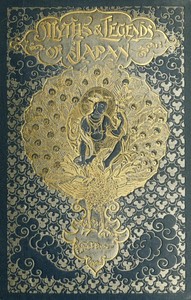
Myths & Legends of Japan
Language: en1,885 downloads on Project Gutenberg
Subjects
In: Mythology, Legends & Folklore
Public-domain ebook sourced from Project Gutenberg #45723.
Public-domain ebook
Language: en1,885 downloads on Project Gutenberg
Subjects
In: Mythology, Legends & Folklore
Public-domain ebook sourced from Project Gutenberg #45723.
Myths & Legends of Japan is a scholarly anthology that gathers the traditional stories, deities, and folk motifs of the Japanese archipelago. The author, Frederick Hadland Davis, opens with an extensive acknowledgment of the many scholars, translators, and earlier writers whose works he has drawn upon, figures such as Lafcadio Hearn, Basil Hall Chamberlain, and W. G. Aston, indicating that the volume is built on a foundation of nineteenth‑century research and translation. The book’s contents are organized into thematic sections, ranging from the “Period of the Gods” and heroic epics to specific motifs like foxes, snow women, and tea ceremonies, and it is supplemented by illustrations that depict scenes such as the moon‑maiden and the legend of Yuki‑onna. This structure signals a comprehensive reference that presents myths in both narrative and analytical form, while the introductory essay situates the legends within a broader cultural and historical context, tracing Japan’s evolution from an isolated realm to a modern power.
The prose reflects the turn‑of‑the‑century academic style of the early 1900s, blending erudite commentary with a reverent tone toward Japanese tradition. Davis’s voice is that of a well‑read Western scholar who admires the elegance of Japanese folklore yet remains firmly within the conventions of his era, employing a formal diction and occasional comparative observations with Western literature. Readers who appreciate detailed, source‑rich surveys of mythology, students of comparative religion, historians of East Asian culture, and lovers of classic folklore collections, will find this work rewarding. Its exhaustive index, glossary, and illustrative plates also make it a valuable companion for researchers seeking a panoramic view of Japan’s mythic heritage.
The opening · free to read
In writing Myths and Legends of Japan I have been much indebted to numerous authorities on Japanese subjects, and most especially to Lafcadio Hearn, who first revealed to me the Land of the Gods. It is impossible to enumerate all the writers who have assisted me in preparing this volume. I have borrowed from their work as persistently as Japan has borrowed from other countries, and I sincerely hope that, like Japan herself, I have made good use of the material I have obtained from so many sources.
I am indebted to Professor Basil Hall Chamberlain for placing his work at my disposal, and I have found his encyclopædic volume, Things Japanese, his translation of the Kojiki, his Murray's Hand-book for Japan (in collaboration with W. B. Mason), and his Japanese Poetry, of great value. I thank the Executors of the late Dr. W. G. Aston for permission to quote from this learned authority's work. I have made use of his translation of the Nihongi (Transactions of the Japan Society, 1896) and have gathered much useful material from A History of Japanese Literature. I am indebted to Mr. F. Victor Dickins for allowing me to make use of his translation of the Taketori Monogatari and the Ho-jō-ki. My friend Mrs. C. M. Salwey has taken a sympathetic interest in my work, which has been invaluable to me. Her book, Fans of Japan, has supplied me with an exquisite legend, and many of her articles have yielded a rich harvest. I warmly thank Mr. Yone Noguchi for allowing me to quote from his poetry, and also Miss Clara A. Walsh for so kindly putting at my disposal her fascinating volume, The Master-Singers of Japan, published by Mr. John Murray in the "Wisdom of the East" series. My thanks are due to Messrs. Houghton, Mifflin Company, for allowing me to quote from Lafcadio Hearn's Glimpses of Unfamiliar Japan and The Japanese Letters of Lafcadio Hearn; to Messrs. George Allen & Sons, for giving me permission to quote from Sir F. T. Piggott's Garden of Japan; to the Editor of the Academy, for permitting me to reprint my article on "Japanese Poetry," and to Messrs. Cassell and Co. Ltd., for allowing me to reproduce "The Garden of Japan," which I originally contributed to Cassell's Magazine. The works of Dr. William Anderson, Sir Ernest Satow, Lord Redesdale, Madame Ozaki, Mr. R. Gordon Smith, Captain F. Brinkley, the late Rev. Arthur Lloyd, Mr. Henri L. Joly, Mr. K. Okakura, the Rev. W. E. Griffis, and others, have been of immense value to me, and in addition I very warmly thank all those writers I have left unnamed, through want of space, whose works have assisted me in the preparation of this volume.
Pierre Loti in Madame Chrysanthème, Gilbert and Sullivan in The Mikado, and Sir Edwin Arnold in Seas and Lands, gave us the impression that Japan was a real fairyland in the Far East. We were delighted with the prettiness and quaintness of that country, and still more with the prettiness and quaintness of the Japanese people. We laughed at their topsy-turvy ways, regarded the Japanese woman, in her rich-coloured kimono, as altogether charming and fascinating, and had a vague notion that the principal features of Nippon were the tea-houses, cherry-blossom, and geisha. Twenty years ago we did not take Japan very seriously. We still listen to the melodious music of The Mikado, but now we no longer regard Japan as a sort of glorified willow-pattern plate. The Land of the Rising Sun has become the Land of the Risen Sun, for we have learnt that her quaintness and prettiness, her fairy-like manners and customs, were but the outer signs of a great and progressive nation. To-day we recognise Japan as a power in the East, and her victory over the Russian has made her army and navy famous throughout the world.
The Japanese have always been an imitative nation, quick to absorb and utilise the religion, art, and social life of China, and, having set their own national seal upon what they have borrowed from the Celestial Kingdom, to look elsewhere for material that should strengthen and advance their position. This imitative quality is one of Japan's most marked characteristics. She has ever been loath to impart information to others, but ready at all times to gain access to any form of knowledge likely to make for her advancement. In the fourteenth century Kenkō wrote in his Tsure-dzure-gusa: "Nothing opens one's eyes so much as travel, no matter where," and the twentieth-century Japanese has put this excellent advice into practice. He has travelled far and wide, and has made good use of his varied observations. Japan's power of imitation amounts to genius. East and West have contributed to her greatness, and it is a matter of surprise to many of us that a country so long isolated and for so many years bound by feudalism should, within a comparatively short space of time, master our Western system of warfare, as well as many of our ethical and social ideas, and become a great world-power. But Japan's success has not been due entirely to clever imitation, neither has her place among the foremost nations been accomplished with such meteor-like rapidity as some would have us suppose.
We hear a good deal about the New Japan to-day, and are too prone to forget the significance of the Old upon which the present régime has been founded. Japan learnt from England, Germany and America all the tactics of modern warfare. She established an efficient army and navy on Western lines; but it must be remembered that Japan's great heroes of to-day, Togo and Oyama, still have in their veins something of the old samurai spirit, still reflect through their modernity something of the meaning of Bushido. The Japanese character is still Japanese and not Western. Her greatness is to be found in her patriotism, in her loyalty and whole-hearted love of her country. Shintōism has taught her to revere the mighty dead; Buddhism, besides adding to her religious ideals, has contributed to her literature and art, and Christianity has had its effect in introducing all manner of beneficent social reforms.
There are many conflicting theories in regard to the racial origin of the Japanese people, and we have no definite knowledge on the subject. The first inhabitants of Japan were probably the Ainu, an Aryan people who possibly came from North-Eastern Asia at a time when the distance separating the Islands from the mainland was not so great as it is to-day. The Ainu were followed by two distinct Mongol invasions, and these invaders had no difficulty in subduing their predecessors; but in course of time the Mongols were driven northward by Malays from the Philippines. "By the year A.D. 500 the Ainu, the Mongol, and the Malay elements in the population had become one nation by much the same process as took place in England after the Norman Conquest. To the national characteristics it may be inferred that the Ainu contributed the power of resistance, the Mongol the intellectual qualities, and the Malay that handiness and adaptability which are the heritage of sailor-men."[1] Such authorities as Baelz and Rein are of the opinion that the Japanese are Mongols, and although they have intermarried with the Ainu, "the two nations," writes Professor B. H. Chamberlain, "are as distinct as the whites and reds in North America." In spite of the fact that the Ainu is looked down upon in Japan, and regarded as a hairy aboriginal of interest to the anthropologist and the showman, a poor despised creature, who worships the bear as the emblem of strength and fierceness, he has, nevertheless, left his mark upon Japan. Fuji was possibly a corruption of Huchi, or Fuchi, the Ainu Goddess of Fire, and there is no doubt that these aborigines originated a vast number of geographical names, particularly in the north of the main island, that are recognisable to this day. We can also trace Ainu influence in regard to certain Japanese superstitions, such as the belief in the Kappa, or river monster.
The Chinese called Japan Jih-pén, "the place the sun comes from," because the archipelago was situated on the east of their own kingdom, and our word Japan and Nippon are corruptions of Jih-pén. Marco Polo called the country Zipangu, and one ancient name describes it as "The-Luxuriant-Reed-Plains-the-land-of-Fresh -Rice-Ears-of-a-Thousand-Autumns-of-Long-Five-Hundred-Autumns." We are not surprised to find that such a very lengthy and descriptive title is not used by the Japanese to-day; but it is of interest to know that the old word for Japan, Yamato, is still frequently employed, Yamato Damashii signifying "The Spirit of Unconquerable Japan." Then, again, we still hear Japan referred to as The Island of the Dragon-fly. We are told in the old Japanese Chronicles that the Emperor, in 630 B.C., ascended a hill called Waki Kamu no Hatsuma, from which he was able to view the land on all sides. He was much impressed by the beauty of the country, and said that it resembled "a dragon-fly licking its hinder parts," and the Island received the name of Akitsu-Shima ("Island of the Dragon-fly").
The Kojiki, or "Records of Ancient Matters," completed A.D. 712, deals with the early traditions of the Japanese race, commencing with the myths, the basis of Shintōism, and gradually becoming more historical until it terminates in A.D. 628. Dr. W. G. Aston writes in A History of Japanese Literature: "The Kojiki, however valuable it may be for research into the mythology, the manners, the language, and the legends of early Japan, is a very poor production, whether we consider it as literature or as a record of facts. As history it cannot be compared with the Nihongi,[2] a contemporary work in Chinese; while the language is a strange mixture of Chinese and Japanese, which there has been little attempt to endue with artistic quality. The circumstances under which it was composed are a partial explanation of the very curious style in which it is written. We are told that a man named Yasumaro, learned in Chinese, took it down from the lips of a certain Hiyeda no Are, who had such a wonderful memory that he 'could repeat with his mouth whatever was placed before his eyes, and record in his heart whatever struck his ears.'" It is possible that Hiyeda no Are was one of the Kataribe or "Reciters," whose duty it was to recite "ancient words" before the Mikado at the Court of Nara on certain State occasions.
The Kojiki and the Nihongi are the sources from which we learn the early myths and legends of Japan. In their pages we are introduced to Izanagi and Izanami, Ama-terasu, Susa-no-o, and numerous other divinities, and these august beings provide us with stories that are quaint, beautiful, quasi-humorous, and sometimes a little horrible. What could be more naïve than the love-making of Izanagi and Izanami, who conceived the idea of marrying each other after seeing the mating of two wagtails? In this ancient myth we trace the ascendency of the male over the female, an ascendency maintained in Japan until recent times, fostered, no doubt, by Kaibara's Onna Daigaku, "The Greater Learning for Women." But in the protracted quarrel between the Sun Goddess and her brother, the Impetuous Male, the old chroniclers lay emphasis upon the villainy of Susa-no-o; and Ama-terasu, a curious mingling of the divine and the feminine, is portrayed as an ideal type of Goddess. She is revealed preparing for warfare, making fortifications by stamping upon the ground, and she is also depicted peeping out of her rock-cavern and gazing in the Sacred Mirror. Ama-terasu is the central figure in Japanese mythology, for it is from the Sun Goddess that the Mikados are descended. In the cycle of legends known as the Period of the Gods, we are introduced to the Sacred Treasures, we discover the origin of the Japanese dance, and in imagination wander through the High Plain of Heaven, set foot upon the Floating Bridge, enter the Central Land of Reed-Plains, peep into the Land of Yomi, and follow Prince Fire-Fade into the Palace of the Sea King.
The book keeps going
Reading is free forever. Sign up and watch scenes appear while you read.



Scenes Storieta drew for other classics.
New illustrated classics
Once or twice a month: the latest books to get full character casts, scene art, and free comic editions. No account needed.