Public-domain ebook
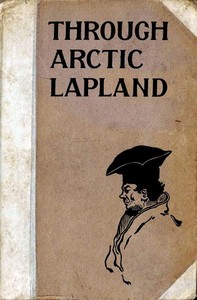
Through Arctic Lapland
by Charles John Cutcliffe Wright Hyne
Language: en429 downloads on Project Gutenberg
Subjects
Public-domain ebook sourced from Project Gutenberg #45862.
Public-domain ebook
by Charles John Cutcliffe Wright Hyne
Language: en429 downloads on Project Gutenberg
Subjects
Public-domain ebook sourced from Project Gutenberg #45862.
The opening · free to read
The wharves of Katherine Dock were black with many thousands of people, and all their eyes converged on a little auxiliary barque which was working out of the basin under her own gentle steam. The barque carried a white tub at her mainmast-head, was rigged with single topsails, bore many white double-ended boats upturned on skids amidships, and was decorated with sundry other matters which even to the shore eye would seem strange in London river. Stacked in her waist were bags of coal, crates, packing cases, a couple of ice-anchors, a tangle of trellis-work sledges, and other quaint trifles which had not yet been struck below.
Any craft more unlike the ordinary conventional type of yacht it would have been hard to conceive, and yet the burgee of the Royal Thames Yacht Club fluttered out from above the white crow's nest (or fouled the telescope rail, as the case might be) and an English blue ensign hung clean and unfrayed from the mizzen truck, as the mizzen gaff, its more orthodox station, had not yet been set up.
The barque was already a vessel well known. As a sealer and whale-fisher she had earned fat dividends for Dundee owners; as the S.Y. Windward she had made history, and helped to found the British colony of Elmwood in Franz Josef's Land, and had been iced up for an Arctic winter in a bay at the back of Cape Flora; and on this trip she was destined (although no one even guessed at it then) to acquire a far more international fame. She was setting out then from Katherine Dock under the command of that old ice-sailor, Captain James Brown, to carry recruits and supplies to the Jackson-Harmsworth exploring expedition after their second winter amongst the polar ice; and she landed these on the sterile rocks of Franz Josef's Land after a bitter struggle with the floes, and brought back with her to the land of champagne and telegraph wires, Frithjof Nansen, the Norskman, as by this time all the world most thoroughly knows.
Slowly that single-topsail barque was warped across the dock basin, a strange small creature amongst the huge steam shipping; slowly she passed through the outer lock; and then the ebb of the muddy river took her, and she moved out into the stream, and the black crowds on the dock-head sent up thunderous cheers.
The little auxiliary propeller fluttered astern, and she dropped down river at no ostentatious speed. But the white barrel perched up there under the main truck betrayed her always, and every vessel of every nationality in those cosmopolitan reaches knew her as the yacht of the English Arctic expedition. The blue ensign was kept on a constant dance up and down from her mizzen truck, as it answered other bunting, which was dipped in salute from countless peaks and poop-staffs. Some crews cheered her as she passed at her puny gait through the crowded shipping; the band of the Worcester played her down the river out of earshot; everybody she passed warmed to her enterprise and wished her success and a snug return.
Ladies, and owner, and shore folk, had come down the river to give her a final "send off," but these left at Greenhythe with the mud pilot, and from that began an easy voyage to the rim of the Polar Sea. The Windward was to go North as much as possible under her own canvas; but as some steam would certainly be required for head winds and other emergencies, she was to call in at Vardö at the entrance to the White Sea to rebunker, so as to have the largest possible supply of good Welsh steam coal for her final battle with the Northern ice. To this port, in the north-easternmost angle of Arctic Norway, the Windward carried as passengers Mr. Cecil Hayter, who drew pictures for this book, and another man, who wrote it.
Now, to say that we two had a vague notion of what was ahead of us was putting the matter mildly. We knew many of those concerned in the Jackson-Harmsworth expedition, and had always had an interest in the achievements of the Windward; and one night in somebody's billiard-room we had talked vaguely over "going North and doing something up there" ourselves. We imagined this something might be to explore the Petchora or one of the lesser-known Northern Siberian rivers, to make the acquaintance of the Samoyede in his native choom, and incidentally to do some big game shooting. We knew remarkably little about the country, and so were quite unfettered in making some very appetising plans. This was six months before the Windward sailed, and though we met two or three times in the interval, the matter was only mentioned casually, and with merely a dilettante interest.
Finally, when Mr. Alfred Harmsworth wired "Are you going North with Windward?" and got a simultaneous reply of "Delighted" from each of us, the yacht was booked to sail in fifty hours' time, and any preparations we wished to make were naturally hustled.
When we actually did get under weigh, our outfit consisted of one inferior double-barrelled 12-bore shot-gun by an anonymous maker, one good Marlin '45 repeating rifle carrying a long bullet, a small assortment of tinned foods and loaded cartridges, an imaginative map, the clothes we stood up in, and a brown canvas, seaman's bag apiece containing sleeping sack, tooth-brush, spare shirt, and foreign office passport with a hieroglyphical Russian visé. But if our equipment was slender, the plan of our expedition was at least definite and concise. The Petchora and North Siberia were to be left undisturbed in their accustomed darkness. Even the virgin delights of Novaya Zemblya (to which island a steamer was alleged to be on the point of starting from Archangel) were to be left for another time. We were going to see the Lapp in that unmeddled-with country, Arctic Lapland.
It had been my luck to live en famille with some herder Lapps once before in North-Western Norway. I had some elk shooting and some fishing up there, and I came across the tribe one day poaching red char from one of my own hired lakes. I kept silence about my temporary proprietorship, and assisted to steal my own fish, after which I encamped with them for seven days, sleeping à la belle étoile, and providing my own nutriment. The tribe possessed some three hundred head of tame reindeer, and as my available luggage at the time was a Kodak camera, I managed to get some rather good photographs of the deer at close quarters.
It was these photographs which suggested going to see the Lapp in his own domains. The map showed the position of Lapland in large letters, and for the sake of definiteness we made up our minds to cross it from north to south, and take to the seas again at the head of the Gulf of Bothnia. That should be our expedition. It was delightfully simple in its scope and comprehensiveness.
Drawing from our own ignorance, and from the united ignorance of others (most freely and generously bestowed), we mapped out the details of the campaign with glibness and ease. At Vardö we were to purchase furs to wear and horses to ride. Russian horses, or rather ponies, they were to be: our friends told us all about them. And then we had merely to procure a guide and interpreter, and set off. There was a road along the north shore of the Varanger fjord to Vadsö, and from there a bridle path of sorts led to Næsseby and Puolnak, and down through the country by Lake Enare to Kittila, where it met a broad road which continued down by the side of the Torneo River as far as the coast. We knew all this because the large scale map which we bought at the best map shop in London said it was so. And there were plenty of villages--the map marked them with clearness and precision. At nights we would either sleep out in our furs and blanket sacks, or sleep in the villages.
As regards the commissariat, that we decided would be simple also. Reindeer meat, salmon, rye bread, milk, cheese, and butter would be always procurable from the natives. And besides, we should shoot far more game than we could possibly use for the pot. Men who "knew the country round there" assured us clearly on this point. Game swarmed. The country was alive with bear, ptarmigan, willow grouse, and capercailzie. I wonder now that no one suggested we might pick up a belated mammoth. And though I personally had been shooting in North Norway before, and so discounted part of the yarns, I did think we should find enough to keep going upon.
The few tins of provisions we did take were mainly to serve as luxuries. For instance, we had quite a large supply of foie gras and larks in aspic.
I had a vivid recollection of how the last tin of that pâté de foie gras went. We had put in a forty-mile tramp by way of sharpening the appetite, and we sat down in the middle of a gray cloud of mosquitoes to share it between us. It was a tin about four inches in diameter by two deep, and it contained a generous casing of tallow, which had partly melted through being carried next to a perspiring Laplander's back. There was no scrap of any other food available, and so we divided the pâté (and the tallow) with mathematical accuracy. Hayter eyed the polished tin when we had finished, and said thoughtfully that he always had liked foie gras. I mentioned that sometimes I preferred beef or even venison; that I could do with about six pounds of beef just then; and that as a meal for a hungry man, foie gras was all very well, but did not seem to go quite far enough.
With these hints, then, at our initial ignorance of what lay beyond, let me pass on to Vardö, which was the real starting-point of both our plans and our journey. The Windward made an easy voyage of it on the whole up to there, and although she carried away her main-topsail yard, and smashed the reefing spar below it in two places, that was looked upon as rather a slice of luck, as it might well have been disastrous if such an accident had happened later, when every ounce of steam and every inch of canvas might be wanted in the fierce wrestle with the Polar ice. In Vardö it might be repaired.
Inside Vardö harbour walls, then, to a mooring we came, and the smells of the place closed round us and took possession. Bobbling about on the harbour swell around us were some two hundred vessels of strange Northern rig, and almost all connected with the trade in fish. There is no agriculture in this town perched on the northern outskirts of the continent; there are no trees to make a timber business; there are no metals or fuels to dig from the earth; there are no inducements to weave or carry on any of the manufactures of a more gentle clime. The sea is the only field which yields the Vardö man a harvest, and from the sea he reaps it with unremitting industry. Finns, Russians, Norwegians, Samoyedes, Lapps, all join in the work and bring their catch, in clumsy yots, and square-sailed viking boats, and the other weird unhandy craft of the North, in past the concrete wall of Vardö harbour, and run alongside the smelling warehouses which are built on piles at the water-side, and send it ashore all slimy and glistening, and then go off to dangle bait in the chill inhospitable seas for more.
The book keeps going
Reading is free forever. Sign up and watch scenes appear while you read.



Scenes Storieta drew for other classics.
New illustrated classics
Once or twice a month: the latest books to get full character casts, scene art, and free comic editions. No account needed.