"The king has come in to his own again"
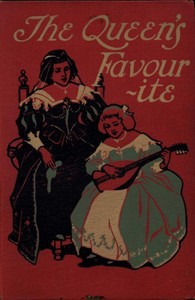
In a large, sombre apartment, in the palace of the Louvre, there was unusual commotion. The Queen Dowager, Henrietta Maria, was seated in a crimson gilt fauteuil, wearing her widow's black robes, for she had never cast off the mourning she had donned for her murdered husband, Charles I; and indeed she had unwillingly suffered any of her attendants to array themselves in brighter colours.
"Until he is avenged," she would say; "until his murderers have suffered what he suffered, if that be possible!"
Behind her, leaning on the back of her chair, was her young daughter, a girl of sixteen--that child who had never seen her father's face, who had been brought over to France by stealth in swaddling clothes, who had suffered all the miseries of exile, and shared all the poverty which her mother's position had forced upon them.
Everybody knows the story of how the queen kept this child in bed in winter, because they could afford no fire in their room. Possibly she did this to shame the king, Louis XIV, who denied the necessaries of existence to the daughter of Henry IV.
The princess was at the present time just passing from girlhood into womanhood. She gave promise of great beauty, which was to be fully realized. There was a triumphant look on her face; indeed, on the faces of all those present, for kneeling at the queen's feet was a messenger who had just arrived from Holland bearing the news that a deputation from England had waited on her son, Charles II, and had invited him back to England, entreating him to suffer himself to be placed upon that throne which had cost his father his life.
After the envoy had delivered his message, a great silence fell upon all present. The queen, for a few seconds, seemed incapable of realizing the truth. It is at this moment we introduce our readers to her court.
Suddenly a little voice broke the silence, and a childish figure, a girl of ten or eleven years old, sprang forward, and holding out with both her little hands a somewhat shabby white satin gown, she pirouetted into the centre of the room, and, dancing on the tips of her toes, sang gaily: "The king has come in to his own again; the king has come in to his own!"
The ice was broken: a general movement took place. A young woman in a tight-fitting black gown and a white cap sprang after the child and passionately shook her.
"How dare you; how dare you!" she exclaimed; but the child twisted herself free of her, and ran lightly to the Princess Henrietta, hiding herself in the folds of her gown.
"Let her alone," said the queen, "she has spoken for us all." And a smile such as had not been seen on that royal face for many a day crept over the widowed queen's countenance. Regaining her self-command, she said to the messenger still kneeling before her:
"I thank you for the haste you have made in coming to us, and I bid you return with equal haste to my dear son, and tell his majesty that all loyal hearts rejoice with him, and that we await but his command to join him in England. Until then we will abide here as patient and loyal subjects."
The messenger arose, and bowed low, saying;
"I have no doubt that the king will desire your majesty's presence as soon as he has taken possession of his kingdom." And with that he bowed himself backwards out of the room.
With the disappearance of the messenger etiquette slackened; there was much talking and not a little laughter. Suddenly the door leading into the anteroom was thrown open, and all the elite of the court of France, all those faithful followers of the Stuart cause who had escaped out of Cromwell's hands and taken up their abode at the French court, young and old, gay sparks of the aristocracy, and grey-headed men and women who had lost lands and fortunes in their master's cause, pressed forward. Their day had come at last; surely they would now reap the fruit of their devotion.
The queen rose and went into their midst with all that stately courtesy for which she was remarkable, and her young daughter, following her example, gave her hand to be kissed, smiling with that wonderful charm and look of gladness which was destined to fascinate so many hearts.
Once more the doors were thrown wide open, but this time heralds announced:
"Le roi, le roi!"
Queen Henrietta stood still, but, as the king entered, she advanced a few steps to meet him, curtsying deeply.
"Ma tante," he said, "I would have been the first to congratulate you, but news flies so fast, you have already heard what I would gladly have imparted to you myself."
"You are very good, my nephew," answered the Queen, "but sorrow has followed me for so long, that I can scarcely allow myself to hope that my dear son will succeed his martyred father in peace and without bloodshed."
"What matters that to you, ma tante? If blood has to be shed in a good cause, there is no regretting it; and there are those here present," he added, turning round and facing the courtiers, "who will not hesitate to give their lives for their rightful king."
A murmur ran through the crowd, and the whole assemblage bowed low in acquiescence. One voice rose above the others:
"His majesty speaks like Solomon; we are ready to shed the last drop of our blood for our royal master. Long live King Charles!"
People said that Queen Henrietta Maria had grown hard in her trouble. At the present moment the softening element of joy crept into her heart and brought tears to her eyes.
"Grand merci, grand merci to you all!" she repeated; and the king, taking her hand, led her to her seat, himself occupying the fauteuil which had been hastily brought for him.
A whispered word to Henrietta, repeated by her to the gentlemen of her household, and the crowd of courtiers disappeared, leaving the king and his aunt alone. Even Princess Henrietta and her little companion were dismissed.
What took place between the royal aunt and nephew was only known some years later; but the queen was well satisfied with the result of their conversation, for the strings of the king's purse were opened, and the poverty which so long oppressed her disappeared.
The princess and the child Agnes felt this change more than anyone. There was a mystery concerning Agnes; but mysteries about personages were very common in those days. In this great Civil War children had been lost, families had disappeared, no one quite knew who might be who.
When people questioned as to who this child was, the queen answered haughtily:
"Her name is Agnes Beaumont. Who she is and whence she comes I know; that is my secret, and must suffice all men."
It was on a cold winter's night nigh upon twenty years ago, and snow lay thick upon the ground, when Patience had found her way to the Palace of the Louvre, and begged and prayed, and almost forced herself into Queen Henrietta's presence. It was in the early days of the queen's widowhood. She had pawned all her jewels; she had sent all her money to the assistance of her son; and she herself was living a beggar on the bounty of the King of France, and that was measured out stingily. Poverty was in the air; the great rooms assigned to her in the Palace of the Louvre were bare and cold; and when Patience succeeded in forcing her way into her presence, she found the queen cowering over a few embers in the great fireplace, with the young princess, then only a child of eight years, gathered in her arms for warmth.
Approaching the queen, Patience knelt before her.
"Do you not recognize me, your majesty?" she said.
The queen looked at her.
"Yes, I recognize you," she said; "you come from my friend," and in a low voice she mentioned a name, adding:
"What of her?"
"Dead," answered Patience, "even as her husband died after the great battle, and with her dying breath she bade me bring you this." And opening back her cloak she showed, lying in her arms, a sleeping child of some eighteen months old.
"Why did you bring her here?" said the queen, throwing up her hands in despair. "What am I to do with her? We have scarce food for ourselves. How shall I feed her?"
"Have no fear on that score," said Patience, "I will feed her. Only let her live under your shelter, protected by your name; for there are those who, if they found her, would cast her out or do her some evil turn. You know that well. They have entered upon her possessions--they hold what by right is hers; therefore she must be cared for until such time as she can claim her own, or till you can give it to her."