Public-domain ebook
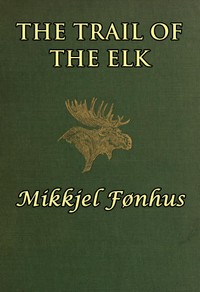
The Trail of the Elk
English325 downloads on Project GutenbergDownload EPUB
Public-domain ebook sourced from Project Gutenberg #51771.
Public-domain ebook
English325 downloads on Project GutenbergDownload EPUB
Public-domain ebook sourced from Project Gutenberg #51771.
The opening · free to read
THIS is the story of a wizard elk—Rauten, as people called him. He was a human being in animal guise.
The story begins in Ré Valley, which lies like a yawning gap between mountains, long and flat with borders of forests so dark that they look as though part of the blackness of night lingered in them. A river moves sluggishly along the bottom of the valley, making its way slowly and carefully between stretches of light-red sand. It runs northwards, a rare thing in Norway.
There are bogs along the banks of the river, bearing tall, stiff sedge, and when the weather is calm they appear to be bristling. But in sunshine and wind they sway to and fro like undulating carpets of silk. Sometimes a long neck appears, and a crane moves with his measured stride, in which there is peace and contentment. For the crane does not trouble himself about the past or the future. The present with its long round of days suffices for him.
An ancient mountain farm lies there with its fence all tumbled down. The thin pasture is covered here and there with copses. The houses rot and are never rebuilt. At one time bears were so troublesome round about Tolleiv Mountain Farm that it was impossible to remain there, and even to-day it often happens, especially in the autumn, that a bear is seen feeding on berries far up the mountain side.
But in the spring, life seethes in all the animals of the valley. The capercailzie stretches his neck, shuts his eyes, and hisses passionately towards the sunrise. Each night is a time of fierce unrest. Wings flap, claws tear and rend, and slavering rows of teeth snarl angrily at each other in the purple moonlight. Above the forests the Ré Mountains rise like white swans.
It was in the summer-time a good many years ago. On the slopes between Svart Mountain at the upper end of Ré Valley there might have been seen an elk with her calf. The strange feature of the calf was that it had lost half one of its ears. I will tell you later on how this happened. The calf was born amongst the patches of hard snow below the region where the snow melts in spring, and at the time of which we write he was still quite small. But as by degrees the weeks passed by he developed gristle, he gained in bulk, marrow formed in his bones, and he grew heavy. That calf was bound to grow into a giant elk if only he were allowed time enough.
Even the elk oxen with their seven-tined antlers, who scrub the young trees in Ré Valley, were once young calves like this.
He is feeding from his mother; the warm milk, trickling slowly from her body into his, gives him his first sensation of pleasure. Consciousness grows clear just as the clouds roll away and leave the blue sky above him. He gains his first notions of time, which is made up of light and darkness. He learns that still water is silent, and that running water makes a sound, and may lick his legs as with wet and cool tongues—and that when the wind rises the trees wail like young fox cubs. He also learns how to distinguish the shrill call of the hawk and falcon that hover beneath the sky like shivering leaves. At night countless little eyes gleam from the vault above him; they are stars. But stars may gleam even from dark copses and gullies, from marten and from fox, from all the animals that rise when the sun sets.
The nights of midsummer draw their soft veil over the valley, and the glaciers, forgotten and abandoned in the mountains, light their shining silvery lamps. Deep down in the Gipsy Pond a golden cloud has gone to rest like a pyre in the night, a sacrificial fire to the god of peace and loneliness. And above its flames the leaves of the waterlilies sway on the face of the water like great green hearts. Some days bring thunder and lightning, as if the heavens would be rent asunder, and after the storm the sun gleams on showers of rain trailing over the mountains like dew-wet shimmering cobwebs.
But on autumn nights the earth seems to be wrapped up in a golden fleece and the moon glares from the sky like a yellow eye.
About this time the elks of Ré Valley grow strangely restless. Old bulls stand snorting against the wind, and they may be observed to veer round for nothing more than the fresh tracks of a man. What ails them? They do not know. But here and there spoors of dog and man form, as it were, zones of terror across the wilderness.
There they go, the man and his dog, across the bogs along the Ré River, where tufts of dying dwarf birch lie blood-red like open wounds. The man and his dog walk for an hour. They go on for another hour.
The man is short and compactly built, and people never call him anything but Gaupa (The Lynx). His beard is long, dark, and bristling like lichen. His eyes have almost the same colour as his beard, and they are so piercing and cold that a glance from them seems to give physical pain, and so small that they appear to be on the point of disappearing. Around the left corner of his mouth the skin is everlastingly twitching; it started years before when he was a lad, but it still goes on whether he is awake or asleep.
Gaupa wears grey homespun, with real silver buttons on his waistcoat. The buttons gleam in the sun, becoming in their turn tiny shining suns. Over his shoulder hangs his rifle, which he has named the “Tempest” and the dog he leads is large, dark and shaggy, and his name is “Bjönn” (The Bear).
Gaupa does not walk like other people, he is always half on the run. When his path is barred by a fallen tree or such like he does not stride across it, he jumps. He seems to be in incredible haste, and yet few people have more time to spare.
Wherever he goes he reads the signs before him. A bog to him is a written page, a short story written by the animals themselves with their hoofs or claws. There is the spoor of an elk, but somewhat old, for dry weather has fallen in and the grass has straightened itself. Bjönn puts his nose to it, but remains indifferent.
And the man and his dog walk on and on.
Late in the day a rumble is heard from the Ré Mountains, long and heavy. The lesser mountains catch the sound and send it on. It floats along the slopes from one side to the other till it dies away behind a shady hill far to the south. One might imagine it was Silence itself moving only to listen for more. And throughout the valley startled elks raise their heads. That is how things were when the shot cracked.
The warm evening sun glows on a pine-clad hillock on the western slope. Moss grown rocks take a deeper tint. Two elks come running out of the forest, a cow and a calf. A shaggy deer-hound follows, his dripping tongue lolling. The cow starts walking again, but stops as if suddenly remembering that there is no longer any hurry. She sways a little and nearly falls, but regains her balance. Her flanks work furiously and with each breath golden-red clouds emerge from her nostrils, falling like a red rain on the little calf frisking before her. He seems to be ruddy all over his back from his mother’s breath.
Standing thus the cow begins to nod her head. Her eyes are moist, shiny, living, like mirrors catching the picture of the little calf before her—oh, so clearly, as if they would fain take the memory of him away with them far away into the land of shadows.
In a little while she falls on one side, felling a young pine with her weight, and now the animal has no more soul than a tree-stump, a monstrous heap of flesh and bones devoid of life.
Bjönn follows the calf, baying deeply. After a while he is heard once more, more shrill and eager. Then once again the evening sun throws a peaceful glow over the pine-clad hill. The huge grey heap on the moss does not move.
Very soon Gaupa is there; he leans his rifle against a tree and draws his knife, and whistles softly, coaxingly, for Bjönn.
It is night, and cloudy weather; no stars twinkle coldly over the Ré Mountains. Outside a tiny wooden hut on the eastern banks of Gipsy Lake Gaupa stands, his hands covered with blood. The tree-tops crowd together against a background of cloudy sky, and somewhere in the western mountain a brook murmurs.
Gaupa is bareheaded and his hair is raven black. With his hand on the door handle he stops suddenly in the act of entering. Was there a sound in the silent darkness? He thought he heard something, but could not decide from which direction it came. Yes—there it is, quite clear now. From somewhere up in Black Mountain a strange animal cry reaches his ears. It is not a bear or fox—it is most of all like a despairing moan of a human being. Icy waves seem to run down his spine. He remains immovable, listening for more cries from the Black Mountain. But nothing more is heard and the man enters his hut, locking the door.
Soon after he is outside again, listening. But there is nothing to be heard, and he re-enters the hut.
The Gipsy Lake Hut is cosy and warm. The roaring stove devours the logs, and from the draught-hole in the iron stove door a light steals out to flit in ever-changing play over the timber walls. Gaupa and Bjönn lie on the bed side by side, the dog barking in his sleep once in a while.
For a long time nothing is heard but the deep contented muttering from the stove.
Then Gaupa rises with a start and sits immovable.
“There it is again,” he thinks. But soon he sees clearly that no animal cry could possibly have reached him from the Black Mountain through those walls of timber.
He understands what animal it was that uttered the cry. It was the elk calf whose mother he had killed. Now that poor mite was searching the wood calling upon his mother. Gaupa had heard such calves in distress call often enough, but the cry from the Black Mountain that night made him shiver. No ordinary elk calf could wail like that.
Gaupa lay down again. Sleep had left him, and strange memories visited him instead.
Some ten to twelve years before a half-demented old Swede roamed about in Ré Valley. People called him the Ré Valley Swede. For two whole summers he wandered about with a divining rod and a pickaxe, looking for the Ré Valley treasure. According to an ancient old legend, seven pack-horses loaded with church plate passed up the Valley at the time of the Black Death. Four men led them. When they reached the bogs near the Tolleiv Mountain Farm, the plague overtook the men. They had barely the strength to bury the silver, before they lay down to die with the name of Our Lady on their lips.
This treasure lived like a ghost in the imagination of the people. Somewhere in the Ré Valley lay the plate, that much was certain. When the half-witted old Swede heard of it he commenced haunting the Ré Valley from end to end. He used his pickaxe diligently enough. Every wound in the bogs bore traces of his exertions.
Thus he went on one whole Summer. During the Winter he went timber-cutting in the lower valley, but Spring saw him in Ré Valley once more wielding his divining rod and his pickaxe untiringly.
People met him when they happened to pass that way. At times he was starved to the point of exhaustion; but when they gave him to eat of the food they carried, the old Swede grew strong and full of energy once more. He would half bury his pickaxe in the earth, then straighten his huge body, saying: “To-day I am as poor as a church mouse. But to-morrow I shall be as rich as the King at Stockholm.... I am pretty certain of the treasure now.”
The book keeps going
Reading is free forever. Sign up and watch scenes appear while you read.



Scenes Storieta drew for other classics.
New illustrated classics
Once or twice a month: the latest books to get full character casts, scene art, and free comic editions. No account needed.