Public-domain ebook
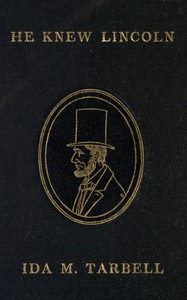
He Knew Lincoln
Language: en294 downloads on Project Gutenberg
Subjects
In: Biographies·History - American
Public-domain ebook sourced from Project Gutenberg #57536.
Public-domain ebook
Language: en294 downloads on Project Gutenberg
Subjects
In: Biographies·History - American
Public-domain ebook sourced from Project Gutenberg #57536.
The opening · free to read
“Did I know Lincoln? Well, I should say. See that chair there? Take it, set down. That’s right. Comfortable, ain’t it? Well, sir, Abraham Lincoln has set in that chair hours, him and Little ‘Doug,’ and Logan and Judge Davis, all of ’em, all the big men in this State, set in that chair. See them marks? Whittlin’. Judge Logan did it, all-firedest man to whittle. Always cuttin’ away at something. I just got that chair new, paid six dollars for it, and I be blamed if I didn’t come in this store and find him slashin’ right into that arm. I picked up a stick and said: ‘Here, Judge, s’posin’ you cut this.’ He just looked at me and then flounced out, mad as a wet hen. Mr. Lincoln was here, and you ought to heard him tee-hee. He was always here. Come and set by the stove by the hour and tell stories and talk and argue. I’d ruther heard the debates them men had around this old stove than heard Webster and Clay and Calhoun and the whole United States Senate. There wan’t never no United States Senate that could beat just what I’ve heard right here in this room with Lincoln settin’ in that very chair where you are this minute.
“He traded here. I’ve got his accounts now. See here, ‘quinine, quinine, quinine.’ Greatest hand to buy quinine you ever seen. Give it to his constituents. Oh, he knew how to be popular, Mr. Lincoln did. Cutest man in politics. I wan’t a Whig. I was then and I am now a Democrat, a real old-fashioned Jackson Democrat, and my blood just would rise up sometimes hearin’ him discuss. He was a dangerous man—a durned dangerous man to have agin you. He’d make you think a thing when you knew it wan’t so, and cute! Why, he’d just slide in when you wan’t expectin’ it and do some unexpected thing that just’d make you laugh, and then he’d get your vote. You’d vote for him because you liked him—just because you liked him and because he was so all-fired smart, and do it when you knew he was wrong and it was agin the interest of the country.
“Tell stories? Nobody ever could beat him at that, and how he’d enjoy ’em, just slap his hands on his knees and jump up and turn around and then set down, laughin’ to kill. Greatest man to git new yarns that ever lived, always askin’, ‘Heard any new stories, Billy?’ And if I had I’d trot ’em out, and how he’d laugh. Often and often when I’ve told him something new and he’d kin’ a forgit how it went, he’d come in and say, ‘Billy, how was that story you’se tellin’ me?’ and then I’d tell it all over.
“He was away a lot, you know, ridin’ the circuit along with some right smart lawyers. They had great doin’s. Nuthin’ to do evenings but to set around the tavern stove tellin’ stories. That was enough when Lincoln was there. They was all lost without him. Old Judge Davis was boss of that lot, and he never would settle down till Lincoln got around. I’ve heard ’em laugh lots of times how the Judge would fuss around and keep askin’, ‘Where’s Mr. Lincoln, why don’t Mr. Lincoln come? Somebody go and find Lincoln,’ and when Lincoln came he would just settle back and get him started to yarning, and there they’d set half the night.
“When he got home he’d come right in here first time he was downtown and tell me every blamed yarn he’d heard. Whole crowd would get in here sometimes and talk over the trip, and I tell you it was something to hear ’em laugh. You could tell how Lincoln kept things stirred up. He was so blamed quick. Ever hear Judge Weldon tell that story about what Lincoln said one day up to Bloomington when they was takin’ up a subscription to buy Jim Wheeler a new pair of pants? No? Well, perhaps I oughten to tell it to you, ma says it ain’t nice. It makes me mad to hear people objectin’ to Mr. Lincoln’s stories. Mebbe he did say words you wouldn’t expect to hear at a church supper, but he never put no meanin’ into ’em that wouldn’t ‘a’ been fit for the minister to put into a sermon, and that’s a blamed sight more’n you can say of a lot of stories I’ve heard some of the people tell who stick up their noses at Mr. Lincoln’s yarns.
“Yes, sir, he used to keep things purty well stirred up on that circuit. That time I was a speakin’ of he made Judge Davis real mad; it happened right in court and everybody got to gigglin’ fit to kill. The Judge knew ’twas something Lincoln had said and he began to sputter.
“‘I am not going to stand this any longer, Mr. Lincoln, you’re always disturbin’ this court with your tomfoolery. I’m goin’ to fine you. The clerk will fine Mr. Lincoln five dollars for disorderly conduct.’ The boys said Lincoln never said a word; he just set lookin’ down with his hand over his mouth, tryin’ not to laugh. About a minute later the Judge, who was always on pins and needles till he knew all the fun that was goin’ on, called up Weldon and whispered to him, ‘What was that Lincoln said?’ Weldon told him, and I’ll be blamed if the Judge didn’t giggle right out loud there in court. The joke was on him then, and he knew it, and soon as he got his face straight he said, dignified like, ‘The clerk may remit Mr. Lincoln’s fine.’
“Yes, he was a mighty cute story-teller, but he knew what he was about tellin’ ’em. I tell you he got more arguments out of stories than he did out of law books, and the queer part was you couldn’t answer ’em—they just made you see it and you couldn’t get around it. I’m a Democrat, but I’ll be blamed if I didn’t have to vote for Mr. Lincoln as President, couldn’t help it, and it was all on account of that snake story of his’n illustratin’ the takin’ of slavery into Kansas and Nebraska. Remember it? I heard him tell it in a speech once.
“‘If I saw a pizen snake crawlin’ in the road,’ he says, ‘I’d kill it with the first thing I could grab; but if I found it in bed with my children, I’d be mighty careful how I touched it fear I’d make it bite the children. If I found it in bed with somebody else’s children I’d let them take care of it; but if I found somebody puttin’ a whole batch of young snakes into an empty bed where mine or anybody’s children was going to sleep pretty soon, I’d stop him from doin’ it if I had to fight him.’ Perhaps he didn’t say ‘fight him,’ but somehow I always tell that story that way because I know I would and so would he or you or anybody. That was what it was all about when you come down to it. They was trying to put a batch of snakes into an empty bed that folks was goin’ to sleep in.
“Before I heard that story I’d heard Lincoln say a hundred times, settin’ right there in that chair, where you are, ‘Boys, we’ve got to stop slavery or it’s goin’ to spread all over this country,’ but, somehow, I didn’t see it before. Them snakes finished me. Then I knew he’d got it right and I’d got to vote for him. Pretty tough, though, for me to go back on Little ‘Doug.’ You see he was our great man, so we thought. Been to the United States Senate and knew all the big bugs all over the country. Sort o’ looked and talked great. Wan’t no comparison between him and Lincoln in looks and talk. Of course, we all knew he wan’t honest, like Lincoln, but blamed if I didn’t think in them days Lincoln was too all-fired honest—kind of innocent honest. He couldn’t stand it nohow to have things said that wan’t so. He just felt plumb bad about lies. I remember once bein’ in court over to Decatur when Mr. Lincoln was tryin’ a case. There was a fellow agin him that didn’t have no prejudices against lyin’ in a lawsuit, and he was tellin’ how Lincoln had said this an’ that, tryin’ to mix up the jury. It was snowin’ bad outside, and Mr. Lincoln had wet his feet and he was tryin’ to dry ’em at the stove. He had pulled off one shoe and was settin’ there holdin’ up his great big foot, his forehead all puckered up, listenin’ to that ornery lawyer’s lies. All at onct he jumped up and hopped right out into the middle of the court-room.
“‘Now, Judge,’ he says, ‘that ain’t fair. I didn’t say no sich thing, and he knows I didn’t. I ain’t goin’ to have this jury all fuddled up.’
“You never see anything so funny in a court-room as that big fellow standin’ there in one stockin’ foot, a shoe in his hand, talking so earnest. No, sir, he couldn’t stand a lie.
“‘Think he was a big man, then?’ Nope—never did. Just as I said, we all thought Douglas was our big man. You know I felt kind of sorry for Lincoln when they began to talk about him for President. It seemed almost as if somebody was makin’ fun of him. He didn’t look like a president. I never had seen one, but we had pictures of ’em, all of ’em from George Washington down, and they looked somehow as if they were different kind of timber from us. Leastwise that’s always the way it struck me. Now Mr. Lincoln he was just like your own folks—no trouble to talk to him, no siree. Somehow you just settled down comfortable to visitin’ the minute he come in. I couldn’t imagine George Washington or Thomas Jefferson settin’ here in that chair you’re in tee-heein’ over some blamed yarn of mine. None of us around town took much stock in his bein’ elected at first—that is, none of the men, the women was different. They always believed in him, and used to say, ‘You mark my word, Mr. Lincoln will be president. He’s just made for it, he’s good, he’s the best man ever lived and he ought to be president.’ I didn’t see no logic in that then, but I dunno but there was some after all.
“It seems all right now though. I reckon I learned somethin’ watchin’ him be President—learned a lot—not that it made any difference in him. Funniest thing to see him goin’ around in this town—not a mite changed—and the whole United States a watchin’ him and the biggest men in the country runnin’ after him and reporters hangin’ around to talk to him and fellers makin’ his pictures in ile and every other way. That didn’t make no difference to him—only he didn’t like bein’ so busy he couldn’t come in here much. He had a room over there in the Court House—room on that corner there. I never looked up that it wan’t chuck full of people wantin’ him. This old town was full of people all the time—delegations and committees and politicians and newspaper men. Only time I ever see Horace Greeley, he came in here to buy quinine. Mr. Lincoln sent him. Think of that, Horace Greeley buyin’ quinine of me.
“No end of other great men around. He saw ’em all. Sometimes I used to step over and watch him—didn’t bother him a mite to see a big man—not a mite. He’d jest shake hands and talk as easy and natural as if ’twas me—and he didn’t do no struttin’ either. Some of the fellers who come to see him looked as if they was goin’ to be president, but Mr. Lincoln didn’t put on any airs. No, sir, and he didn’t cut any of his old friends either. Tickled to death to see ’em every time, and they all come—blamed if every old man and woman in Sangamon County didn’t trot up here to see him. They’d all knowed him when he was keepin’ store down to New Salem and swingin’ a chain—surveyed lots of their towns for ’em—he had—and then he’d electioneered all over that county, too, so they just come in droves to bid him good-by. I was over there one day when old Aunt Sally Lowdy came in the door. Aunt Sally lived down near New Salem, and I expect she’d mended Mr. Lincoln’s pants many a time; for all them old women down there just doted on him and took care of him as if he was their own boy. Well, Aunt Sally stood lookin’ kind a scared seein’ so many strangers and not knowin’ precisely what to do, when Mr. Lincoln spied her. Quick as a wink he said, ‘Excuse me, gentlemen,’ and he just rushed over to that old woman and shook hands with both of his’n and says, ‘Now, Aunt Sally, this is real kind of you to come and see me. How are you and how’s Jake?’ (Jake was her boy.) ‘Come right over here,’ and he led her over, as if she was the biggest lady in Illinois, and says, ‘Gentlemen, this is a good old friend of mine. She can make the best flapjacks you ever tasted, and she’s baked ’em for me many a time.’ Aunt Sally was jest as pink as a rosy, she was so tickled. And she says, ‘Abe’—all the old folks in Sangamon called him Abe. They knowed him as a boy, but don’t you believe anybody ever did up here. No, sir, we said Mr. Lincoln. He was like one of us, but he wan’t no man to be over familiar with. ‘Abe,’ says Aunt Sally, ‘I had to come and say good-by. They say down our way they’re goin’ to kill you if they get you down to Washington, but I don’t believe it. I just tell ’em you’re too smart to let ’em git ahead of you that way. I thought I’d come and bring you a present, knit ’em myself,’ and I’ll be blamed if that old lady didn’t pull out a great big pair of yarn socks and hand ’em to Mr. Lincoln.
The book keeps going
Reading is free forever. Sign up and watch scenes appear while you read.



Scenes Storieta drew for other classics.
New illustrated classics
Once or twice a month: the latest books to get full character casts, scene art, and free comic editions. No account needed.