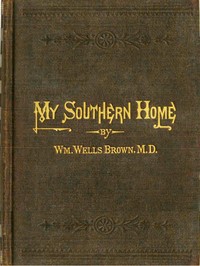
WM. WELLS BROWN, M.D.
Author of “Sketches of Places and People Abroad,” “Clotelle,” “The Black Man,” “The Negro in the Rebellion,” “The Rising Son,” etc.
“Go, little book, from this thy solitude! I cast thee on the waters--go thy ways! And if, as I believe, thy vein be good, The world will find thee after many days.”--_Southey._
Boston: A. G. Brown & Co., Publishers, 28 East Canton Street. 1880.
Copyright, 1880, by Annie G. Brown.
Electrotyped and Printed by Duffy, Cashman & Co., Fayette Court, Boston.
PREFACE.
No attempt has been made to create heroes or heroines, or to appeal to the imagination or the heart.
The earlier incidents were written out from the author’s recollections. The later sketches here given, are the results of recent visits to the South, where the incidents were jotted down at the time of their occurrence, or as they fell from the lips of the narrators, and in their own unadorned dialect.
BOSTON, May, 1880.
CONTENTS.
I.
Poplar Farm and its occupants. Southern Characteristics. Coon-Hunting and its results. Sunny side of Slave life on the Plantation.
II.
The Religious Teaching at Poplar Farm. Rev. Mr. Pinchen. A Model Southern Preacher. Religious Influence among the Southerners of the olden time. Genuine negro wit.
III.
A Southern country Doctor. Ancient mode of “pulling teeth.” Dinkie the King of the Voudoos.
IV.
The Parson and the Slave Trader. Slave life. Jumping the Broomstick. Plantation humor.
V.
An attempt to introduce Northern ideas. The new Plough. The Washing-Machine. Cheese-making.
VI.
Southern Amusements,--Wit and Humor. Superstition. Fortune-Telling in the olden time.
VII.
The Goopher King--his dealings with the Devil; he is feared by Whites and Blacks. How he mastered the Overseer. Hell exhibited in the Barn.
VIII.
Slave-Hunting. The Bloodhounds on the Track. The poor “white Trash.” A Sunday Meeting. A characteristic Sermon by one of their number.
IX.
Old-Fashioned Corn-Shucking. Plantation Songs: “Shuck that corn before you eat” an’ “Have that possum nice and sweet.” Christmas Holidays.
X.
The mysterious, veiled Lady. The white Slave Child. The beautiful Quadroon,--her heroic death. The Slave Trader and his Victim. Lola, the white Slave,--the Law’s Victim.
XI.
The introduction of the Cotton Gin, and its influence on the Price of Slaves. Great rise in Slave property. The great Southern Slave Trader. How a man got flogged when intended for another.
XII.
New Orleans in the olden time. A Congo Dance. Visiting the Angels, and chased by the Devil. A live Ghost.
XIII.
The Slave’s Escape. He is Captured, and again Escapes. How he outwitted the Slave-Catchers. Quaker Wit and Humor.
XIV.
The Free colored people of the South before the Rebellion. Their hard lot. Attempt to Enslave them. Re-opening of the African Slave Trade. Sentiments of distinguished Southern Fire-Eaters.
XV.
The book keeps going
Keep reading, and see it illustrated
Reading is free forever. Sign up and watch scenes appear while you read.
Scenes Storieta drew for other classics.