Public-domain ebook
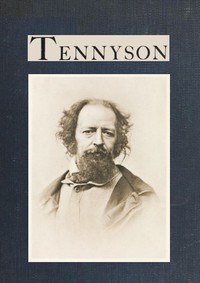
Tennyson
by Chesterton, G. K. (Gilbert Keith); Garnett, Richard
Language: en404 downloads on Project Gutenberg
Subjects
In: Poetry·Biographies·British Literature
Public-domain ebook sourced from Project Gutenberg #61764.
Public-domain ebook
by Chesterton, G. K. (Gilbert Keith); Garnett, Richard
Language: en404 downloads on Project Gutenberg
Subjects
In: Poetry·Biographies·British Literature
Public-domain ebook sourced from Project Gutenberg #61764.
The opening · free to read
find it in Nature. There is, perhaps, more loveliness in Nature than in art, but there are not so many lovely things. The loveliness is broken to pieces and scattered: the almond tree in blossom will have a mob of nameless insects at its root, and the most perfect cell in the great forest-house is likely enough to smell like a sewer. Tennyson loved beauty more in its collected form in art, poetry, and sculpture; like his own “Lady of Shalott,” it was his office to look rather at the mirror than at the object. He was an artist, as it were, at two removes: he was a splendid imitator of the splendid imitations. It is true that his natural history was exquisitely exact, but natural history and natural religion are things that can be, under certain circumstances, more unnatural than anything in the world. In reading Tennyson’s natural descriptions we never seem to be in physical contact with the earth. We learn nothing of the coarse good-temper and rank energy of life. We see the whole scene accurately, but we see it through glass. In Tennyson’s works we see Nature indeed, and hear Nature, but we do not smell it.
(Reproduced from “The Laureate’s Country,” by kind permission of Messrs. Seeley & Co., Ltd.)]
From a photo by Messrs. Carlton & Sons, Horncastle
The book keeps going
Reading is free forever. Sign up and watch scenes appear while you read.



Scenes Storieta drew for other classics.
New illustrated classics
Once or twice a month: the latest books to get full character casts, scene art, and free comic editions. No account needed.