Among all the various arms of government in our nation, no arm is at once less known or more worthy of renown than the Coast Guard. Like the knights of the Table Round, this company of gallant surfmen and sailors is organized and exists almost solely for the protection of others. Though few in numbers, the Coast Guard accomplishes deeds that are mighty. Skill of the highest order, daring incredible, and discipline that is perfect, make a giant of this little service. Stout of heart, indeed, must be the men who belong to it; for when others are fleeing for their lives, the Coast Guard is always heading straight for the danger, to rescue those incompetent or unable to effect their own rescue. Let those who think the age of romance is past but read the story of the Coast Guard and they will change their minds.
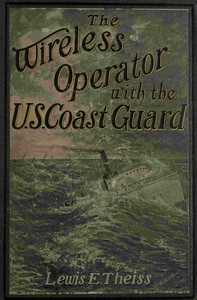
For those who demand that fiction be based upon actual occurrence, the author wishes to say that this book is hardly more than a transcript from life. Every major incident in it is based upon an actual happening. It was the Coast Guard cutter Yamacraw that lost six boatloads of seamen in the surf while attempting to rescue a helpless steamer. It was the Seneca that searched the wintry seas for the helpless oil tanker that had been abandoned by the tug towing it. And the final incident in the book, in which a stricken freighter sinks in a storm, and the wireless operator ministers calmly to his commander in the face of almost certain death, is but a poor attempt to recite the story of “Smiling Jimmy Nevins,” a mere lad, who went smiling to his death as a member of a volunteer crew from the Seneca, in an effort to save a torpedoed freighter for the Allies during the recent World War.
In preparation for the writing of this story, the author spent some time aboard both the Seneca and the Tampa. He wishes here to express his admiration for the Coast Guard as a whole, and his very great indebtedness to Captain B. H. Camden, of the Seneca, Captain Wm. J. Wheeler, of the Tampa, Lieutenant C. C. Von Paulson, of the Tampa, and Chief Electrician Belton Miller, of the Seneca, for their kindly assistance. Each of the four has played a heroic part in some of the deeds portrayed in this book.
Lewis E. Theiss.
Lewisburg, Pa. February 28, 1923.
Reading into the present the history of the early mariner along our shores, one is impressed with the march of civilization. Institutions having for their purpose the saving of human life are products of civilization—a part of the great scheme of humanization.
This volume, dedicated “To those unsung heroes, the men of the U. S. Coast Guard,” is an interesting, an engaging, and a compelling portrayal of the everyday work of the Coast Guard, with its vicissitudes, hardships, perils and accomplishments. The Coast Guard in fact is an establishment of service and opportunity—service to those whose fortunes are cast with the deep and along our shores, opportunity for the young men of the nation of character, stability and fixedness of purpose, to follow the Stars and Stripes in the ever-beautiful cause of humanity.
F. C. BILLARD, Rear Admiral, U. S. Coast Guard, Commandant
Henry Seeks His Fortune
Henry Harper was making his way down the longest street in the world as fast as the jam of traffic would allow. But this longest street in the world, Broadway in New York City, is also one of the world’s busiest thoroughfares, and, despite his haste, Henry Harper could proceed but slowly. It was the noon hour, and the sidewalks were jammed with thousands upon thousands of clerks, stenographers, business men, and other busy workers, going to or from their luncheons. The streets were overflowing with vehicular traffic, as the sidewalks were with foot-passengers. No matter to which side Henry darted, there was always some person or some vehicle in front of him, and so, though quivering with impatience, he was obliged to curb his speed and make his way the best he could among pedestrians and trucks. He was bound for the office of the United States Secret Service, and it seemed to him that he would never get there. He had just come to New York from his home in Central City, Pennsylvania, and he was on his way to see his old friend Willie Brown, who had some time previously won a position with the Secret Service.
When, finally, he did reach his destination, Henry found himself facing a situation that troubled him a great deal more than he cared to admit. Willie Brown was not in the office. What was more, Willie was not even in town. He had been sent away on some special duty. The office boy did not know when Willie would return. All he knew was that Willie had started on a trip that would probably last two or three weeks, and there was no one in the office who could give Henry any more definite information. All the clerks were out at luncheon, but they probably wouldn’t know where Willie was going, anyway. And the Chief, who had given Willie his orders in person, had left for the day.
If Henry had wanted to see Willie merely to renew old acquaintanceship, the situation would have been unpleasant enough. But it was a thousand times worse than that, for Henry had come to New York upon Willie’s express invitation, and the latter was going to try to help him get a job. Henry had not told him exactly when he would arrive, and so he could not blame him for not being on hand or for not leaving a message for him. Willie’s absence made it mighty unpleasant for Henry, though, for the latter had expected to be his guest, and his funds were slender. Indeed, he had little more than enough money to pay his return car fare. Two or three days at a New York hotel would exhaust these funds entirely. No wonder Henry looked worried as he slowly left the building and stepped once more into the seething jam on Broadway.
“I’ll slip over to the Confederated Steamship Office,” thought Henry to himself. “I know the Lycoming is at sea, and Roy won’t be back in New York for almost a week. But maybe I can find some one who can help me out of my difficulty.” So he headed hopefully toward the piers on the Hudson River front, occupied by the coastwise steamship line for which another of his old chums, Roy Mercer, now worked as a wireless operator on the steamer Lycoming.
Again he was doomed to disappointment. Not a ship lay in the docks. Not an official of any sort could be found about the place. Only a watchman was in charge, at the gate, and he proved to be gruff and surly. If only one of the Lycoming’s sister ships had been in port, Henry would have appealed to the wireless operator on her, and trusted to the freemasonry that exists among wireless men generally. But there was no such luck for him. Apparently there was no one he could reach to whom he could appeal. Here he was, stranded in the metropolis, without a friend or an acquaintance, with no job in sight, and with only a very few dollars in his pocket. It was a situation to take the heart out of almost any boy.
But Henry was no ordinary boy. To begin with, he was approaching manhood. In a year or two he would be old enough to vote. He was as large as most men, and as independent mentally as he was sturdy physically, so he did not become alarmed and panic-stricken, as a younger lad might have, but set himself to think out the best course he could pursue. He knew that all he had to do was to find some way to tide himself over until either Roy or Willie returned, and things would be all right.
Nevertheless he was worried about his money. For even though he could readily borrow from his friends upon their return, it wouldn’t be exactly an easy thing to repay the loan. The money in his pocket was about all the money he had in the world.
With Roy and Willie, he had belonged to the Camp Brady Wireless Patrol. Indeed, it was Henry himself who had organized that little group of boys, and who had made the first wireless set they possessed, by the use of some patterns given him by an uncle. And he had become probably the most expert wireless operator in the patrol. In fact, during an emergency he had served for a time as a government operator in the big wireless station at Frankfort, not so many miles from his home in Central City.
When he thought of those days Henry sighed, almost with bitterness. Then he was the leader in every respect. Not only was he the oldest boy in the Wireless Patrol, but he was farthest advanced. In the nature of things he should by this time have been far along the road to success, and in a position to help his friends; whereas it had actually turned out that he was behind them all, and that they were helping him instead. Yet it was no fault of Henry’s. His father’s death had thrown upon him the burden of supporting not only himself but his mother as well. Henry had given up his work at the high school for a time, but his mother had insisted upon his completing it. It had taken him twice as long to finish his course this way as it would have, could he have gone on without interruption. But now he was glad he had listened to his mother. Even though he was so late getting started, he knew he would go farther in the end.
But was he started? The question worried Henry so much that he could hardly think. He had come to New York with high hopes of getting a real start, and now he seemed about to waste the few remaining dollars he possessed. What should he do? The roar of the traffic disturbed him. He could not think connectedly. He wanted to compose himself, so he made his way down the water-front to Battery Park, where he might be undisturbed while he thought out his problem.
But the familiar scenes in Battery Park set a new train of thought in motion in his head, and utterly defeated, for the time, his plan to think out his course of action, for in front of him, as he sat on a park bench, was the old, familiar harbor, with its seething waters and its throbbing life. And straight across the rolling waves was Staten Island, where he had spent those memorable days in that never-to-be-forgotten hunt for the secret wireless of the Germans, during the war, when the Secret Service had accepted the proffered help of the Wireless Patrol in the search for the treacherous spies that were betraying the movements of American transports. How clearly all the incidents of that search for the secret wireless now stood out in Henry’s mind. He could recall, as though it had been but yesterday, the departure of the selected unit of the patrol—Roy Mercer and Lew Heinsling and Willie Brown and himself—from Central City, and their meeting with their leader, Captain Hardy, and the tedious watch for the German spies, lasting through weeks, which began in upper Manhattan and ended in Staten Island.
And when Henry thought of the snug little headquarters they had had in a private house in Staten Island, with a delightful elderly couple, he jumped to his feet and almost shouted with relief. Why hadn’t he thought of those old people before? They would take him in and tide him over until his friends returned. They would be glad to see him again, too. Henry felt sure of that, and, sighing with relief, he leaped to his feet, seized his little suit-case, and hustled over to the near-by municipal ferry-house, just in time to catch an outgoing boat for Staten Island.




![Cover of The story of Robinson Crusoe in Latin: Adapted from Daniel Defoe's famous book [or rather, translated from J.H. Campe's "Robinson der Jüngere"] by G.F. Goffeaux. Edited, amended and rearranged by P.A. Barnett](/covers/74851.jpg)