Public-domain ebook
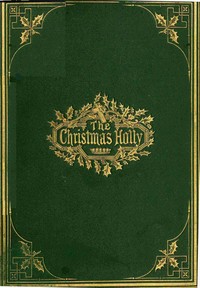
The Christmas Holly
Language: en335 downloads on Project Gutenberg
Subjects
In: Children & Young Adult Reading·Novels·American Literature
Public-domain ebook sourced from Project Gutenberg #64117.
Public-domain ebook
Language: en335 downloads on Project Gutenberg
Subjects
In: Children & Young Adult Reading·Novels·American Literature
Public-domain ebook sourced from Project Gutenberg #64117.
The opening · free to read
SHELDON & Co., PUBLISHERS, 498 & 500 BROADWAY.
1867.
Entered according to Act of Congress, in the year 1866, by SHELDON & Co., In the Clerk’s Office of the District Court of the United States, for the Southern District of New York.
Stereotyped by SMITH & MCDOUGAL, 84 Beckman St.
SALUTATORY.
On a Christmas Eve, many years ago, before I had learned to accept Life as it is,--as it must ever be while Man needs the discipline of reverses, and while the ways of God are known but to Himself,--a checquered scene, always; often grey and lowering; sometimes black with midnight and chill with storm--on a certain Christmas Eve, then, when I was young, unreasonable and rebellious, I took a long, lonely walk into the country. The afternoon suited my temper, and both were gloomy. Low heavens of clouded steel that yet seemed, now and then, to shiver with the still, biting air, and with each shudder, to let down a few wandering flakes of snow; a bleak landscape of commons, blasted by invisible frost; of sterile hills, that must have been stony and bare in the sunniest springtime,--and for a horizon, a girdle of leafless woods, stretching up motionless boughs against the pitiless sky; in the hollow formed by the amphitheatre of hills, an artificial pond--too intensely tame in form and surroundings to deserve the name of lake, or be mistaken for aught but what it was, viz., a pool dug and filled with a single eye to the production of ice for the next summer’s use,--this was the picture that greeted my outlooking sight. Within was the dull, icy calm of stoical misanthropy; distrust of my fellows, which stubbornly refused to ask of heavenly wisdom the solution of the human enigma that had baffled, in disgusting me.
Into the midst of this sunless mood came a surprise Right before me, in my steady but aimless track across the waste, was a clump of dwarf trees, poor, puny things that must have had a hard coming-up. I marvelled, in surveying them, that the germs from which they had struggled had had the courage to sprout in such a barren spot. In the centre of the coppice, head and shoulders above his fellows, arose a holly sapling, brave with leaves of glossy green and scarlet berries. The only smile in the drear expanse, it was in itself a whole fountain of cheer. The soil about the trunk might be frozen to stone-like hardness, but below, the great heart of Mother Earth pulsed warmly still; throwing up, at each beat, sap into the hardy frame of her winter-child; strength to the lusty limbs; verdure to the spiky leaves; blushes to the coral beads. And while I looked, a bevy of brown-coated plump-breasted snow-birds whirled noisily across the plain, and alighted, with much twittering and a deal of happy, useless fluttering, among the inviting branches.
I had conned my lesson, and I turned my face homewards with changed spirits and a changed purpose. As one measure towards the fulfilment of the latter, I send this Christmas greeting into the waste we know as the common life of this working-day world. We make it too common, dear reader. We choose for ourselves a path across a dead level, and then perversely adapt our feelings to what we are pleased to call our circumstances. I pray you, for this one holiday season, learn with me of my holly-tree. Seek out present brightness, and in it read the promise of happy days to come. Sigh not that
--“All hope of Spring-time Has perished with the year,”
while the same Love that nourishes the tiny greenling of the forest into brightness and beauty, despite wintry blast and wintry sleet, will keep alive in your heart, if not the tender shoots of youthful joys, the stronger, braver, worthier growth of love for your brother man; helpful charity for all things weak and lowly and sorrowing; hope and faith in the wise and tender Father of us all.
MARION HARLAND.
Nettie’s Prayer.
Netties Prayer.
Mrs. Dryden was cross!
She would have been at a loss to specify what especial grounds she had for the discontent that possessed her on this particular night. If interrogated, she would probably have returned an evasive reply to the effect that it was none of the questioner’s business how she felt or looked, so long as she did not obtrude her unhappiness upon other people. Everybody had his and her own troubles with which others had no right to intermeddle. She was responsible to no one for her behavior; nobody should hinder her from being low-spirited, if she pleased to be so. She was out of humor with the whole world, herself included. The children were troublesome; the servants heedless; her husband indifferent to her grievances--and it was Christmas eve.
“Really,” she said, peevishly, at tea-time, “one would suppose that Christmas came but once in a century, instead of once a year! Everybody is as crazy to-night as if there were never to be another 25th of December.”
“By the way,” said her husband, looking up from his paper, “I suppose you have baked some mince-pies and fried some dough-nuts--haven’t you?”
“I have mince-pies and turkey for to-morrow!” was the curt reply. “I knew you would not be satisfied unless you had as good a dinner as your neighbors. But as for dough-nuts--they are oily, rank, indigestible abominations, fit only for an ostrich’s stomach, and one doesn’t get the smell of the hot fat out of the house in two weeks after they have been cooked. I never mean to make another while I live.”
Two pairs of sorrowful eyes stole a glance of mutual pity at one another, when this announcement was made; two pairs of cherry lips took a piteous curl, for a second; two curly heads bent lower over the plates set before their owners.
Not that there was any dearth of sweet things in the Dryden larder, or that Ally and Nettie, the proprietors of the eyes, lips, and heads aforesaid, were gormandizers. But this matter of frying doughnuts was great fun to them, as it is to most other small people who have ever been permitted to stand by and see the rings, leaves, birds, circles, triangles, and the endless variety of nondescript figures leave the kneading-board pale, flat surfaces of soft dough, and, upon being thrown into the bubbling fat, sinking, like leaden shapes, with a tremendous splutter and “fizz,” arise slowly and majestically to the top of the caldron, as Mr. Weller has it, “swelling wisibly” before the enraptured eye into puffy, crisp, toothsome morsels, fit, in the estimation of the juvenile partakers thereof, for a queen’s luncheon. Last year, the brother and sister had spent Christmas week with an aunt in another town. This lady being the indulgent mamma of half a dozen boys and girls, enjoyed nothing so much as making them merry and happy. The six days passed in her abode lived in the memory of nephew and niece as a dream of Paradisaical delight. But, this season, the holidays were to be kept at home, and the prospect was, to say the least, not eminently flattering.
Mr. and Mrs. Dryden were estimable people in their way, but they had studied to render themselves intensely and purely matter-of-fact. They prided themselves secretly upon growing wiser and more practical--less poetical--each revolving cycle. Each year, life assumed a more positive and less romantic aspect; their own duties seemed more momentous and imperative; the things which others call recreation and innocent amusements were puerile and unworthy. Mr. Dryden was making money; Mrs. Dryden was a notable housekeeper, and, so far as the physical needs of the children were concerned, a careful mother. Four little ones, three boys and a girl, claimed her love and maternal offices. Allison, the eldest, was eight years old; Nettie, six; and a pair of twin babies were in their third winter. The mother’s hands were certainly full, however admirable might be her faculty of accomplishing with speed the work set for her to do. It was not surprising that she should sometimes wear a haggard, anxious look, or that, now and then, she should be, as she now expressed it, “worried out of her senses.”
“I don’t see, for my part,” she broke forth, impatiently, presently, “how people find time or have the heart to frolic and observe holidays and the like frivolous carryings-on! With me, it is work, work, work! from morning until night, and from one year’s end to another. It frets me to see grown-up men and women, who ought to know something about the cares and solemn responsibilities of life, acting like silly children. What is Christmas more than any other time--when one takes a sober, common-sense view of the matter?”
“That is what nobody does in this age of nonsense and dissipation,” returned her husband. “I don’t know what the world is coming to!”
“Wasn’t our Saviour born on Christmas-day, Mamma?” asked Nettie’s timid voice.
“That is not certain, by any means, child. And if it were true, there is all the more scandal in making a frolic of it. If there were to be prayer-meetings held all over the world to celebrate the event, it would be far more appropriate.”
The polysyllable staggered Nettie a little, but she retained sufficient courage to reply: “Our teacher told us, last Sabbath, that everybody ought to be very happy upon the Saviour’s birthday.”
Before Mrs. Dryden could answer, Ally put in his oar.
“Mamma! why doesn’t Santa Claus ever come down our chimney?”
“There is no such creature, Allison! You are too old to believe in that ridiculous fable.”
“But, Mamma, he came to Aunt Mary’s last year!” cried both children, in a breath.
“And we all hung up our stockings in the parlor!” added Nettie.
“And Aunt Mary let the fire go down on purpose, so that the old chap might not be scorched!” shouted Ally, excitedly. “We wanted her to have the chimney swept, but she said he wouldn’t mind a little dirt.”
“For you know--
‘His clothes were all tarnished with ashes and soot!’”
quoted Nettie, “and yet he was in a good humor
“You children will be the death of me!” cried Mrs. Dryden, distractedly, putting her hands to her ears. “I shall certainly never let you spend another Christmas at your Aunt Mary’s! Your heads were so crammed with nonsense last year, that I am afraid you will never get rid of it. Finish your suppers and be off to bed! You are as Christmas-mad as if you had never been trained to more sensible things!”
“I can not imagine,” said Mr. Dryden, severely, “how they have contrived to remember the senseless doggerel your sister was so injudicious as to teach them.”
“That is the depravity of human nature!” sighed the wife.
Very sober little faces were uplifted to father and mother for a “good-night” kiss, and very slow footsteps went up the stairs to the chamber which the brother and sister shared in common. There was a pathos in the sound, so unlike was it to the brisk patter of other small feet upon other floors and staircases on that jubilee eve.
The father, albeit he was not an imaginative man, noticed this, and went off to the parlor with a pained and yearning heart--saddened, he knew not by what--longing for something he could not name. The children had interrupted his evening reading, at supper, by their chatter, and he bestowed himself in his armchair by the centre-table, to finish the perusal of his newspaper. His seat was comfortable; the light clear and soft; the evening news interesting; the room still; yet he could not fix his mind upon his occupation. Through the quiet apartment came and went the echoes of the four little feet, in slow dejection, going on up to the repose that was to be visited by no happy dreams of the glories of Christmas morning. He saw, between him and the printed column, the sadly-serious countenances, that were, by this time, laid upon their pillows. He wondered if the pair would cry themselves to sleep. He purposely waxed angry with his sister-in-law for putting these silly notions into the children’s heads. They were contented enough until that unfortunate visit. Now, there was no telling where this mischief would stop. It was too provoking to have two such fine natures soured by repinings and foolish longings; two minds so intelligent filled with superstitious fancies. Yes! they were fine children! if he did say it--and dutiful as handsome and intelligent. His wife had an excellent method of discipline, and deserved much credit for her success in training her offspring. She was a good woman--industrious and conscientious--but he could have wished that her spirits were more equable. He did not relish the idea that his blooming Nettie might, one day, become a toil-worn, pains-taking wife and mother; her smooth forehead be ploughed in two deep furrows, like those that crossed her mother’s, from temple to temple; her pouting lips grow colorless and drawn down at the corners; her bird-like voice sharpen into the shrill peevishness of the tones that had ordered the bairns off to bed. He would like to keep life fresh and bright for his darling so long as he could. She would find out, soon enough, what a dry, dusty, detestable cheat the world was. If he might have his wish, she should be a child always; a merry, laughing, singing fairy, to gladden his old age; a simple-hearted, trusting child, in whose love and purity he could find refreshment, when disheartened by the faithlessness of his fellow-men. She was very fond of him--grave and undemonstrative as he was. With the unerring perception of childhood, she had discovered that she was his favorite, and repaid his partiality in the coin he liked best. The sound of his latch-key in the door was the signal, noon and night, for her to bound down stairs to meet him; to kiss him, and offer, in her pretty, womanly way, to relieve him of his overcoat; to hang up his hat and bring him his slippers. Such nimble feet as hers were! Blithe, willing little feet, how they twinkled to and fro, to perform whatever errands he would suffer her to undertake for his comfort! Merry, dancing little feet!
The book keeps going
Reading is free forever. Sign up and watch scenes appear while you read.



Scenes Storieta drew for other classics.
New illustrated classics
Once or twice a month: the latest books to get full character casts, scene art, and free comic editions. No account needed.