Public-domain ebook
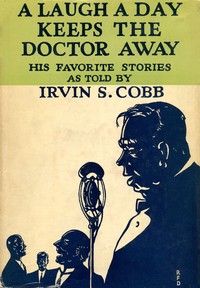
A laugh a day keeps the doctor away
Language: en2,127 downloads on Project Gutenberg
Subjects
In: Short Stories·Humour·American Literature
Public-domain ebook sourced from Project Gutenberg #69467.
Public-domain ebook
Language: en2,127 downloads on Project Gutenberg
Subjects
In: Short Stories·Humour·American Literature
Public-domain ebook sourced from Project Gutenberg #69467.
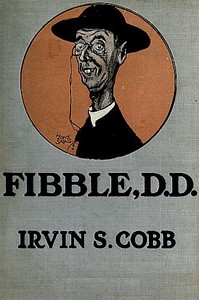
Irvin S. Cobb’s A Laugh a Day Keeps the Doctor Away is a collection of short, anecdotal jokes that he treats as a uniquely American pastime. The book opens with a lively essay on the history of the “short humorous story,” tracing its lineage from biblical times to the telegraph operators who spread jokes across the nation. Cobb then launches into the first tale, “The Untraveled Stranger,” a barroom scene set in a Kentucky life‑saving station where a boastful traveler and a drunken patron spar over delirium tremens. The introductory essay and the first story together establish the book’s purpose: to compile the author’s favorite brief sketches, organized by subject headings ranging from “Actors” to “Yankee,” and to celebrate humor as a social glue.
The tone is conversational and colloquial, peppered with dialect and the brisk banter of early‑20th‑century America. Cobb’s prose mixes informal narration with a touch of regional color, reflecting the era’s newspaper‑style humor columns. Readers who enjoy quick, character‑driven jokes, period slang, and a panoramic glimpse of everyday life, from back‑country barrooms to courtroom quips, will find this anthology a satisfying companion for a light‑hearted reading session.
The opening · free to read
So it would not do for us to lay claim to sole responsibility for the short humorous story. But I am quite certain that we, more than any other people, have made it a part of our daily life, using it to point morals, to express situations, to help us solve puzzles. To these extents, at least, it is a national institution with us.
Americans like to tell short stories and like to laugh at them. We are by inheritance a race of story-tellers. There are short stories which sum up the characteristics of white Americans or black Americans, Jews or Gentiles, city folk or country folk more completely than could ponderous essays or scholarly expositions. It is of record that Abraham Lincoln, in the darkest days of the Union, cured more than one crisis with some homely anecdote, some aptly barbed retort.
After-dinner speakers and professional jokesmiths of the stage or the printed page are not responsible for the spread of good stories to the extent with which they generally are credited. That honor properly belongs to telegraph operators and notably to telegraph operators serving on “leased” wires in newspaper offices. Late at night when the flood tides of news matter have slackened off, the operator, say, in New York, tells his friend in Buffalo a good one he heard that afternoon. The Buffalo man passes it along to Kansas City. The Kansas City man conveys it by dot-and-dash to a pal in Denver and next morning folks are grinning over it in the streets of San Francisco.
I always have loved short funny stories. I prefer them to be new, but an old one, properly told, is often better than a new one badly presented. For the contents of this book I have sought to choose those short stories which made the greatest appeal to me. Some of them I heard years ago; others no longer ago than yesterday.
For the book I claim two distinctions, namely, as follows:
There is only one mother-in-law story in it.
There is not a single story in it in which a colored character is referred to as “Rastus.”
I. S. C.
The book keeps going
Reading is free forever. Sign up and watch scenes appear while you read.



Scenes Storieta drew for other classics.
New illustrated classics
Once or twice a month: the latest books to get full character casts, scene art, and free comic editions. No account needed.