Public-domain ebook
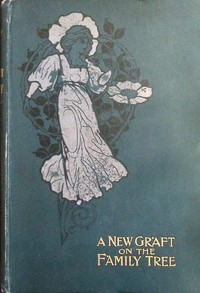
A new graft on the family tree
by Pansy
English442 downloads on Project GutenbergDownload EPUB
Public-domain ebook sourced from Project Gutenberg #71567.
Public-domain ebook
by Pansy
English442 downloads on Project GutenbergDownload EPUB
Public-domain ebook sourced from Project Gutenberg #71567.
The opening · free to read
WILL IT BLOOM, OR WITHER?
"WHAT in the world are you ever going to do with all those tidies?"
The speaker was a girl of sixteen—a fair, bright creature, with dancing eyes, and that alert expression which we find on the faces of those to whom the future is an interesting and exciting puzzle which they long to solve.
She was watching with curious interest the absorption of her sister, who knelt before a half-packed trunk, studying the disposal of packages so as to solve that old problem, "How to get twice as much into a trunk as it will reasonably hold."
She made no answer to the young questioner, having just taken up a closely written sheet of paper, the contents of which absorbed her attention. The question was repeated.
"Louise, what do you expect to do with all those tidies?"
"Put them on chairs and sofas—" with a far-away expression and dreamy tone, and eyes only for the paper before her.
The young girl laughed slightly, then her face grew sober.
"Louise," she said, hesitating as one who might be on doubtful ground, "has Lewis told you anything about his home and its surroundings?"
"Somewhat, dear—" still only half attending to the speaker.
"Well, Addie Dunlop says they live very plainly indeed. She visits the Wheelers, you know, in that vicinity, and she was at their house on two different occasions. She says it is quite isolated from neighbours, and is a regular country farmhouse."
This brought a laugh.
"What would you have a country farmhouse but a country farmhouse?"
"Oh well, Louise, you know what I mean."
If she did she kept the knowledge in silence; and her young sister, after regarding her with a curious look for a moment, drew a heavy sigh.
"It doesn't seem to me that you belong to country farmhouses," she said boldly, "with your education and talents. What will you do with them buried among commonplace—hills?" She had nearly said people, but checked herself. "Why should Lewis hide himself in that out-of-the-way place?"
"Well, dear, you know it is a question of health with him. Nearly all his plans in life had to be changed to meet the demands of a failing body. Farm life agrees with him."
"I don't believe it will with you. I don't like to think of you away off there, miles away from anything to which you are accustomed. Louise, honestly, aren't you afraid you will be homesick?"
Thus solemnly questioned, Louise dropped her engrossing paper, and turning from the trunk, gave the questioner the full benefit of her laughing eyes.
"My dear little grandmother, have you gone and gotten your yourself into a fever of anxiety over your young and giddy sister? I'm not a bit afraid of a farmhouse. As for homesickness, of course I shall have that disease. What sort of a heart would it be that could leave such a home as mine without longing for it, and the dear faces that belong to it, sometimes many times a day? But having looked at the matter fairly, it seems to be the right thing to do. And, my troubled little sister, you want to fully realize this. I am not going 'away off there' alone, but with Lewis Morgan; and if I did not love him enough to be absolutely certain that I could go to the ends of the earth with him as well as not, if it should seem best to do so, I assuredly ought not to marry him."
"And leave papa and mamma!"
It was impossible not to laugh at the startled, tragic tone in which these words were spoken, as the elder sister repeated them—
"And leave papa and mamma! And also, which is a very important matter, leave my dear little troubled sister Estelle. Positively, dear, though it has its sad side, of course, it does not seem too much of a sacrifice for me to make in order to be with Lewis. If it did, I should think myself unworthy of him."
"How strange!" said the younger sister, though she was wise enough this time to say it to herself. "I'm sure I don't see how she can do it. Besides papa and mamma, there is our beautiful home, and all the girls, and the lectures, and the circles, and—oh, well, everything. According to Addie Dunlop she will just be buried alive, surrounded by snow in winter and haying and harvesting in summer. What is there in Lewis Morgan that should make her want to go? I wouldn't like to go anywhere with him. He is nice enough; he is very nice indeed, for that matter. I like him as well, if not better, than any of the young men who call on us. But liking a man and enjoying a half-hour's talk with him, and going to a lecture or concert with him, is one thing, and going away from one's father and mother to spend a lifetime with him is another."
The conclusion of her soliloquy was that she said aloud, in tones more dismayed than before—
"I don't understand it at all! I never could go away with Lewis Morgan, and leave papa and mamma and everybody."
Whereupon the bride-elect leaned over her open trunk and laughed immoderately. Her young sister's perplexity seemed so funny to her.
"Of course you couldn't, you dear child," she said, when she could speak. "You are not expected to want to go away from papa and mamma and live with Lewis Morgan, though I am sure I hope you will come and live with us half the time. Farmhouses are very nice places in which to spend summer, Estelle. But you mustn't wear a woe-begone face over me, and think of me as making a sacrifice. If you ever give your heart to a good, true man, you will be entirely willing to go away with him, and until you are you must never think of taking marriage vows. Meantime, dear, of course you don't understand it; you are much too young. I hope it will be many a year before the thing will seem possible to you."
"It will never seem possible," Estelle said stoutly. "If I have got to love any man enough to be willing to go away from papa and mamma before I can be married, I shall have to be an old maid; for that is all nonsense. I know no man on earth could tempt me to do it."
"Very well," said the bride in much composure, "I am glad you think so; it is the best way to feel. To be sure, people change their minds sometimes; but at your age it is much the nicest thing to think. Meantime, dear, don't you worry about those tidies. I shall find places for them, where they will set the nice old-fashioned rooms aglow with their beauty. I am glad I have so many. Now, do you suppose that ebony box would fit in this niche? I would like to have it here, because we shall keep this trunk with us all the time."
"She hasn't the least idea how farmhouses look, especially that one. I wonder if she has the slightest notion how her future brother-in-law looks? Lewis Morgan indeed! I wish he had stayed in Australia!" And with another long-drawn sigh the troubled young sister went in search of the ebony box.
This was not the first time that Louise Barrows, the bride-elect, had been called upon to vindicate the comforts of her future home. Her father had demurred and hesitated, and argued the question with his prospective son-in-law, and the mother had shed some tears in secret over the thought that the daughter of whom she was so proud had chosen so obscure and prosaic a future.
"Think of her getting-up at four o'clock in the morning to look after the butter and milk, and get breakfast for the workmen!" she had said to her husband in their confidential talks; and he had answered—
"There are worse lots in life than that, I suppose."
But he had sighed as heavily as the young daughter always did when she thought about it, and he had wished from his inmost heart that things had shaped differently. Still he essayed to comfort his wife.
"He is Louise's own choice, and he is a good Christian man, with strong, solid principles. It might have been much worse."
"Oh yes," the mother assented, "he is a Christian man;" and the tone in which she said it might almost have justified you in expecting her to add: "But that doesn't amount to much." What she did say was: "But what can Louise do for herself or others, buried alive out there? She is eminently fitted for usefulness. You know as well as I that she would grace any circle, and that she is a leader among her set; she leads in the right direction, too, which is more than can be said of most girls: but what chance will she have to develop her talents?"
"That is true," the father said, and then he sighed again. Yet these Christian parents had prayed for their daughter every day since she was born, and professed assured confidence in the belief that God guides his children and answers prayer. Still their faith did not reach high enough to get away from a lurking belief that the Guide of their daughter's life had made a mistake in setting her future among such surroundings. Not that they put the thought into such words—that would have been irreverent; but what did their sighings and regrettings mean?
It was rather hard on the prospective bride, even though her parents were wise enough to say almost nothing about their regrets, now that the question was settled. But she felt it in the atmosphere. Besides, she had to encounter a like anxiety from another source. It was only the evening before Estelle's cross-questioning occurred that Lewis Morgan himself, getting-up from one of the luxurious easy-chairs which, repeated in varying patterns, abounded in Mr. Barrows' parlours, crossed over to the mantel, and, resting his elbow on its edge and his forehead on his hand, looked down from his fine height on Louise as she nestled in a brown-tinted plush chair that harmonized perfectly with her soft, rich dress, and contrasted perfectly with her delicate skin, and made to the gazer a lovely picture, which seemed but to heighten his perplexity.
"After all, Louise," he said, "I don't know but we made a mistake in planning as we did. Someway, out in Australia, where my planning was done, the contrast between your present home and our future one was not so sharply defined before me as it is here."
The book keeps going
Reading is free forever. Sign up and watch scenes appear while you read.



Scenes Storieta drew for other classics.
New illustrated classics
Once or twice a month: the latest books to get full character casts, scene art, and free comic editions. No account needed.