Public-domain ebook
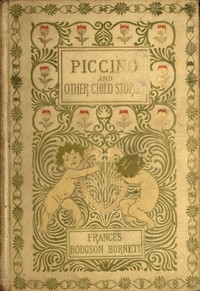
Piccino, and other child stories
Language: en432 downloads on Project Gutenberg
Subjects
In: Short Stories·Children & Young Adult Reading·British Literature
Public-domain ebook sourced from Project Gutenberg #76009.
Public-domain ebook
Language: en432 downloads on Project Gutenberg
Subjects
In: Short Stories·Children & Young Adult Reading·British Literature
Public-domain ebook sourced from Project Gutenberg #76009.
The opening · free to read
If he lived a hundred years—to be as old as Giuseppe, who was little Roberto’s great-grand-father, and could only move when he was helped, and sat in the sun and played with bits of string—if he lived to be as old as that, he could never forget them, those two strange and dreadful days.
When sometimes he spoke of them to such of his playmates as were older than himself—especially to Carlo, who tended sheep, and was afraid of nothing, even making jokes about the _forestieri_—they said they thought he had been foolish; that as it seemed that the people had been ready to give him anything, it could not have been so bad but one could have tried to bear it, though they all agreed that it was dreadful about the water.
It is true, too, that as he grew older himself, after his mother died and his father married again—the big Paula who flew into such rages and beat him—and when he had to tend sheep and goats himself, and stay out on the hills all day in such ragged jackets and with so little food—because Paula said he had not earned his salt, and she had her own children to feed—then he longed for some of the food he would not eat during those two days, and wondered if he would do quite the same thing again under the same circumstances. But this was only when he was very hungry and the mistral was blowing, and the Mediterranean looked gray instead of blue.
He was such a tiny fellow when it happened. He was not yet six years old, and when a child is under six he has not reached the age when human creatures have begun to face life for themselves altogether; and even a little Italian peasant, who tumbles about among sheep and donkeys, which form part of his domestic circle, is still in a measure a sort of baby, whose mother or brother or sister has to keep an occasional eye on him to see that he does not kill himself. And then also Piccino had been regarded by his family as a sort of capital, and had consequently had more attention paid to him than he would have had under ordinary circumstances.
It was like this. He was so pretty, so wonderfully pretty! His brothers and sisters were not beauties, but he was a beauty from his first day, and with every day that passed he grew prettier. When he was so tiny that he was packed about like a bundle, wound up in unattractive-looking bandages, he had already begun to show what his eyes were going to be—his immense soft black eyes, with lashes which promised to be velvet fringes. And as soon as his hair began to show itself, it was lovely silk, which lay in rings, one over the other, on his beautiful little round head. Then his soft cheeks and chin were of exquisite roundness, and in each he had a deep dimple which came and went as he laughed.
He was always being looked at and praised. A “_Gesù bambino_” the peasant women called him. That was what they always said when a child had wonderful beauty, their idea of supreme child loveliness being founded on the pictures and waxen, richly dressed figures they saw in the churches.
But it was the forestieri who admired him most, and that was why he was so valuable. His family lived near a strange little old city in the hills, which spread out behind one of the fashionable seaside towns on the Italian Riviera. The strange little old city, which was a relic of centuries gone by, was one of the places the rich foreigners made excursions to see. It was a two or three hours’ drive from the fashionable resort, and these gay, rich people, who seemed to do nothing but enjoy themselves, used to form parties and drive in carriages up the road which wound its way up from the shore through the olive vineyards and back into the hills. It was their habit to bring servants with them, and hampers of wonderful things to eat, which would be unpacked by the servants and spread on white cloths on the grass in some spot shaded by the trees. Then they would eat, and drink wine, and laugh, and afterwards wander about and explore the old city of Ceriani, and seem to find the queer houses and the inhabitants and everything about it interesting.
To the children of Ceriani and its outskirts these excursion parties were delightful festivities. When they heard of the approach of one they gathered themselves together and went forth to search for its encampment. When they had found it they calmly seated themselves in rows quite near and watched it as if it were a kind of theatrical entertainment to which they had paid for admission. They were all accomplished in the art of begging, and knew that the forestieri always had plenty of small change, and would give, either through good-nature or to avoid being annoyed. Then they knew from experience that the things that were not eaten were never repacked into the hampers if there was some one to ask for them. So they kept their places quite cheerfully and looked on at the festivities, and talked to each other and showed their white teeth in generous grins quite amiably, sure of reaping a pleasant harvest before the carriages drove back again down the winding road ending at the sea and San Remo, and the white, many-balconied hotels.
And it was through these excursion parties that Piccino’s market value was discovered. When he was a baby and his sister Maria, who was his small nurse—being determined not to be left behind by her comrades—toiled after the rest of the children with her little burden in her arms or over her shoulder, it was observed that the forestieri always saw the pretty round black baby head and big soft dark eyes before they saw anything else, and their attention once attracted by Piccino very pleasant things were often the result. The whole party got more cakes and sandwiches and legs of chickens and backs of little birds, and when bits of silver were given to Maria for Piccino, Maria herself sometimes even had whole francs given to her, because it was she who was his sister and took care of him. And then, having begun giving, the good-natured ones among the party of ladies and gentlemen did not like to quite neglect the other children, and so scattered soldi among them, so that sometimes they all returned to Ceriani feeling that they had done a good day’s work. Their idea of a good day’s work was one when they had not run after carriages for nothing, or had heads shaken at them when they held out their hands and called imploringly, “_Uno soldino, bella signora—bella signora!_” Piccino had been born one of the class which in its childhood and often even later never fails in the belief that the English and Americans who come to the beautiful Riviera come there to be begged from, or in some way beguiled out of their small coin.
Maria was a sharp child. She had not lugged her little brothers and sisters about all through the working time of her twelve years without learning a few things. She very soon found out what it was that brought in the soldi and the nice scraps from the hampers.
“It is Piccino they give things to—_ecco_!” she said. “They see his eyes and they want to look at him and touch his cheeks. They like to see the dimples come when he laughs. They would not look at me like that, or at you, Carmela. They would not come near us.”
This was quite true. The row of little spectators watching the picnics might be picturesque, but it was exceedingly dirty, and not made up of the material it is quite safe to come near. It was a belief current among the parties who drove up from San Remo that soap had never been heard of in the vicinity of Ceriani and that water was avoided as a poisonous element, and this belief was not founded upon mere nothings.
“They are as dirty as they are cheerful and impudent,” some one had said, “and that is saying a great deal. I wonder what would happen if one of them were caught and washed all over.”
Nobody could have been dirtier than Piccino was. Pretty as he looked, there were days when the most enthusiastic of the ladies dare not have taken him in her arms. In fact, there were very few days when any one would have liked to go quite that far—or any farther, indeed, than looking at his velvet eyes and throwing him soldi and cakes. But his eyes always won him the soldi and cakes, and the older he grew the more he gained, so that not only Maria and her companions, but his mother herself, began to look upon him as a source of revenue.
“If he can only sing when he grows a little older,” his mother said, “he can fill his pockets full by going and singing before the hotels and in the gardens of the villas. Every one will give him something. They are a queer lot, these foreigners, who are willing to give good money to a child because he has long eyelashes. His are long enough, thanks to the Virgin! Sometimes I wonder they are not in his way.”
His mother was the poorest of the poor. She had seven children, and a mere hovel to put them in, and nothing to feed and clothe them with. Her husband was a good-for-nothing, who never worked if he could help it, and who, if he earned a few soldi, got rid of them at once before they could be scolded out of him and spent on such extravagances as food and fire. If Piccino had not been a little Italian peasant he would, no doubt, have starved to death or died of cold long before he had his adventure; but on the Riviera the sun shines and the air is soft, and people seem born with a sort of gay carelessness of most things that trouble the serious world.
As for Piccino, he was as happy as a soft little rabbit or a young bird or a baby fawn. When he was old enough to run about, he had the most beautiful days. They seemed to him to be made up of warm sunshine and warm grass, flowers looking at him as he toddled round, light filtering through vines and the branches of olive-trees, nice black bread and figs, which he lay on his back and munched delightedly, and days when Maria dragged him along the road to some green place where grand people sat and ate good things, and who afterwards gave him cakes and delicious little bones and soldi, saying over and over again to each other that he was the prettiest little boy they had ever seen, and had the most beautiful eyes, and oh! his eyelashes!
“Look at his eyelashes!” they would exclaim. “They are as thick as rushes round a pool, and they must be half an inch long.”
Sometimes Piccino got rather tired of his eyelashes, and wore a resigned expression, but he was little Italian enough to feel that they must be rather a good thing, as they brought such luck. Once, indeed, a man came all by himself to Ceriani, and persuaded his mother to make him sit on a stone while he put him in a picture, and when it was over he gave his mother several francs, and she was delighted; but Piccino was not so pleased, because he had thought it rather tiresome to sit so long on one stone.
This was the year before the dreadful two days came.
When they came he had been put into queer little trousers, which were much too big for him. One of his brothers had outgrown them and given them good wear. They were, in fact, as ragged as they were big, and as dirty as they were ragged; but Piccino was very proud of them. He went and showed them to the donkey, whose tumble-down sleeping apartment was next to his own, and who was his favorite playmate and companion. It was such a little donkey, but such a good one! It could carry a burden almost as big as its stable, and it had soft, furry ears and soft, furry sides, and eyes and eyelashes as pretty for a donkey as Piccino’s were for a boy. It was nearly always at work, but when it was at home Piccino was nearly always with it. On wet and cold days he stayed with it in its tiny, broken stable, playing and talking to it; and many a day he had fallen asleep with his curly head on its warm little fuzzy side. When it was fine they strolled about together and were companions, the donkey cropping the grass and Piccino pretending it was a little flock of sheep, and that he was big enough to be a shepherd. In the middle of the night he used to like to waken and hear it move and make little sounds. It was so close to him that he felt as if they slept together.
The book keeps going
Reading is free forever. Sign up and watch scenes appear while you read.



Scenes Storieta drew for other classics.
New illustrated classics
Once or twice a month: the latest books to get full character casts, scene art, and free comic editions. No account needed.