Public-domain ebook
Matabele land and the Victoria Falls
by Frank Oates
Language: en1,292 downloads on Project Gutenberg
Subjects
Public-domain ebook sourced from Project Gutenberg #77803.
Public-domain ebook
by Frank Oates
Language: en1,292 downloads on Project Gutenberg
Subjects
Public-domain ebook sourced from Project Gutenberg #77803.
The work is a post‑humous travel memoir that records Frank Oates’s brief but intense expedition through Matabele land to the Victoria Falls. The editor begins by apologising for the imperfections inevitable in a volume assembled from the traveller’s own notebooks and private letters, many of which were never intended for publication. He explains that the narrative has been preserved as faithfully as possible, with only occasional bridging passages of his own, and that the accompanying maps and illustrations are drawn from Oates’s field observations or the hand of his brother, who accompanied him for part of the journey. The volume also contains an appendix of scientific papers contributed by noted naturalists of the day, offering additional interest to readers of African natural history and colonial exploration.
The prose reflects a late‑Victorian sensibility, combining a formal, almost reverential editorial voice with the immediacy of a field journal. Detailed descriptions of flora, fauna, and indigenous customs are interwoven with personal reflections on the traveller’s untimely death and the loss of his specimens. Readers who appreciate meticulous nineteenth‑century travel accounts, the early scientific study of southern Africa, and the earnest, sometimes melancholy tone of a memorial compilation will find this book rewarding.
The opening · free to read
Printed by R. & R. CLARK, Edinburgh.
PREFACE.
In offering to the public the following pages, I feel, as editor, that I owe a few words of apology and explanation to the reader by way of preface--apology for the imperfections of the volume; explanation how such imperfections have arisen. The traveller whose journey to the Zambesi is here recounted died of fever a few days after he had left that river on his way homewards, and the book has been compiled from his note-books, and letters home. The latter were written with no view of publication; the former were intended only for the writer’s own subsequent use and as suggestive guides to memory. It is always a question in such a case how far the surviving friends of the deceased writer or traveller do well in publishing the unfinished labour of his pen. What his own wish would have been cannot be known, or even guessed at, unless specially expressed; and the reflection forcibly presents itself to the mind that perhaps a certain injustice may be done to the memory of the dead by publishing, in a form which may fairly challenge the criticism of the general reader, a few hasty jottings by the wayside, written under circumstances the least favourable to literary composition, and a limited number of letters home, meant merely for the perusal of the writer’s nearest and most indulgent friends. On the other hand, however, it must be borne in mind that, much as must inevitably be lost in editing pages such as these for want of the inspiring touch which the writer himself could alone have finally given them, there will probably be a directness and freshness of the expressions which a traveller makes use of on the spot, hampered as he then is by no oppressive consciousness that he is addressing that imaginary “public”--consisting after all but of a number of individuals like himself, all with the same human heart and interests,--which might be wanting in his more matured work.
Guided, then, by the latter consideration, and by the reflection that every day the number of our countrymen is increasing who look to South Africa with a growing interest--whether as a land for colonization, exploration, or scientific research,--I venture to add another to the long list of already published books upon that country, hoping that the reader may find therein matter of some general interest, and that, if not, he will look leniently on the error of judgment which has led me, together with those who have here shared my responsibility, to offer for his perusal pages prepared at first mainly for private friends, but which it was afterwards thought might possibly prove of interest to a somewhat wider circle.
Further, with reference to the length of time which has elapsed between the date of the writer’s death and the publication of this volume, I can only claim in extenuation of this circumstance the fact that a considerable period necessarily intervened before the traveller’s journals and papers reached this country, that they required on their arrival much care in their disposal, and that the whole of the natural history collections had to be gone through systematically before being finally placed in competent hands for arrangement and classification. The delay, then, has enabled me to include in the volume the papers in the appendix on the latter subject, contributed by such able hands, which I believe will add interest to the whole; and that not only in the case of scientific readers, but of all those who would realize in a measure what it is which makes up the life and experiences of the naturalist traveller in his wanderings in distant lands. I may add, moreover, that the general state and condition of the country of which these pages treat would appear, from the accounts of those who have recently visited it, to remain substantially the same, or only changed in points of minor interest. The abandonment, however, of the Tati Gold-mine and the establishment of Kama in the Bamangwato sovereignty perhaps demand attention.
In editing this work it has been my object to preserve, wherever possible, the writer’s narrative in exactly his own words; and this plan has been steadily adhered to throughout, those passages only being omitted which appeared little likely to interest the general reader, or in which--as several times occurred--old ground was re-traversed. In such cases the intervening periods have been bridged over by a short narrative of my own, intended merely to connect the story and weld the whole together. The maps, it may be added, are all of them the result of the traveller’s own special observations, recorded as he went along.
Of the illustrations in the body of the work, I may remark that they are all from original drawings taken on the spot, or from the objects they purport to represent. Some are from sketches by the late Frank Oates; the remainder--and these the larger number--from those of his brother, W. E. Oates, who accompanied him during a portion of his journey. It may therefore perhaps be fairly claimed for them that, whatever their artistic merits, these drawings are--what alone they claim to be--faithful representations of the scenes and objects they depict. In the “List of Illustrations” it will be found to which of the two brothers each drawing may be respectively attributed.
And now there only remains to me the pleasing duty of returning my warmest thanks to the many friends who have helped me with my task. To those gentlemen who have contributed the valuable papers which form the appendix to this volume, my thanks are especially due; I refer to Professors Rolleston, Westwood, and Oliver, Dr. Albert Günther, Mr. R. Bowdler Sharpe, and Mr. J. G. Baker. And in this connexion I have also to thank Captain G. E. Shelley, who named the majority of the birds in my late brother’s collection before they passed into the hands of Mr. Sharpe, to be permanently deposited in the British Museum. From all of these, and especially from Mr. Sharpe, I have received, besides, much friendly help and advice with reference to the general arrangements of the volume, as I have proceeded with my labours; as well, also, as from Mr. H. W. Bates, the able Assistant Secretary of the Royal Geographical Society, to whose kindness I am deeply indebted for many valuable suggestions and much practical assistance. The four beautiful plates which accompany Professor Westwood’s paper have been drawn by his own hand to illustrate his descriptions of new or remarkable insects.
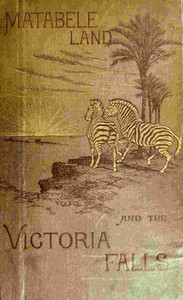
Of those gentlemen, moreover, who have contributed their professional assistance, I must also in common gratitude add a word. Mr. Francis Holl has bestowed much pains on the production of a portrait of my late brother, from a photograph by Gowland of York, which I believe to be very successful; Mr. Kaufmann’s chromo-lithographs are the result of much careful effort on his part to catch the spirit and preserve the effect of the original water-colour drawings from which they have been taken; the lithographs in the appendix, drawn respectively by Messrs. J. G. Keulemans, R. Mintern, W. H. Fitch, and (as already mentioned) Professor Westwood, have been accurately rendered by the skilful hands of Messrs. M. and N. Hanhart, and Messrs. Mintern Brothers; and the wood-engravings have been skilfully and conscientiously executed by Messrs. G. Pearson, J. D. Cooper, and E. Evans, all of them with a faithful determination to do the fullest justice to their respective subjects, and I believe with admirable result. The birds and animals have been placed on wood chiefly by Mr. Smit, and some by Mr. Davenport; whilst Mr. Charles Whymper has contributed two original drawings of the author’s dogs and the designs upon the cover. Mr. Edward Weller also and his son have spared no pains to make the maps which accompany the volume as perfect and complete as possible; to whom, as well as to all the others named, my grateful thanks are due, and most heartily do I acknowledge what I owe them.
To enumerate more fully the names of those who have further assisted me, either professionally or as private friends, I must now forbear from undertaking; suffice it to say there are many, especially of the latter class, without whose assistance and encouragement I should probably never have succeeded in bringing my labours to a close. Let me thank them now for the generous help and sympathy so ungrudgingly given, and which, alas, it is so impossible for me to recompense.
It may be proper to add, before concluding--what I have failed elsewhere to mention--that a considerable number of specimens in my brother’s collection were destroyed at Shoshong in his lifetime by the unroofing, during a gale, of the hut where they were stored, and that some of the spirit jars of reptiles and beetles were afterwards left behind when the collections were conveyed to England; circumstances which led in all probability to the loss of many valuable specimens.
There are not many who will need to be reminded that to “inspan” and “outspan,” words of frequent occurrence in the traveller’s journal, mean, in South African parlance, to “yoke” and “unyoke,” and that “spoor” means “footprints” or “track.” All other words of Dutch or native origin introduced into the text are explained, I believe, where they occur. The accent in the word “Matabele” falls, it may be added, on the third of its four syllables.
My task is ended--in many respects a very mournful, yet a very pleasing one; and if there be found but a few readers who derive either pleasure or profit from a perusal of these pages, I shall feel amply rewarded for my trouble.
C. G. O.
May 1881.
MEMOIR.
“To be able to give one’s name to a bird, or a flower, may seem to many but a poor ambition; and yet, materially considered, it is quite as likely to be perpetuated as to give it to a street or town, and is much more likely to define the tastes and individuality of the giver.”--_Bret Harte._
The saying has seldom been truer of any one than of the writer of the succeeding pages, that “the child is father of the man.” His love of nature generally, and of natural history in all its branches, was one of Frank Oates’s earliest instincts; and to the study of our English wild-birds--their ways and haunts, their comings and their goings--he was especially devoted from boyhood. The pages of Waterton and Buffon, treating of wider fields of study, supplied his imagination at that period with richer food; and the plates of Audubon’s Birds, when access could be had to them, were turned by him with feelings little short of reverence. From his earliest days he had resolved to visit those distant, and, to him, still mysterious lands, where the page of nature was yet to the white man in great part an unread book; and those who, after his death in the full prime of manhood, witnessed the arrival at his English home of his large collections of natural history specimens, brought from the interior of South Africa by the devoted service of a friend, realized strangely how the boy’s ambition had been fulfilled in after life, and felt that, though cut off in the very perfection of his powers, the purpose of his being had not wholly failed. Those even who knew him best were surprised indeed, when these evidences of his work abroad arrived, to see how much he had accomplished in the brief period--a little short of two years--of his absence. As, one after another, the packing-cases were opened, each in its turn afforded to the looker-on some fresh illustration of the untiring determination of the deceased traveller to make the very utmost of his opportunities whilst abroad. The voice that could alone have told the story of those collections, the hand that had brought them thus together, were silent and still in a far distant grave; but an utterance--the more pathetic because it was inaudible--seemed to go forth, unbidden, from those speechless records of devoted work and enterprise, and tell the secret tale of a life in earnest sympathy with nature curtailed,--the hand, as it were, yet warm from its labours.
The book keeps going
Reading is free forever. Sign up and watch scenes appear while you read.



Scenes Storieta drew for other classics.
New illustrated classics
Once or twice a month: the latest books to get full character casts, scene art, and free comic editions. No account needed.