Public-domain ebook
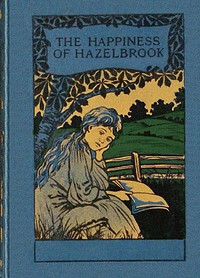
The happiness of Hazelbrook
Language: en4,443 downloads on Project Gutenberg
Subjects
Public-domain ebook sourced from Project Gutenberg #78045.
Public-domain ebook
Language: en4,443 downloads on Project Gutenberg
Subjects
Public-domain ebook sourced from Project Gutenberg #78045.
The book is a modestly paced juvenile tale set in a small English village, where the Lawrence family struggles to keep their household running after the death of the father. The opening scene places the reader in the Lawrence cottage as mother and children negotiate chores, needlework, and the care of the crippled little Nelly. Through a series of domestic exchanges, the narrative introduces Katie, a thirteen‑year‑old who promises to finish a shirt but is easily distracted by a walk in the garden and a cowslip‑making venture. The episode quickly escalates into a cascade of mishaps, cold dinner, lost cotton, and tears, illustrating the moral lesson that idle temptations undermine duty. The plot thus begins with a vivid snapshot of rural life, family responsibility, and the consequences of neglecting one’s obligations.
Written in a straightforward, didactic style typical of late‑Victorian moral fiction, the prose reflects the period’s emphasis on Christian virtue and industriousness. The language is plain yet descriptive, offering enough detail to evoke the cottage setting without ornate flourish. Readers who appreciate gentle moral instruction, historical domestic scenes, and a narrative that foregrounds character development over adventure will find this story engaging. It will especially appeal to those who enjoy reading about youthful repentance and the quiet heroism of everyday perseverance.
The opening · free to read
"That you may, mother; I shan't stir till I have finished it."
"There's Ben's dinner all ready in the basin; you can just put it into the oven for a short time before you send it. And Willie and Tom will take it when they come home from school."
"All right, mother."
"And don't let little Esther get into any mischief. Keep her in with you as much as you can, Katie; she plays very well by herself, and it's much better for her than running about all the morning with the children of the village. Besides, she will amuse Nelly if she stays indoors."
As Mrs. Lawrence spoke, she stooped to kiss a pale, sickly-looking little girl, about ten years old, who was lying upon a little bed near the window.
"I will look after Esther, mother," said the child, in a feeble voice: "I wish I could do some work to help you, that I do." And the tears came into Nelly's eyes as she spoke.
"Don't fret about that, Nelly; some day, please God, you'll be able to help me;—it's not the will that's wanting, anyhow, I know that quite well. Meantime, you've got your own work to do, as our minister used often to say to me; there's no one but has work to do in the world, however rich he may be."
"Why, mother, what work can Nelly possibly have to do?" said Katie.
"Nelly has to pray to God to make her patient under the trial He has sent her," replied her mother—"to keep from murmuring, or being discontented."
"I shouldn't think that was very hard," interrupted Katie. She was about to add that her sister had no needlework to do, but something kept her silent.
"I should like to see 'you' try for a week, Katie," said her mother.
Katie blushed and said nothing.
"It is not so very easy, as you think, to lie patiently day after day, and week after week; and it is only God's grace that can enable Nelly to do so, Katie; but He never yet sent a burden so heavy that He did not at the same time send strength enough to carry it; that is, if we ask Him for it. But I must go now, so be good children, and mind you keep to your work, Katie."
"Of course I will, mother," answered the young girl, rather pertly, as if offended at being reminded so often.
And yet Katie's conscience must have told her that her mother had too good cause for complaint. Katie Lawrence was nearly thirteen. She was a sharp, clever girl, quick at her needle, and might have been of the greatest use to her mother, had it not been for the sad habit of neglecting her duty. Hers was truly but "eye-service." So long as her mother worked beside her, Katie's needle moved rapidly and steadily. But once let Mrs. Lawrence be called away by any business, and there was an end to all Katie's industry. First she would begin to yawn, then down would go her work, and she would be off into the garden to look at the chickens, or feed the pig, or anything, in fact, but sit to her needlework.
Mrs. Lawrence was most anxious to bring up her children to habits of industry, and had a great objection to Katie wasting her time with all the idle girls of the village, in whose company her mother felt sure she would learn nothing that was good. She therefore forbade her daughter going out without her consent. And Katie would promise, and, at the moment, intend to obey her mother's wishes. But no sooner was her mother's back turned, than her promised obedience was forgotten. This was the more blameable in Katie, because she was quite old enough to know what a hard struggle her mother had to make both ends meet.
There was not a prettier cottage in Hazelbrook than that of Widow Lawrence, and it was as neat and clean as it was pretty. When hard-working Ben Lawrence died of the typhus fever, three years before this story begins, the villagers shook their heads, and said that poor Mrs. Lawrence would never be able to get along with her six children, and one of them a cripple too. And some even went so far as to advise her to give up her home and go into the workhouse.
But the widow had a stout heart within her, and, in humble faith on God's promise to befriend the fatherless and the widow, she aroused herself, after the first heavy shock of her great grief, and determined to put her shoulder to the wheel, and do what she could for her fatherless children.
The eldest boy, Ben, was engaged as ploughboy at Farmer Hall's, and earned three shillings a week. Mrs. Lawrence herself went every Tuesday to the rectory to assist in the washing. This brought her in two shillings. Added to this, the parish agreed to allow her half a crown a week, which made a total of seven-and-sixpence. And as she was a first-rate needlewoman, she hoped that what she and Katie could earn by plain work, in addition to the above, would enable her, with strict economy, to pay her way and keep out of debt.
It was often a hard struggle, but Mrs. Lawrence managed still to keep her ground; and her cottage, although one of the poorest in the village, was, as we said before, one of the neatest and prettiest. Her husband had been very fond of gardening, and had taken great pains with the little piece of ground. It was well stocked with fruit-trees, and produced sufficient potatoes to last the family for the year.
Ben had been accustomed to assist his father, and was now able to take the entire charge of the garden, which it was his pride and pleasure to attend to of an evening, after he came home from work. He was the eldest of the family, and was just fourteen years old. Poor little Nelly had been a cripple from an infant. She had had a fall which injured her spine, and for several years had not been able to put her foot to the ground.
Some medical men expressed their opinion that the little girl would become stronger as she grew older, and that she might yet be able to earn her living by needlework, or some simple occupation. But up to the present time, she had lain on her back, and could not move without great pain. She required more nourishing food than her mother could afford to give her, and it was one of Mrs. Lawrence's greatest trials to feel she could not get Nelly all that she required.
She was a patient, even a cheerful child. God had mercifully, in her case, 'tempered the wind to the shorn lamb,' and whilst giving her a contented spirit, had also blessed her with a capacity for enjoying any little happiness within her reach. A simple daisy-chain, a bunch of buttercups, the first primrose, were like 'treasures of silver and gold' to the poor lame girl.
Willie and Tom came next to Nelly. They were two merry little urchins of six and eight years of age, and went regularly to school. Esther, the "baby" of the family, was a rosy, laughing little girl of three, always getting into mischief, but warm-hearted and affectionate.
Katie worked on steadily for some little time after her mother left home that morning. Then she washed up the breakfast-things, and put them away, and swept up the hearth. She had washed her hands, and was about to sit down again to work, when the thought struck her that she would just take one turn—just one—round the garden, that beautiful spring morning. She should feel so fresh after it, and would be able to work twice as fast when she came back.
So catching up little Esther in her arms, she ran with the child down to the end of the garden. A clear running stream separated it from an adjoining meadow, which was already quite yellow with cowslips.
"I must just gather a bunch for Nelly, she is so fond of them," thought Katie, as she sprang across the little brook.
Once in the meadow, she and Esther were soon busy filling their pinafores with sweet cowslips. The time slipped away unheeded.
"I will just make Nelly 'one' cowslip ball," thought Katie. And sitting down on the root of an old tree under the hedge in the meadow, she took out of her pocket the reel of cotton with which she had been working, and began to make a cowslip ball.
This is a rather tedious thing to do—the first one she attempted she spoiled, it was not a nice shape. Then she had not quite enough flowers for the second, so she left Esther sitting on the old tree, whilst she ran to gather some more. She was more successful in her next attempt, but it had taken her a long time, and she had scarcely finished it, when she heard the voices of her little brothers who had come home from school, and were calling for her.
"Dear me, how late it must be!" cried Katie, as she hastened back through the meadow.
When she reached the stream, Willie and Tom were both standing on the opposite bank in the garden.
"Why, Katie, where have you been?" said they. "Nelly says we are to take Ben his dinner, but it is not warmed yet, and it is time we went."
"Oh dear, dear, how tiresome!" said Katie. "I'm sure I never thought I had been so long."
When she reached the cottage, it was nearly half-past twelve o'clock. Poor Ben's dinner had to be sent, cold as it was, and then Katie had to hurry and see about peeling the potatoes for their own meal. Little Esther had wetted her feet sadly coming back in such a hurry across the brook, so her socks and shoes had to be dried, and by the time that was done, it was dinner-time.
Katie was cross with herself and with everybody. Nelly had thanked her heartily for the cowslip ball, but had told her that she would willingly have gone without the flowers, sooner than Katie should be behindhand with the shirt she had promised her mother to get finished.
"I shall have plenty of time this afternoon, Nelly," said Katie, pettishly; "so you need not trouble yourself about me."
By the time the dinner-things were cleared away, and her little brothers sent off to school, it was past two o'clock. Katie sighed as she washed her hands and again prepared to sit down to work.
"Everything seems to go wrong with me to-day," said she; "why, where can my cotton be? I'm sure I had it in my pocket this morning."
"Katie had cotton in a field," lisped little Esther.
The book keeps going
Reading is free forever. Sign up and watch scenes appear while you read.



Scenes Storieta drew for other classics.
New illustrated classics
Once or twice a month: the latest books to get full character casts, scene art, and free comic editions. No account needed.