Public-domain ebook
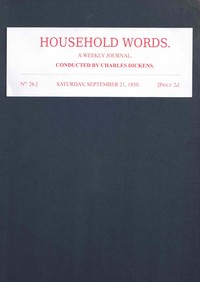
Household words, No. 26, September 21, 1850: A weekly journal
Language: en4,439 downloads on Project Gutenberg
Subjects
Public-domain ebook sourced from Project Gutenberg #78061.
Public-domain ebook
Language: en4,439 downloads on Project Gutenberg
Subjects
Public-domain ebook sourced from Project Gutenberg #78061.
Household Words, No. 26, dated September 21 1850, is a single‑issue weekly journal that blends essay, satire and theatrical review. The opening essay launches with a sprawling, tongue‑in‑cheek comparison of how English life is misrepresented on foreign stages, arguing that dramatists, unlike novelists, can indulge in “the rankest breadths of impossible absurdity.” It proceeds to catalogue a parade of caricatures, from a French‑styled Prefect in a cocked hat to a “Lord Pudding” swaggering through Vienna, each vignette serving as a comic inventory of the stereotypes that continental audiences project onto the English. The piece is framed as a corrective, noting the “distorted views” that arise from French, German and Austrian dramatists and urging a more balanced cultural exchange.
The voice is exuberant and densely allusive, packed with period‑specific references, mock‑French spellings and a relentless rhythm of clauses that echo the Victorian penchant for elaborate, digressive prose. Its humor is both scholarly and bawdy, appealing to readers who relish 19th‑century cultural commentary, theatre history, and the kind of satirical journalism that Charles Dickens popularised. Those interested in the interplay of national identity and stagecraft, or in a vivid snapshot of mid‑Victorian literary journalism, will find this issue an engaging, if occasionally overwhelming, read.
The true expression of what is popularly believed of us abroad is not to be found so distinctly set forth in novels, as in plays. The novelist is restricted in a measure within the not narrow bounds of probability; but the dramatist may first revel at will in the rankest breadths of impossible absurdity; and then the actor may intensify the enormity by dress, gait, and unmeasured foolery. The amount of instruction on the manners, habits, feelings, modes of expression, gesture, dress, and general demeanour of his compatriots which an Englishman may glean in some of the foreign Theatres, when an Englishman is being represented on the stage, is perfectly astounding. We have in this way become acquainted with English characteristics of which the most comically inclined maniac could never dream after the most dyspeptic of suppers. …
Keep reading free · chapter 1 needs no account