Public-domain ebook
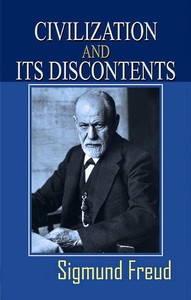
Civilization and its discontents
Language: en990 downloads on Project Gutenberg
Subjects
Public-domain ebook sourced from Project Gutenberg #78221.
Public-domain ebook
Language: en990 downloads on Project Gutenberg
Subjects
Public-domain ebook sourced from Project Gutenberg #78221.
The opening · free to read
The impression forces itself upon one that men measure by false standards, that everyone seeks power, success, riches for himself and admires others who attain them, while undervaluing the truly precious things in life. And yet, in making any general judgement of this kind one is in danger of forgetting the manifold variety of humanity and its mental life. There are certain men from whom their contemporaries do not withhold veneration, although their greatness rests on attributes and achievements which are completely foreign to the aims and ideals of the multitude. One might well be inclined to suppose that after all it is only a minority who appreciate these great men, while the majority cares nothing for them. But the discrepancy between men’s opinions and their behaviour is so wide and their desires so many-sided that things are probably not so simple.
One of these exceptional men calls himself my friend in his letters to me. I had sent him my little book which treats of religion as an illusion and he answered that he agreed entirely with my views on religion, but that he was sorry I had not properly appreciated the ultimate source of religious sentiments. This consists in a peculiar feeling, which never leaves him personally, which he finds shared by many others, and which he may suppose millions more also experience. It is a feeling which he would like to call a sensation of ‘eternity’, a feeling as of something limitless, unbounded, something ‘oceanic’. It is, he says, a purely subjective experience, not an article of belief; it implies no assurance of personal immortality, but it is the source of the religious spirit and is taken hold of by the various Churches and religious systems, directed by them into definite channels and also, no doubt, used up in them. One may rightly call oneself religious on the ground of this oceanic feeling alone, even though one reject all beliefs and all illusions.
These views, expressed by my friend whom I so greatly honour and who himself once in poetry described the magic of illusion, put me in a difficult position. I cannot discover this ‘oceanic’ feeling in myself. It is not easy to deal scientifically with feelings. One may attempt to describe their physiological signs. Where that is impossible—I am afraid the oceanic feeling, too, will defy this kind of classification—nothing remains but to turn to the ideational content which most readily associates itself with the feeling. If I have understood my friend aright, he means the same thing as that consolation offered by an original and somewhat unconventional writer to his hero, contemplating suicide: ‘Out of this world we cannot fall’.[1] So it is a feeling of indissoluble connection, of belonging inseparably to the external world as a whole. To me, personally, I may remark, this seems something more in the nature of an intellectual judgement, not, it is true, without any accompanying feeling-tone, but with one of a kind which characterizes other equally far-reaching reflections as well. I could not in my own person convince myself of the primary nature of such a feeling. But I cannot on that account deny that it in fact occurs in other people. One can only wonder whether it has been correctly interpreted and whether it is entitled to be acknowledged as the fons et origo of the whole need for religion.
I have nothing to suggest which could effectively settle the solution of this problem. The idea that man should receive intimation of his connection with the surrounding world by a direct feeling which aims from the outset at serving this purpose sounds so strange and is so incongruous with the structure of our psychology that one is justified in attempting a psycho-analytic, that is, genetic explanation of such a feeling. Whereupon the following lines of thought present themselves. Normally there is nothing we are more certain of than the feeling of our self, our own ego. It seems to us an independent unitary thing, sharply outlined against everything else. That this is a deceptive appearance, and that on the contrary the ego extends inwards without any sharp delimitation, into an unconscious mental entity which we call the id and to which it forms a façade, was first discovered by psycho-analytic research, and the latter still has much to tell us about the relations of the ego to the id. But towards the outer world at any rate the ego seems to keep itself clearly and sharply outlined and delimited. There is only one state of mind in which it fails to do this—an unusual state, it is true, but not one that can be judged as pathological. At its height the state of being in love threatens to obliterate the boundaries between ego and object. Against all the evidence of his senses the man in love declares that he and his beloved are one, and is prepared to behave as if it were a fact. A thing that can be temporarily effaced by a physiological function must also of course be liable to disturbance by morbid processes. From pathology we have come to know a large number of states in which the boundary lines between ego and outer world become uncertain, or in which they are actually incorrectly perceived—cases in which parts of a man’s own body, even component parts of his own mind, perceptions, thoughts, feelings, appear to him alien and not belonging to himself; other cases in which a man ascribes to the external world things that clearly originate in himself, and that ought to be acknowledged by him. So the ego’s cognizance of itself is subject to disturbance, and the boundaries between it and the outer world are not immovable.
Further reflection shows that the adult’s sense of his own ego cannot have been the same from the beginning. It must have undergone a development, which naturally cannot be demonstrated, but which admits of reconstruction with a fair degree of probability.[2] When the infant at the breast receives stimuli, he cannot as yet distinguish whether they come from his ego or from the outer world. He learns it gradually as the result of various exigencies. It must make the strongest impression on him that many sources of excitation, which later on he will recognize as his own bodily organs, can provide him at any time with sensations, whereas others become temporarily out of his reach—amongst these what he wants most of all, his mother’s breast—and reappear only as a result of his cries for help. Thus an ‘object’ first presents itself to the ego as something existing ‘outside’, which is only induced to appear by a particular act. A further stimulus to the growth and formation of the ego, so that it becomes something more than a bundle of sensations, i.e. recognizes an ‘outside’, the external world, is afforded by the frequent, unavoidable and manifold pains and unpleasant sensations which the pleasure-principle, still in unrestricted domination, bids it abolish or avoid. The tendency arises to dissociate from the ego everything which can give rise to pain, to cast it out and create a pure pleasure-ego, in contrast to a threatening ‘outside’, not-self. The limits of this primitive pleasure-ego cannot escape readjustment through experience. Much that the individual wants to retain because it is pleasure-giving is nevertheless part not of the ego but of an object; and much that he wishes to eject because it torments him yet proves to be inseparable from the ego, arising from an inner source. He learns a method by which, through deliberate use of the sensory organs and suitable muscular movements, he can distinguish between internal and external—what is part of the ego and what originates in the outer world—and thus he makes the first step towards the introduction of the reality-principle which is to control his development further. This capacity for distinguishing which he learns of course serves a practical purpose, that of enabling him to defend himself against painful sensations felt by him or threatening him. Against certain painful excitations from within the ego has only the same means of defence as that employed against pain coming from without, and this is the starting-point of important morbid disturbances.
In this way the ego detaches itself from the external world. It is more correct to say: Originally the ego includes everything, later it detaches from itself the external world. The ego-feeling we are aware of now is thus only a shrunken vestige of a far more extensive feeling—a feeling which embraced the universe and expressed an inseparable connection of the ego with the external world. If we may suppose that this primary ego-feeling has been preserved in the minds of many people—to a greater or lesser extent—it would co-exist like a sort of counterpart with the narrower and more sharply outlined ego-feeling of maturity, and the ideational content belonging to it would be precisely the notion of limitless extension and oneness with the universe—the same feeling as that described by my friend as ‘oceanic’. But have we any right to assume that the original type of feeling survives alongside the later one which has developed from it?
Undoubtedly we have: there is nothing unusual in such a phenomenon, whether in the psychological or in other spheres. Where animals are concerned we hold the view that the most highly developed have arisen from the lowest. Yet we still find all the simple forms alive to-day. The great saurians are extinct and have made way for the mammals, but a typical representative of them, the crocodile, is still living among us. The analogy may be too remote, and it is also weakened by the fact that the surviving lower species are not as a rule the true ancestors of the present-day more highly developed types. The intermediate members have mostly died out and are known to us only through reconstruction. In the realm of mind, on the other hand, the primitive type is so commonly preserved alongside the transformations which have developed out of it that it is superfluous to give instances in proof of it. When this happens, it is usually the result of a bifurcation in development. One quantitative part of an attitude or an impulse has survived unchanged while another has undergone further development.
This brings us very close to the more general problem of conservation in the mind, which has so far hardly been discussed, but is so interesting and important that we may take the opportunity to pay it some attention, even though its relevance is not immediate. Since the time when we recognized the error of supposing that ordinary forgetting signified destruction or annihilation of the memory-trace, we have been inclined to the opposite view that nothing once formed in the mind could ever perish, that everything survives in some way or other, and is capable under certain conditions of being brought to light again, as, for instance, when regression extends back far enough. One might try to picture to oneself what this assumption signifies by a comparison taken from another field. Let us choose the history of the Eternal City as an example.[3] Historians tell us that the oldest Rome of all was the Roma quadrata, a fenced settlement on the Palatine. Then followed the phase of the Septimontium, when the colonies on the different hills united together; then the town which was bounded by the Servian wall; and later still, after all the transformations in the periods of the republic and the early Caesars, the city which the Emperor Aurelian enclosed by his walls. We will not follow the changes the city went through any further, but will ask ourselves what traces of these early stages in its history a visitor to Rome may still find to-day, if he goes equipped with the most complete historical and topographical knowledge. Except for a few gaps, he will see the wall of Aurelian almost unchanged. He can find sections of the Servian rampart at certain points where it has been excavated and brought to light. If he knows enough—more than present-day archaeology—he may perhaps trace out in the structure of the town the whole course of this wall and the outline of Roma quadrata. Of the buildings which once occupied this ancient ground-plan he will find nothing, or but meagre fragments, for they exist no longer. With the best information about Rome of the republican era, the utmost he could achieve would be to indicate the sites where the temples and public buildings of that period stood. These places are now occupied by ruins, but the ruins are not those of the early buildings themselves but of restorations of them in later times after fires and demolitions. It is hardly necessary to mention that all these remains of ancient Rome are found woven into the fabric of a great metropolis which has arisen in the last few centuries since the Renaissance. There is assuredly much that is ancient still buried in the soil or under the modern buildings of the town. This is the way in which we find antiquities surviving in historic cities like Rome.
The book keeps going
Reading is free forever. Sign up and watch scenes appear while you read.



Scenes Storieta drew for other classics.
New illustrated classics
Once or twice a month: the latest books to get full character casts, scene art, and free comic editions. No account needed.