
Storieta
English
Sign up
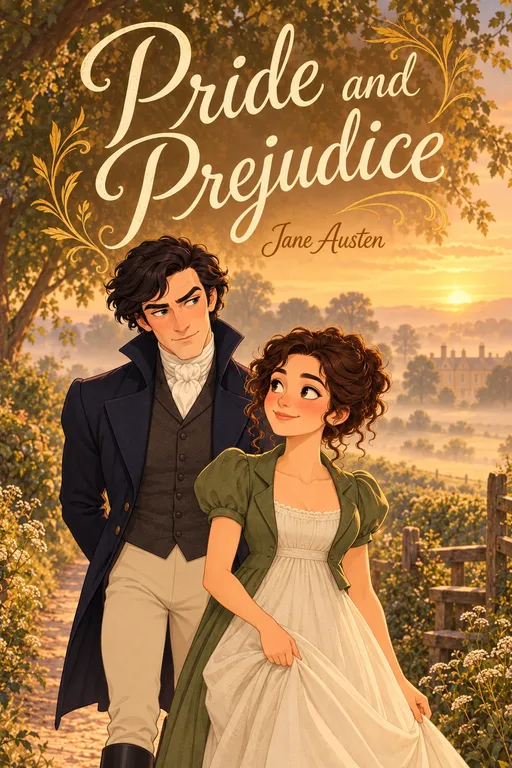
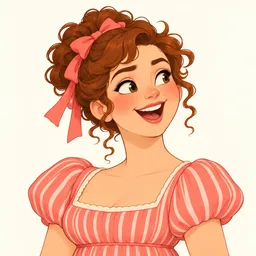
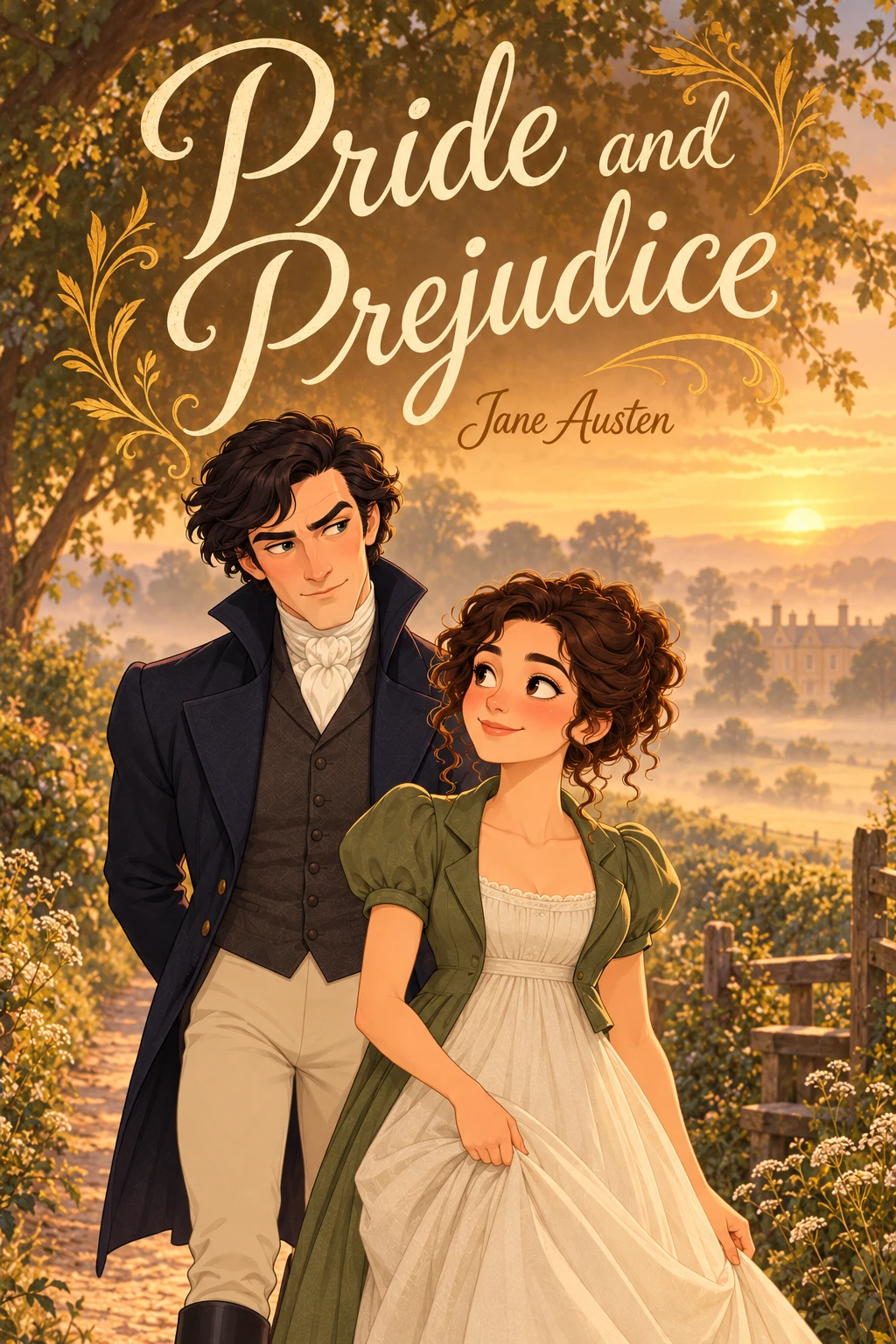
Cover of Pride and Prejudice, comic edition

Illustrated edition · Part One · free to read

Pride and Prejudice

by Jane Austen1813

Wit, Regency ballrooms, and the slow-burn that defined every slow-burn after.

Drawn page by page

The story opens

20 drawn pages · dialogue straight from the original text

Cover of Pride and Prejudice, comic edition
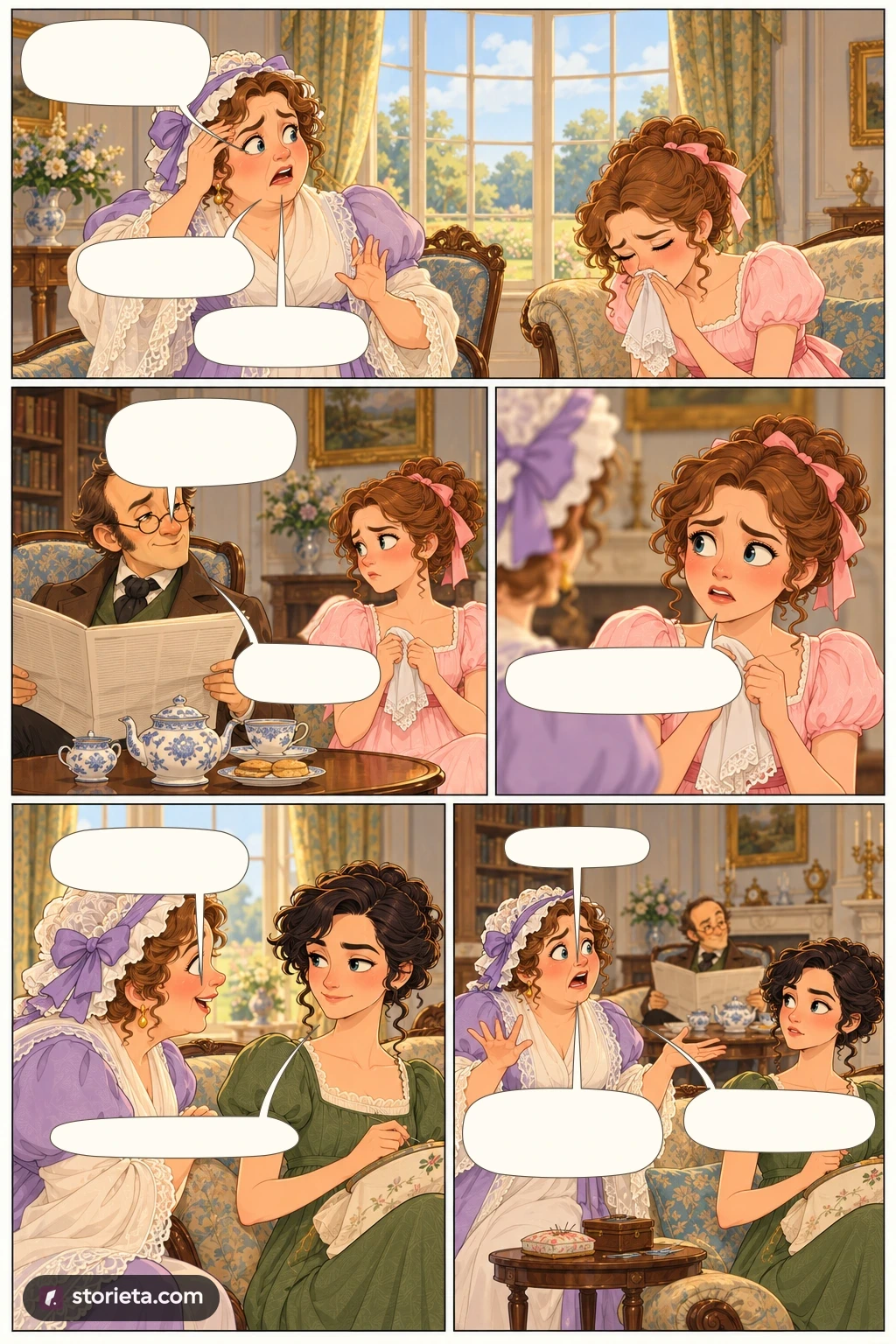
Pride and Prejudice, illustrated page 1: It is a truth universally acknowledged,
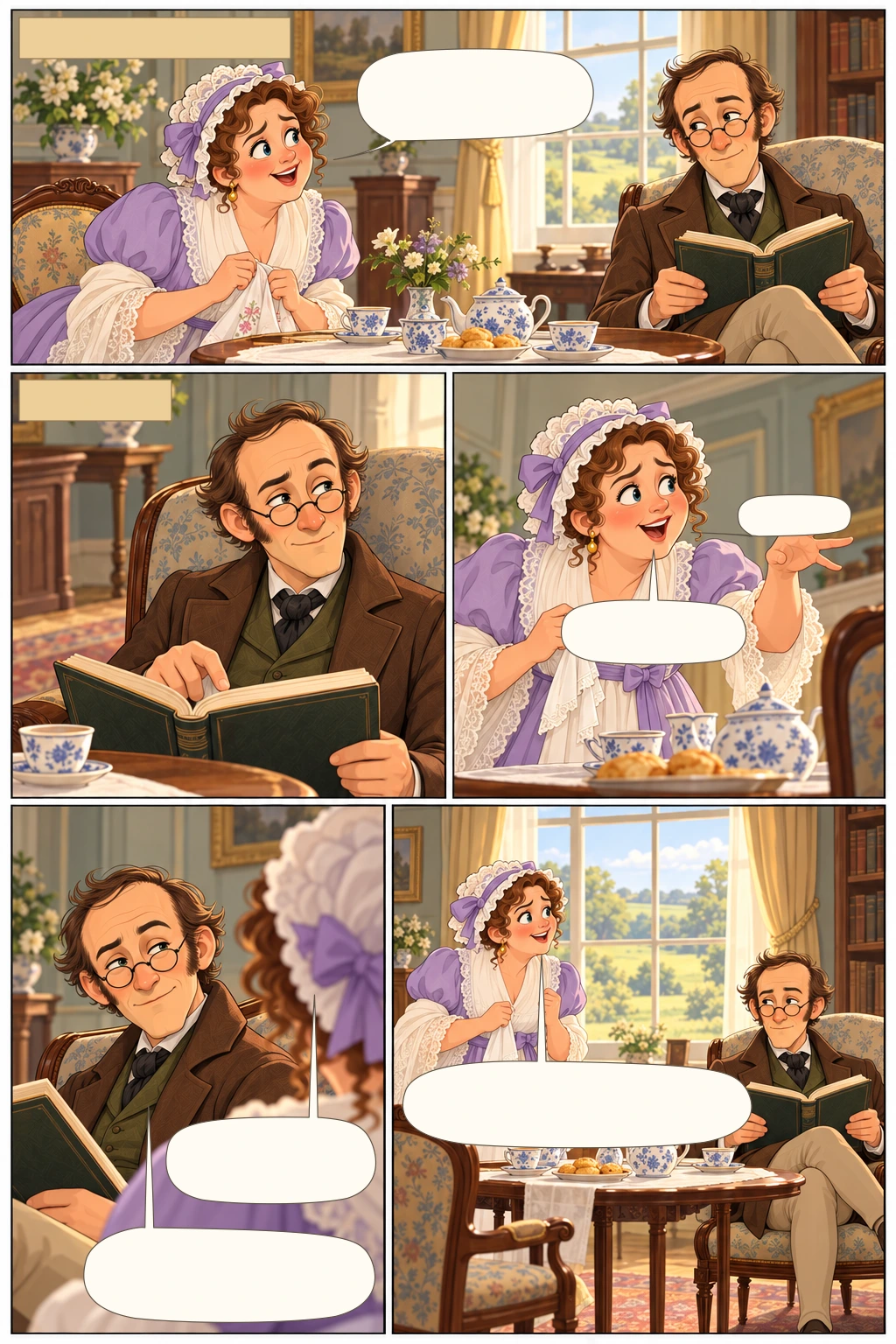
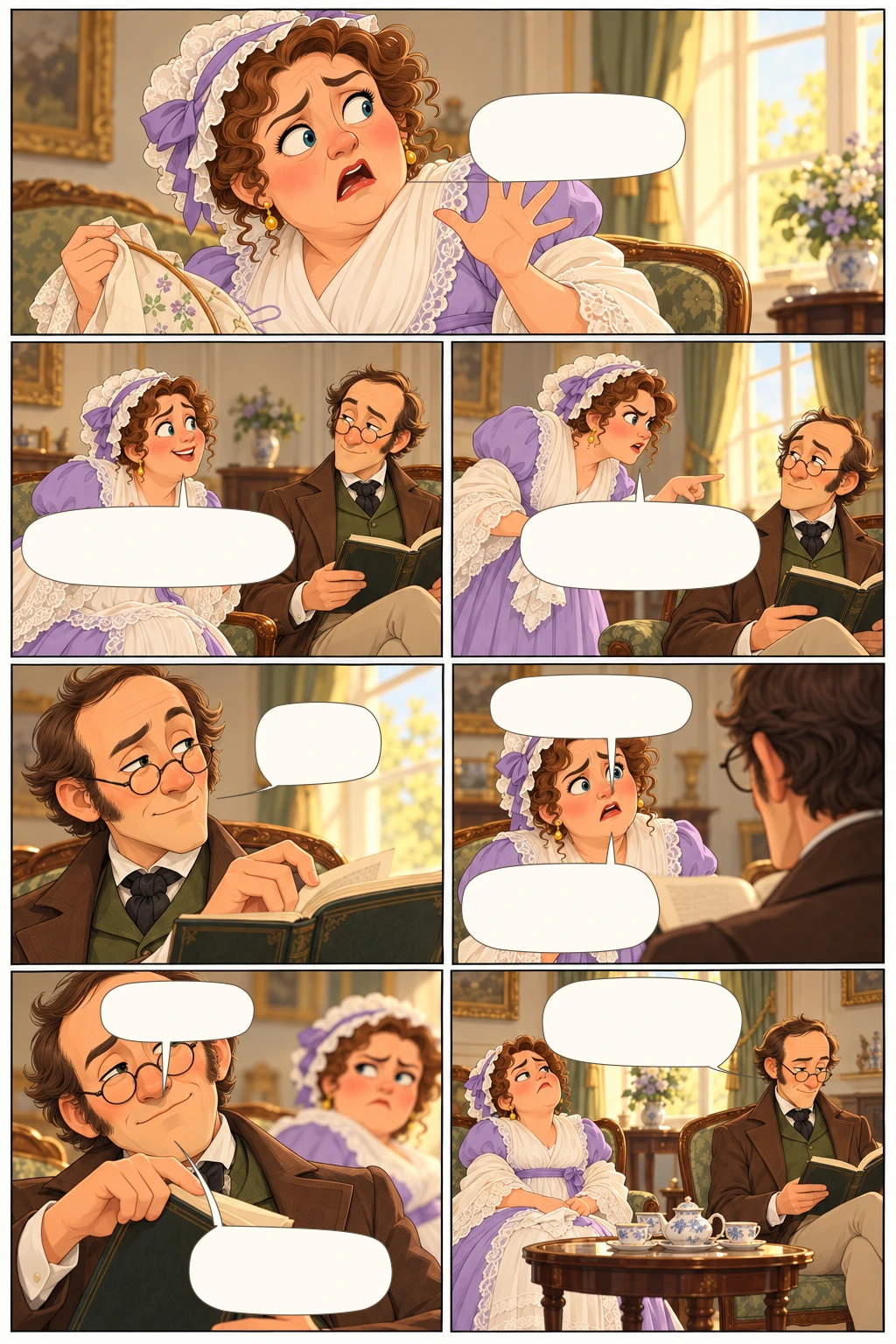
Pride and Prejudice, illustrated page 2: “My dear Mr. Bennet,” said his lady to him one day,
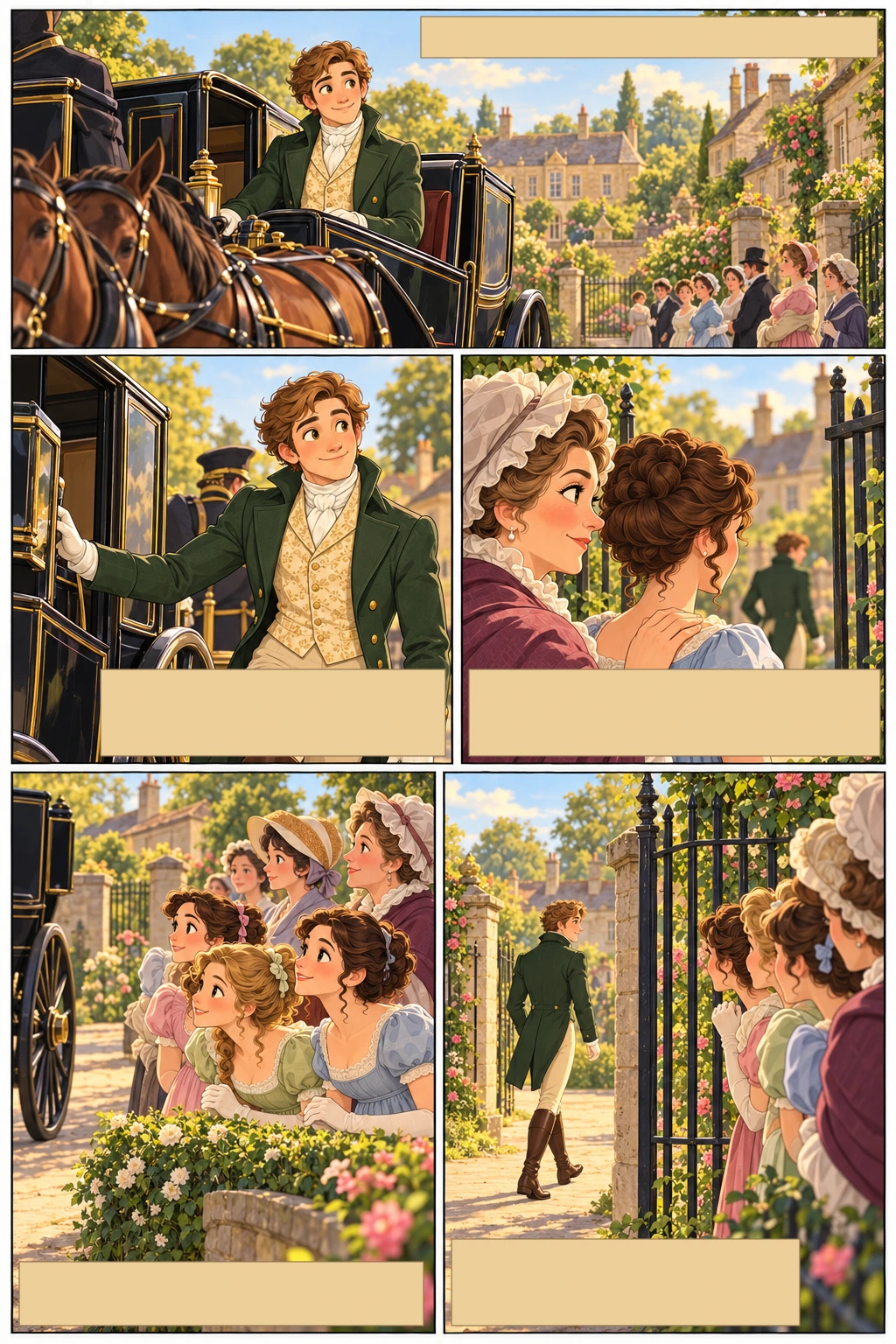
Pride and Prejudice, illustrated page 3: Bingley.
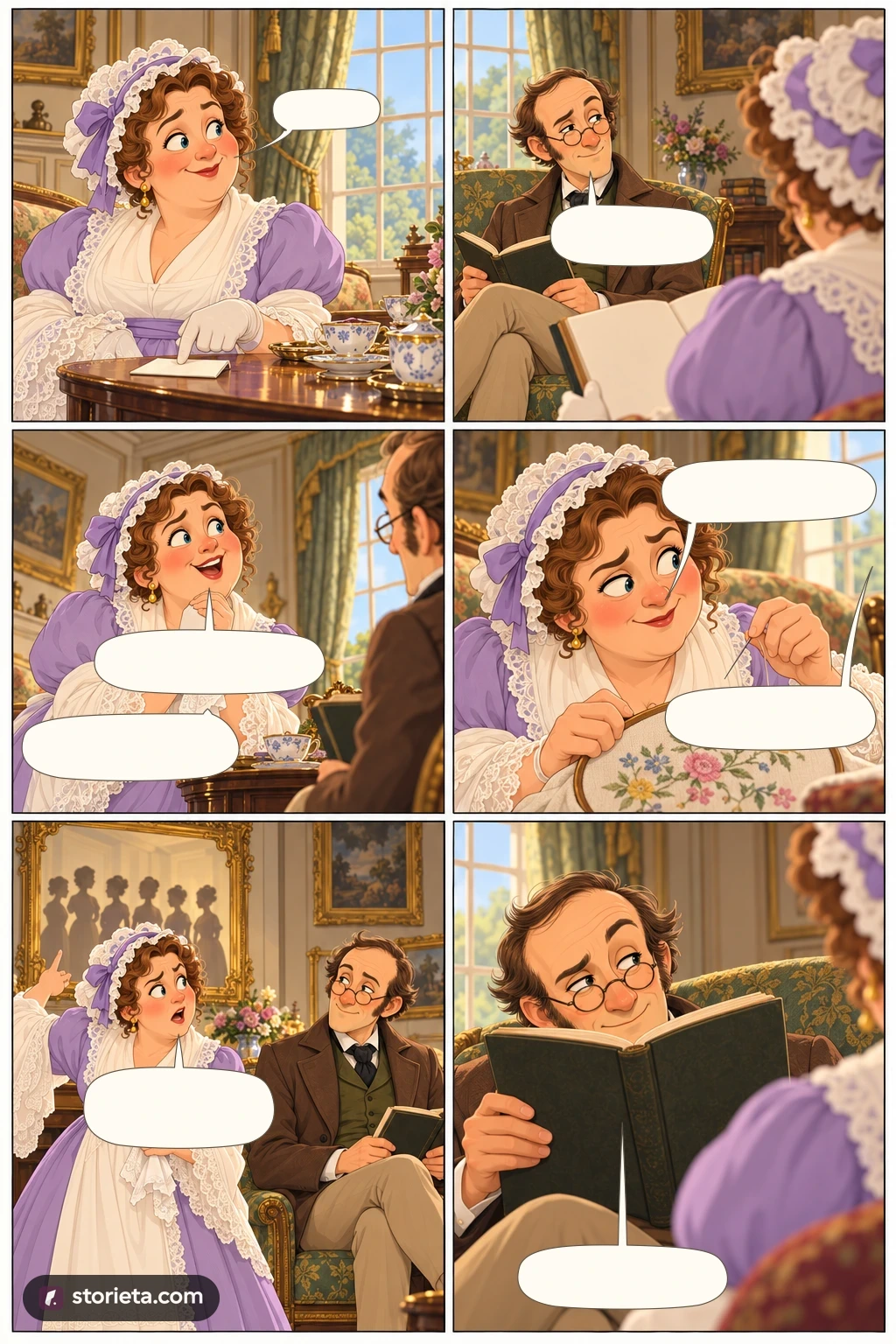
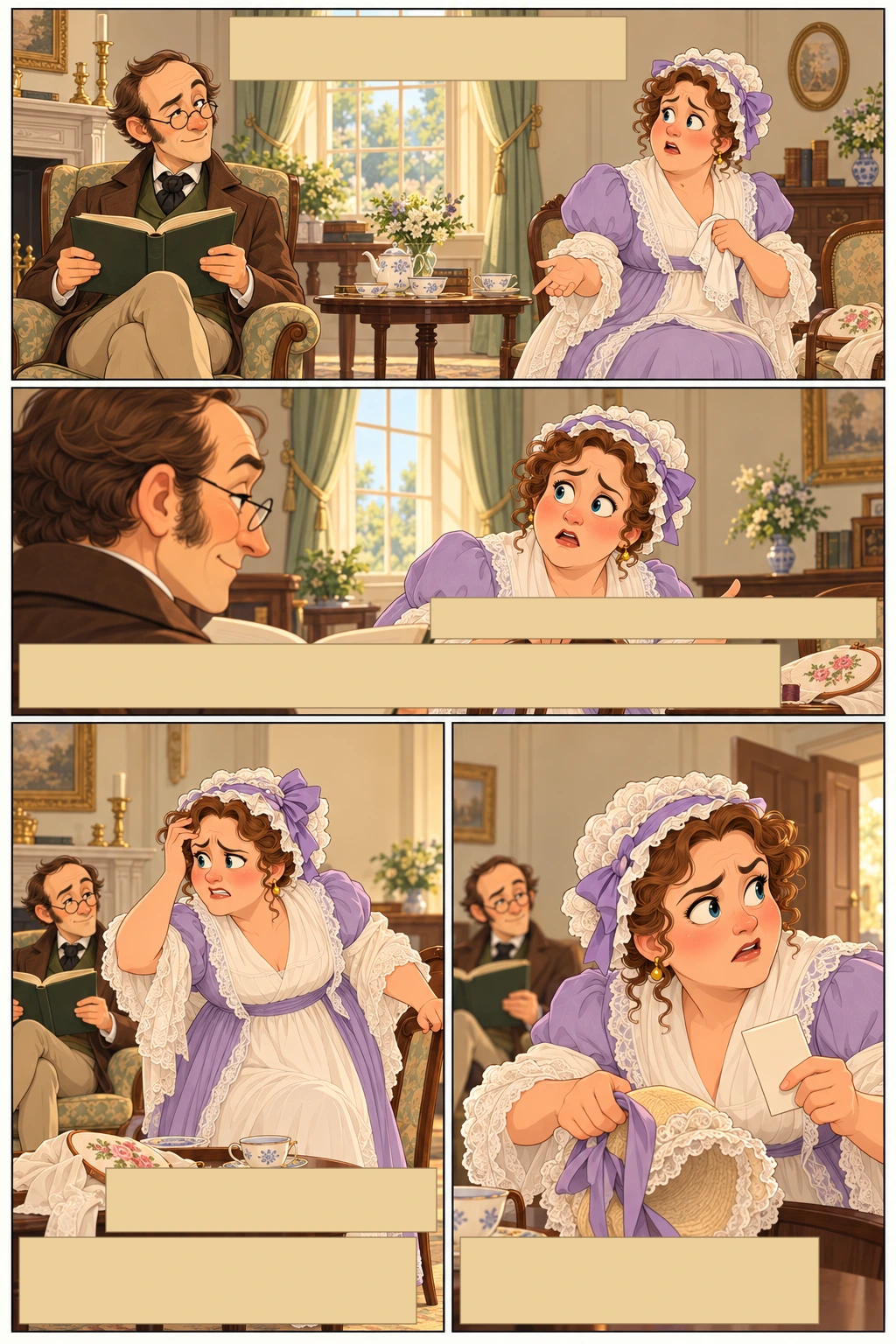
Pride and Prejudice, illustrated page 4: Design! nonsense, how can you talk so!
Pride and Prejudice, illustrated page 5: Mr. Bennet was so odd a mixture of quick parts, sarcastic humour,
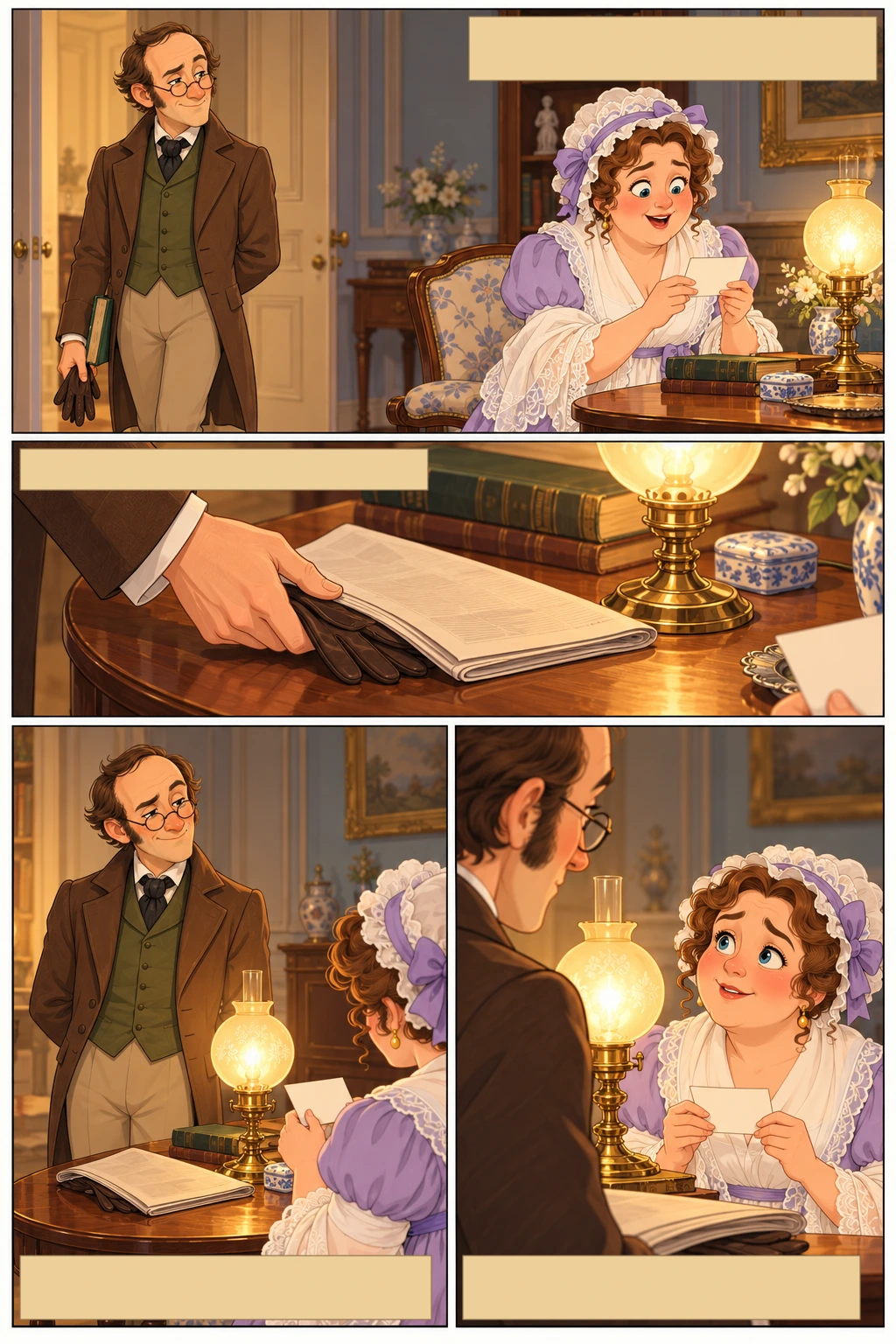
Pride and Prejudice, illustrated page 6: Mr. Bennet was among the earliest of those who waited on Mr. Bingley.
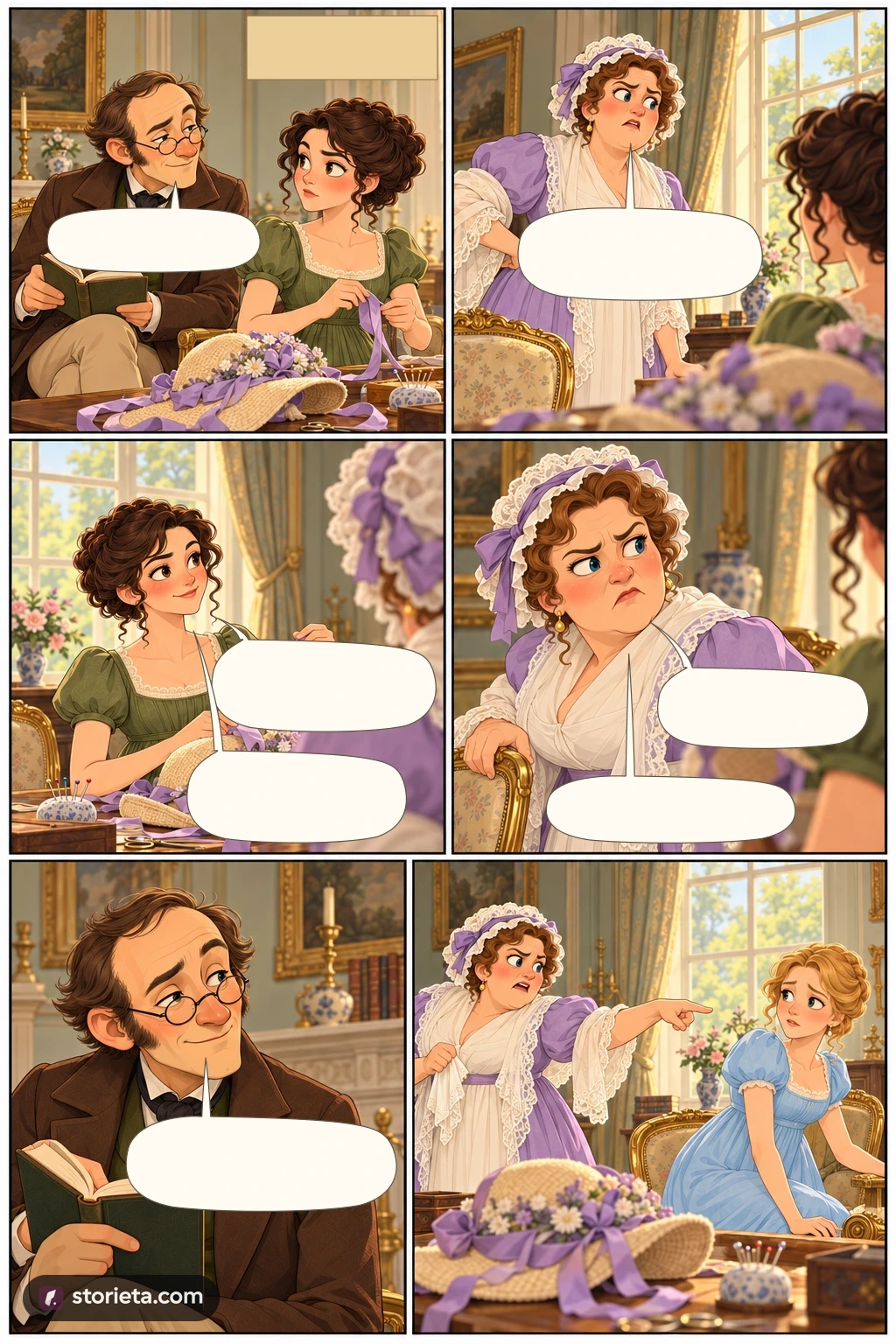
Pride and Prejudice, illustrated page 7: Observing his second daughter employed in trimming a hat, he suddenly addressed her with,
Pride and Prejudice, illustrated page 8: Don't keep coughing so, Kitty, for heaven's sake!
Pride and Prejudice, illustrated page 9: Then, my dear, you may have the advantage of your friend,
Pride and Prejudice, illustrated page 10: What can be the meaning of that emphatic exclamation?
Pride and Prejudice, illustrated page 11: I am sick of Mr. Bingley,
Pride and Prejudice, illustrated page 12: The astonishment of the ladies was just what he wished;
Pride and Prejudice, illustrated page 13: He eluded the skill of them all.
Pride and Prejudice, illustrated page 14: Come, Darcy, I must have you dance. I hate to see you standing about
Pride and Prejudice, illustrated page 15: Mr. Bingley had danced with her twice,
Pride and Prejudice, illustrated page 16: He is just what a young man ought to be,
Pride and Prejudice, illustrated page 17: Dear Lizzy!
Pride and Prejudice, illustrated page 18: I know you do; and it is that which makes the wonder.
Pride and Prejudice, illustrated page 19: Certainly not; at first.
Pride and Prejudice, illustrated page 20: Within a short walk of Longbourn lived a family with whom the Bennets were particularly intimate.

End of the free preview
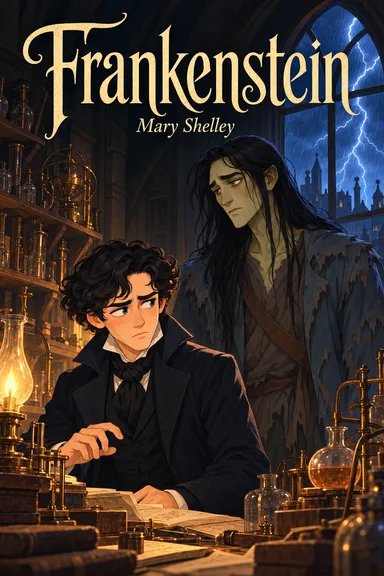
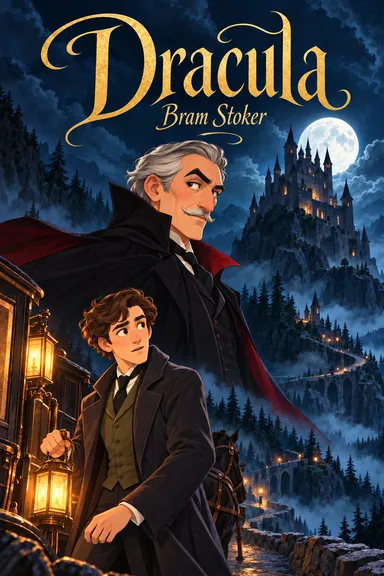
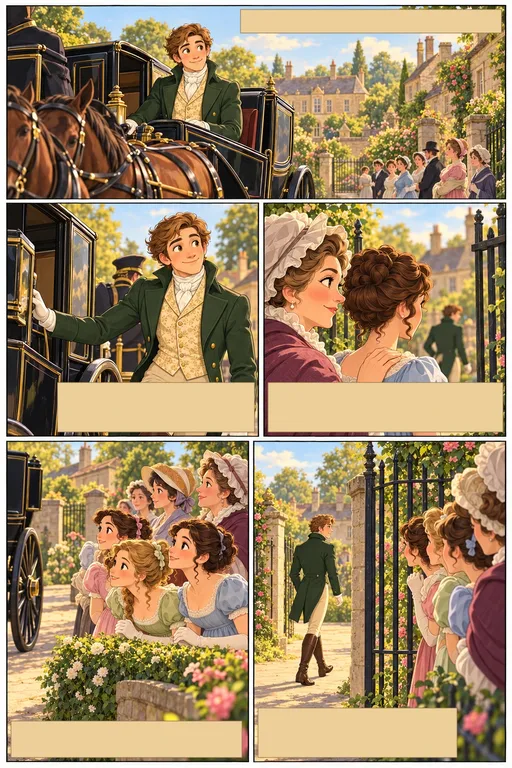
A drawn page from the comic edition of DraculaA drawn page from the comic edition of FrankensteinA drawn page from the comic edition of Alice's Adventures in Wonderland

Pages from three other classics. Any book you add can be drawn like this.

Keep the story going.

Create a free account to add Pride and Prejudice to your library and continue where this adaptation ends. Reading stays free, with 25 credits to illustrate scenes. A card is only required if you start the 7-day Pro trial.

How the cast of Pride and Prejudice connects

Drawn from who shares scenes with whom in the original text. Each bond is labeled from the pair's first scene together, so the map stays spoiler-light.

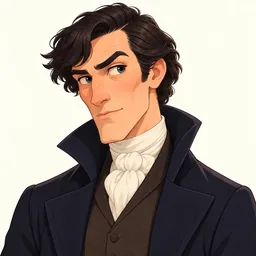
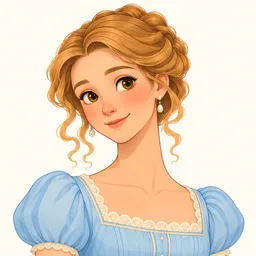
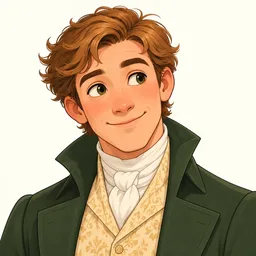
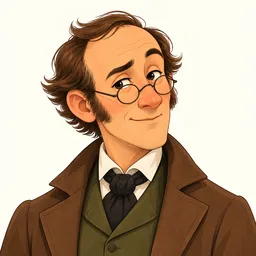
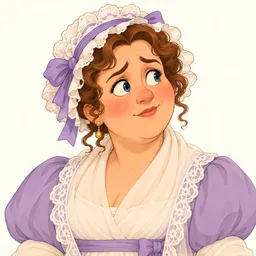
Mrs. Bennet ↔ Mr. Bennet: SpousesMr. Bennet → Elizabeth Bennet: Father-daughterMrs. Bennet → Elizabeth Bennet: Mother and daughterElizabeth Bennet ↔ George Wickham: AcquaintancesElizabeth Bennet ↔ Mr. Collins: Marriage proposalFitzwilliam Darcy ↔ Mrs. Bennet: Disliked neighborMrs. Bennet ↔ Mr. Collins: Disliked suitorSPOUSESACQUAINTANCESCharlotte LucasLady Catherine de Bou…Fitzwilliam DarcyMrs. BennetElizabeth BennetLydia BennetGeorge WickhamMr. CollinsCaroline BingleyMr. BennetCharles BingleyKitty Bennet

Meet all 19 characters, including 7 not on the map

About Pride and Prejudice

Pride and Prejudice is a domestic fiction set in early‑nineteenth‑century England, focusing on the marriage market among young women and the families that surround them. The novel opens with the famous observation that a wealthy single man must be in want of a wife, immediately introducing the Bennet household and the lively, often sarcastic dialogue between Mr. and Mrs. Bennet as they discuss the arrival of the affluent newcomer, Mr. Bingley. Their banter reveals the mother’s preoccupation with securing advantageous matches for her five daughters, while the father’s dry humor and detached demeanor provide a counterpoint. The early chapters lay out the social expectations, the gossip about the new estate, and the contrasting personalities of the prospective suitors, setting the stage for the courtship and family dynamics that drive the story.

The narrative is rendered in Austen’s elegant, witty prose, marked by sharp irony and keen observation of social manners. Its voice is both genteel and incisive, reflecting the Regency period’s concerns with reputation, inheritance, and the limited options for women. Readers who enjoy nuanced character studies, subtle satire of class conventions, and a gentle yet probing exploration of love and family will find this work especially rewarding.

Pride and Prejudice by Jane Austen its book page, where the opening is free to read with no account.

More illustrated classics

Every one opens free.

Illustrated openings drawn page by page. No signup to start reading.
Browse all illustrated classics