Public-domain ebook
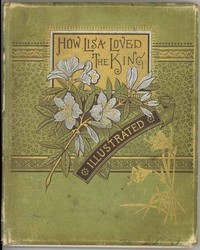
How Lisa Loved the King
by George Eliot
Language: en421 downloads on Project Gutenberg
Subjects
In: Historical Novels·Poetry·British Literature
Public-domain ebook sourced from Project Gutenberg #20813.
Public-domain ebook
by George Eliot
Language: en421 downloads on Project Gutenberg
Subjects
In: Historical Novels·Poetry·British Literature
Public-domain ebook sourced from Project Gutenberg #20813.
The opening · free to read
Six hundred years ago, Palermo town Kept holiday. A deed of great renown, A high revenge, had freed it from the yoke Of hated Frenchmen; and from Calpe's rock To where the Bosporus caught the earlier sun, 'Twas told that Pedro, King of Aragon, Was welcomed master of all Sicily,-- A royal knight, supreme as kings should be In strength and gentleness that make high chivalry.
Spain was the favorite home of knightly grace, Where generous men rode steeds of generous race; Both Spanish, yet half Arab; both inspired By mutual spirit, that each motion fired With beauteous response, like minstrelsy Afresh fulfilling fresh expectancy. So, when Palermo made high festival, The joy of matrons and of maidens all Was the mock terror of the tournament, Where safety, with the glimpse of danger blent, Took exaltation as from epic song, Which greatly tells the pains that to great life belong.
And in all eyes King Pedro was the king Of cavaliers; as in a full-gemmed ring The largest ruby, or as that bright star Whose shining shows us where the Hyads are. His the best genet, and he sat it best; His weapon, whether tilting or in rest, Was worthiest watching; and his face, once seen, Gave to the promise of his royal mien Such rich fulfilment as the opened eyes Of a loved sleeper, or the long-watched rise Of vernal day, whose joy o'er stream and meadow flies.
But of the maiden forms that thick enwreathed The broad piazza, and sweet witchery breathed, With innocent faces budding all arow, From balconies and windows high and low, Who was it felt the deep mysterious glow, The impregnation with supernal fire Of young ideal love, transformed desire, Whose passion is but worship of that Best Taught by the many-mingled creed of each young breast?
'Twas gentle Lisa, of no noble line, Child of Bernardo, a rich Florentine, Who from his merchant-city hither came To trade in drugs; yet kept an honest fame, And had the virtue not to try and sell Drugs that had none. He loved his riches well, But loved them chiefly for his Lisa's sake, Whom with a father's care he sought to make The bride of some true honorable man,-- Of Perdicone (so the rumor ran), Whose birth was higher than his fortunes were, For still your trader likes a mixture fair Of blood that hurries to some higher strain Than reckoning money's loss and money's gain. And of such mixture good may surely come: Lord's scions so may learn to cast a sum, A trader's grandson bear a well-set head, And have less conscious manners, better bred; Nor, when he tries to be polite, be rude instead.
'Twas Perdicone's friends made overtures To good Bernardo; so one dame assures Her neighbor dame, who notices the youth Fixing his eyes on Lisa; and, in truth, Eyes that could see her on this summer day Might find it hard to turn another way. She had a pensive beauty, yet not sad; Rather like minor cadences that glad The hearts of little birds amid spring boughs: And oft the trumpet or the joust would rouse Pulses that gave her cheek a finer glow, Parting her lips that seemed a mimic bow By chiselling Love for play in coral wrought, Then quickened by him with the passionate thought, The soul that trembled in the lustrous night Of slow long eyes. Her body was so slight, It seemed she could have floated in the sky, And with the angelic choir made symphony; But in her cheek's rich tinge, and in the dark Of darkest hair and eyes, she bore a mark Of kinship to her generous mother-earth, The fervid land that gives the plumy palm-trees birth.
She saw not Perdicone; her young mind Dreamed not that any man had ever pined For such a little simple maid as she: She had but dreamed how heavenly it would be To love some hero noble, beauteous, great, Who would live stories worthy to narrate, Like Roland, or the warriors of Troy, The Cid, or Amadis, or that fair boy Who conquered every thing beneath the sun, And somehow, some time, died at Babylon Fighting the Moors. For heroes all were good And fair as that archangel who withstood The Evil One, the author of all wrong,-- That Evil One who made the French so strong; And now the flower of heroes must he be Who drove those tyrants from dear Sicily, So that her maids might walk to vespers tranquilly.
Young Lisa saw this hero in the king; And as wood-lilies that sweet odors bring Might dream the light that opes their modest eyne Was lily-odored; and as rites divine, Round turf-laid altars, or 'neath roofs of stone, Draw sanctity from out the heart alone That loves and worships: so the miniature Perplexed of her soul's world, all virgin pure, Filled with heroic virtues that bright form, Raona's royalty, the finished norm Of horsemanship, the half of chivalry; For how could generous men avengers be, Save as God's messengers on coursers fleet?-- These, scouring earth, made Spain with Syria meet In one self-world where the same right had sway, And good must grow as grew the blessed day. No more: great Love his essence had endued With Pedro's form, and, entering, subdued The soul of Lisa, fervid and intense, Proud in its choice of proud obedience To hardship glorified by perfect reverence.
Sweet Lisa homeward carried that dire guest, And in her chamber, through the hours of rest, The darkness was alight for her with sheen Of arms, and plumed helm; and bright between Their commoner gloss, like the pure living spring 'Twixt porphyry lips, or living bird's bright wing 'Twixt golden wires, the glances of the king Flashed on her soul, and waked vibrations there Of known delights love-mixed to new and rare: The impalpable dream was turned to breathing flesh, Chill thought of summer to the warm close mesh Of sunbeams held between the citron-leaves, Clothing her life of life. Oh! she believes That she could be content if he but knew (Her poor small self could claim no other due) How Lisa's lowly love had highest reach Of winged passion, whereto winged speech Would be scorched remnants left by mounting flame. Though, had she such lame message, were it blame To tell what greatness dwelt in her, what rank She held in loving? Modest maidens shrank From telling love that fed on selfish hope; But love, as hopeless as the shattering song, Wailed for loved beings who have joined the throng Of mighty dead ones. . . . Nay, but she was weak, Knew only prayers and ballads, could not speak With eloquence, save what dumb creatures have, That with small cries and touches small boons crave.
She watched all day that she might see him pass With knights and ladies; but she said, "Alas! Though he should see me, it were all as one He saw a pigeon sitting on the stone Of wall or balcony: some colored spot His eye just sees, his mind regardeth not. I have no music-touch that could bring nigh My love to his soul's hearing. I shall die, And he will never know who Lisa was,-- The trader's child, whose soaring spirit rose As hedge-born aloe-flowers that rarest years disclose.
{Lady seated overlooking garden: p18.jpg}
"For were I now a fair deep-breasted queen A-horseback, with blonde hair, and tunic green, Gold-bordered, like Costanza, I should need No change within to make me queenly there: For they the royal-hearted women are Who nobly love the noblest, yet have grace; For needy suffering lives in lowliest place, Carrying a choicer sunlight in their smile, The heavenliest ray that pitieth the vile. My love is such, it cannot choose but soar Up to the highest; yet forevermore, Though I were happy, throned beside the king, I should be tender to each little thing With hurt warm breast, that had no speech to tell Its inward pang; and I would soothe it well With tender touch, and with a low soft moan For company: my dumb love-pang is lone, Prisoned as topaz-beam within a rough-garbed stone."
So, inward-wailing, Lisa passed her days. Each night the August moon with changing phase Looked broader, harder, on her unchanged pain; Each noon the heat lay heavier again On her despair, until her body frail Shrank like the snow that watchers in the vale See narrowed on the height each summer morn; While her dark glance burnt larger, more forlorn, As if the soul within her, all on fire, Made of her being one swift funeral-pyre. Father and mother saw with sad dismay The meaning of their riches melt away; For without Lisa what would sequins buy? What wish were left if Lisa were to die? Through her they cared for summers still to come, Else they would be as ghosts without a home In any flesh that could feel glad desire. They pay the best physicians, never tire Of seeking what will soothe her, promising That aught she longed for, though it were a thing Hard to be come at as the Indian snow, Or roses that on Alpine summits blow, It should be hers. She answers with low voice, She longs for death alone--death is her choice; Death is the king who never did think scorn, But rescues every meanest soul to sorrow born.
Yet one day, as they bent above her bed, And watched her in brief sleep, her drooping head Turned gently, as the thirsty flowers that feel Some moist revival through their petals steal; And little flutterings of her lids and lips Told of such dreamy joy as sometimes dips A skyey shadow in the mind's poor pool. She oped her eyes, and turned their dark gems full Upon her father, as in utterance dumb Of some new prayer that in her sleep had come. "What is it, Lisa?"--"Father, I would see Minuccio, the great singer; bring him me." For always, night and day, her unstilled thought, Wandering all o'er its little world, had sought How she could reach, by some soft pleading touch, King Pedro's soul, that she who loved so much, Dying, might have a place within his mind,-- A little grave which he would sometimes find And plant some flower on it,--some thought, some memory kind.
Till in her dream she saw Minuccio Touching his viola, and chanting low A strain, that, falling on her brokenly, Seemed blossoms lightly blown from off a tree; Each burthened with a word that was a scent,-- Raona, Lisa, love, death, tournament; Then in her dream she said, "He sings of me, Might be my messenger; ah! now I see The king is listening"--Then she awoke, And, missing her dear dream, that new-born longing spoke. She longed for music: that was natural; Physicians said it was medicinal; The humors might be schooled by true consent Of a fine tenor and fine instrument; In short, good music, mixed with doctor's stuff, Apollo with Asklepios--enough! Minuccio, entreated, gladly came. (He was a singer of most gentle fame, A noble, kindly spirit, not elate That he was famous, but that song was great; Would sing as finely to this suffering child As at the court where princes on him smiled.) Gently he entered and sat down by her, Asking what sort of strain she would prefer,-- The voice alone, or voice with viol wed; Then, when she chose the last, he preluded With magic hand, that summoned from the strings Aerial spirits, rare yet palpable wings That fanned the pulses of his listener, And waked each sleeping sense with blissful stir. Her cheek already showed a slow, faint blush; But soon the voice, in pure, full, liquid rush, Made all the passion, that till now she felt, Seem but as cooler waters that in warmer melt.
The book keeps going
Reading is free forever. Sign up and watch scenes appear while you read.



Scenes Storieta drew for other classics.
New illustrated classics
Once or twice a month: the latest books to get full character casts, scene art, and free comic editions. No account needed.