Public-domain ebook
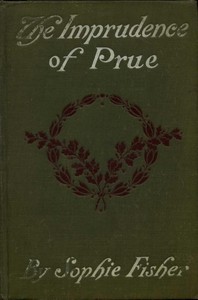
The Imprudence of Prue
Language: en506 downloads on Project Gutenberg
Subjects
In: Historical Novels·Romance·Humour
Public-domain ebook sourced from Project Gutenberg #47305.
Public-domain ebook
Language: en506 downloads on Project Gutenberg
Subjects
In: Historical Novels·Romance·Humour
Public-domain ebook sourced from Project Gutenberg #47305.
The opening · free to read
"Stand and deliver!"
The words rang out in the gathering darkness of the February evening. The jaded horses, exhausted with dragging a cumbrous chariot through the miry lanes and rugged by-roads of the rough moorland, obeyed the command with promptitude, disregarding the lash of the postboy and the valiant oaths of a couple of serving-men in the rumble.
"Keep still, unless you wish me to blow out what you are pleased to consider your brains," said the highwayman. "My pistols have an awkward habit of going off of their own accord when I am not instantly obeyed—so don’t provoke them."
The postilion became as still as a statue and the footmen, under cover of the self-acting pistols, descended, grumbling but unresisting, yielded up their rusty blunderbusses with a transparent show of reluctance and withdrew to a respectful distance, while the highwayman dismounted, opened the carriage door and throwing the light of a lantern within, revealed the shrinking forms of two women muffled in cloaks and hoods.
One of them uttered a shriek of terror when the door was opened and incoherently besought the highwayman to spare two lone, defenseless women.
The highwayman thrust his head in and peered round eagerly, as though in search of other passengers. Then, pulling off his slouch-brimmed hat, he revealed a pair of dark eyes that gleamed fiercely from behind a mask, and as much of a bronzed and weather-beaten face as it left uncovered. Black hair, loosely gathered in a ribbon and much disordered by wind and rain, added considerably to the wildness of his aspect, and the uncertain light of the lantern flickered upon several weapons besides the pistols he carried so carelessly.
"I shall not hurt you, Madam," he exclaimed impatiently. "Your money and jewels are all I seek. I expected to find a very different booty here and must hasten elsewhere lest I miss it altogether by this confounded mishap. So let me advise you to waste neither my time nor your own breath in useless lamentations, but hasten to hand out your purses and diamonds."
"We have neither, Mr. Highwayman," said the other lady in a clear, musical voice, quite free from tremor. "I am a poor widow without a penny in the world, flying from my creditors to take refuge with a relative almost as poor as myself. This is my companion—alack for her! The wage I owe her might make her passing rich if ever ’twere paid—but it never will be."
"Do poor widows travel in coach and four with serving-men and maids?" demanded the highwayman with an incredulous laugh. "Come, ladies, I am well used to these excuses. Do not put me to the disagreeable necessity of setting you down in the mud while I search your carriage and—mayhap—your fair selves."
The lady threw back her hooded cloak, revealing a face and form of rare beauty, and extended two white hands and arms, bare to the elbow and entirely devoid of ornament. In one hand she held a little purse through whose silken meshes glittered a few pieces of money.
"This is all the money I have in the wide world," she said, in a voice of pathetic sweetness. "Take it, if you will, and search for more if you think it worth while—and if you find anything, prithee, share it with me!"
But the highwayman scarcely heard her. Through his mask his eyes were fixed upon her beautiful face with a devouring admiration of which she was quite unconscious. Not that such an expression would have seemed at all extraordinary to her, or otherwise than the natural tribute of any masculine creature to the beauty she valued at its full worth.
"Keep your purse, Madam," he said, and his voice had lost its harshness; "I will take but one thing from you—something you will not miss, but that a monarch might prize—a kiss from those lovely lips."
"A kiss, rascal! Do you know what you ask?" she exclaimed, her sweetness vanishing in haughty anger. "Something I shall not miss, forsooth! What can—"
"Oh! kiss him, Prue; kiss him and let us be gone!" implored her companion. "We shall miss the mail-coach at the cross-roads, and then what will become of us?"
The highwayman leaned against the open carriage-door and watched the struggling emotions flickering over the face of the widow. Anger and disgust were succeeded by scornful mirth, and at last, with a gesture of indescribably haughty grace, she extended her hand, palm downward.
"My hand, Sir Highwayman," she said loftily, "has been deemed not unworthy of royal kisses!"
"My plebeian lips would not venture where a king’s have feasted," was the mocking retort. "But whoever in future may kiss your lips must come after Robin Freemantle, the Highwayman. So, sweet one, by your leave." He bent suddenly over her and kissed her boldly on the scarlet blossom of her mouth.
She drew back, gasping with anger and amazement. "How dare you?" she almost screamed.
He stood a moment as if half-dazed by his own audacity, then closed the carriage-door and replaced his beaver on his head.
"Good night, Ladies," he cried in a tone of reckless gaiety. "A pleasant journey to London and a merry time at court, and as ’tis ill junketing on an empty purse, accept mine in exchange for yours."
With which he flung a heavy wallet into the carriage and snatching the little silken trifle from Prue’s hand, sprang on his horse and was quickly lost in the gloom of night.
"Insolent varlet!" cried Prue passionately. "Would I were a man to beat him to death!" And she burst into a flood of angry tears.
"Console yourself, sweet cousin," said her companion coaxingly. "You have saved our jewels for the second time to-day—first by outwitting a sheriff and now by cajoling a highwayman. After all, what is a kiss? You have just as many left for Sir Geoffrey as you had before you were robbed of that one."
"That is all very well," cried Prue, half laughing and half tearful, "but how would you have liked it if it had happened to you?"
"Faith, I’m not sure I should have made such a fuss! After thirty one may well be grateful for the kisses of a handsome young gallant—for I could see he was young, and I’ll warrant me he was comely too—even if he is Robin Freemantle, the highwayman."
"For shame, Cousin Peggie, an’ if you love me, never remind me of this," replied Prue, with a touch of irritation. "I would far rather have lost my few last jewels than have suffered such an insult."
"So would not I," laughed the incorrigible cousin. "What with play and the haberdasher all I have left in the world is contained in the little box under my feet, and I should count that cheaply saved at the price of a kiss."
"You were not asked to pay the price," said Prue coldly. Then, thrusting her head out of the window, she relieved her pent-up feelings by soundly berating the cowardly serving-men who had yielded without a blow to a force so inferior and were now wasting precious time hunting for their useless weapons instead of hastening to the near-by crossroads to meet the mail-coach in which the two ladies proposed traveling from Yorkshire to London.
The two men clambered back into the rumble, somewhat shamefaced, and each striving by muttered disclaimers to reject the charge of cowardice in favor of the other. The postilion, suddenly galvanized into activity, roused the horses with strange oaths and cries and fierce cracklings of the whip. Prudence closed the window and retired into the voluminous shelter of her cloak, and the interrupted journey was resumed.
No further adventures overtook the two ladies. The mail-coach picked them up at the crossroads and carried them to London in course of time, where they were soon safely housed with their grandmother, Lady Drumloch.
My Lady Drumloch was, as all the world knows, a very great lady, and back in the days of King Charles the Second had been a beauty and a toast. The daughter of a duke and the wife of an earl, she had queened it in two courts, had gone into exile with King James, intrigued and plotted with the Jacobites, and finally, having lost husband and son and fortune in her devotion to a hopeless cause, had made her peace with Queen Anne and returned to England to eke out her last years in the soul-crushing poverty of the great.
But as with her she brought her two granddaughters, the Honorable Margaret Moffat and Lady Prudence Wynne, her meager little house on the outskirts of May fair soon became not only the Mecca of other Jacobites as aristocratic and as poor as herself, but of many who were neither Jacobites nor in reduced circumstances. Among both classes the Lady Prudence, though but fifteen, soon found courtiers to pick and choose from. The saucy child with her skin of milk and roses, her tangle of dark curling locks and her wonderful blue eyes, was already possessed of that mysterious charm of femininity by which the world has been swayed since the days of Eve.
To gratify her grandmother’s ambition, and at the same time emancipate herself from the restrictions of the school-room, she married the Viscount Brooke, heir of the Earl of Overbridge. But the marriage resulted disastrously. The viscount had long before exhausted his private means, and although his father, hoping that marriage would sober and settle him, made a sufficiently liberal allowance to the young couple, a few months of reckless extravagance and gaiety plunged them in an ocean of debt, from which the viscount, in a fit of delirium, extricated himself by means of a bullet in his brain, leaving Prue a widow at sixteen with no home but her grandmother’s little house in Mayfair, and not a penny beyond the grudging bounty of her father-in-law.
Still, it was delightful to be a widow, and, consequently, free from all authority. Having curtailed her mourning within the scantiest limits, she returned to society with renewed ardor, where her youth and beauty, enhanced by her widowhood, secured her a flattering welcome. She played the hostess in Lady Drumloch’s shabby drawing-rooms, filling them with laughter, scandal and love-making. She chaperoned Margaret Moffat, who was ten years her senior and who loved her with the infatuation one sometimes, if rarely, observes in a very plain woman for a very beautiful one.
Poor as she notoriously was, the oft-repeated rumors of Prue’s engagement to one or another of her wealthy admirers enabled her to run into debt time and again for such necessaries of existence as fashionable dresses and costly jewels, for which she certainly never expected to pay out of her own pocket. Nay, even money-lenders, beguiled by her bright eyes and her unquestionably promising matrimonial prospects, had furnished the sinews of war (for which her future husband would have to pay right royally), and this despite the fact that the Lady Prudence Brooke, widowed at sixteen, was still a widow at two-and-twenty.
Lady Drumloch’s granddaughters were not expected at her town-house, and when the hired cabriolet in which they arrived drew up at her door, the ancient butler was divided between joy at the sight of the two bright young faces, and trepidation as to the welcome they might expect from the higher powers. Mrs. Lowton, my lady’s waiting-woman, was troubled by no such complex emotions. She made little attempt to conceal her own dissatisfaction or to disguise the fact that the old countess was in no humor for gay company.
The book keeps going
Reading is free forever. Sign up and watch scenes appear while you read.



Scenes Storieta drew for other classics.
New illustrated classics
Once or twice a month: the latest books to get full character casts, scene art, and free comic editions. No account needed.