Public-domain ebook
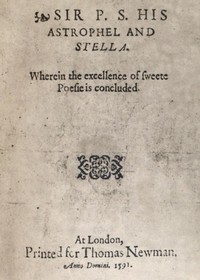
Sir P.S.: His Astrophel and Stella Wherein the excellence of sweete poesie is concluded
Language: en885 downloads on Project Gutenberg
Subjects
Public-domain ebook sourced from Project Gutenberg #56375.
Public-domain ebook
Language: en885 downloads on Project Gutenberg
Subjects
Public-domain ebook sourced from Project Gutenberg #56375.
The opening · free to read
Transcriber’s Note: Variable spelling and hyphenation have been retained from the original printing. Some minor errors in punctuation and capitalisation have been corrected, and some changes to the text are listed at the end.
SIR P. S. HIS ASTROPHEL AND STELLA.
Wherein the excellence of sweete Poesie is concluded.
At London, Printed for Thomas Newman. Anno Domini. 1591.
SIR P. S. HIS ASTROPHEL AND STELLA.
Loving in trueth, and fayne my love in verse to show, That the deere Shee, might take some pleasure of my paine: Pleasure might cause her read, reading might make her know, Knowledge might pittie winne, and pittie grace obtaine. I sought fit wordes to paint the blackest face of woe, Studying inventions fine, her wittes to entertaine, Oft turning others leaves, to see if thence would flowe, Some fresh and fruitfull showre, upon my Sunne-burnt braine. But wordes came halting out, wanting inventions stay, Invention Natures childe, fledde Stepdame studies blowes: And others feete, still seem’de but strangers in my way, Thus great with Childe to speake, and helplesse in my throwes, Byting my trewand penne, beating my selfe for spite: Foole saide my Muse to mee, looke in thy heart and write.
Not at first sight, nor with a dribbing shot, Love gave the wound, which while I breath will bleede: But knowne, worth did in mine of time proceede, Till by degrees it had full conquest got. I sawe and lik’d, I lik’d but loved not, I lov’d, but did not straight what Love decreede: At length to Loves decrees, I forst agreede: Yet with repining at so partiall lot. Now even that foot-steppe of lost libertie Is gone, and now like slave borne Muscovite: I call it praise to suffer tyrannie, And now imploy the remnant of my wit To make my selfe believe that all is well, While with a feeling skill I paint my hell.
Let Daintie wittes cry on the Sisters nine, That bravely maskt, their fancies may be tolde: Or Pinders Apes flaunt they in phrases fine, Enamling with pyde flowers their thoughts of gold: Or els let them in statelyee glorie shine, Ennobling new found tropes with problemes old: Or with strange similes, inricht each line, Of hearbes or beasts, which Inde or Affricke hold. For me in sooth, no Muse but one I know, Phrases and Problemes from my reach do growe. And straunge things cost too deere for my poor sprites, How then? even thus in Stellas face I reede, What love and beautie be, then all my deede But coppying is, what in her nature writes.
Vertue (alas) now let me take some rest, Thou set’st a bate betweene my will and wit; If vaine love have my simple soule opprest, Leave what thou lik’st not, deale not thou with it. Thy Scepter use in some olde Catoes brest, Churches or Schooles are for thy seat more fit: I doe confes, (pardon a fault confest,) My mouth too tender is for thy hard bit. But if that needes, thou wilt usurping bee The little reason that is left in mee. And still th’ effect of thy perswasions proove, I sweare, my heart such one shall shew to thee, That shrines in flesh so true a deitie, That Vertue, thou thy selfe shalt be in love.
It is most true, that eyes are found to serve The inward light: and that the heavenly part Ought to be King, from whose rules who doth swerve, Rebels to nature, strive for their owne smart. It is most true, what wee call Cupids dart, An Image is, which for ourselves we carve: And fooles adore, in Temple of our hart, Till that good God make church and Church-men starve. True that true beautie vertue is in deede, Whereof this beautie can but be a shade: Which Elements with mortall mixture breede, True that on earth we are but Pilgrimes made, And should in soule, up to our Country move: True and most true, that I must Stella love.
Some Lovers speake, when they their Muses entertaine Of hopes begot, by feare, of wot not what desires, Of force of heavenly beames, infusing hellish paine; Of lyving deathes, deere woundes, faire Stormes, and friesing fyres. Some one his songs in Jove and Joves straunge tales attyres, Bordered with Bulles and Swannes, poudered with golden raine: Another humbler witte to shepheards pipe retyres, Yet hiding royall blood, full oft in Rurall vaine. To some a sweetest plaint a sweetest stile affordes, Whiles teares poure out his inke, and sighes breathe His paper pale despaire, and paine his penne doth move. I can speake what I feele, and feele as much as they, But thinke that all the mappe of my state I display, When trembling voice brings foorth, that I do Stella love.
When nature made her chiefe worke, Stella’s eyes, In collour blacke, why wrapt she beames so bright? Would she in beamy blacke like Painter wise, Frame daintiest lustre mixte of shades of light? Or did she els that sober hewe devise, In object best, to strength and knitt our sighte Least if no vaile these brave gleames did disguise, They Sun-like should more dazell than delight. Or would she her miraculous power shewe, That whereas blacke seemes Beauties contrarie, Shee even in blacke doth make all Beauties flower Both so and thus; she minding Love should bee Plaste ever there, gave him this mourning weede: To honour all their deathes, which for her bleede.
Love borne in Greece, of late fled from his native place, Forst by a tedious proofe, that Turkish hardned hart Were no fit marke, to pearce with his fine pointed dart: And pleasd with our lost peace, staide here his fleeting race. But finding these North climes, too coldlie him imbrace, Not usde to frosen clippes, he strave to finde some part Where with most ease and warmth, he might imploy his art. At length he preach’d himselfe in Stellas joyfull face, Whose faire skinne, beamie eyes, like morning Sunne on snow: Deceiv’d the quaking boy, who thought from so pure light, Effects of livelie heate must needes in nature growe. But shee most faire, most colde; made him thence take his flight To my close hart; where while some fire brands he did lay, He burnt unwares his wings, and cannot fly away.
Queene Vertues Court, which some call Stellas face, Prepar’d by Natures cheefest furniture: Hath his front built of Alabaster pure. Gold is the covering of that statelie place. The doore, by which sometimes comes forth her grace Red Porphire is, which locke of Pearle makes sure: Whose Porches rich, with name of chekes indure, Marble mixt red and white, doe enterlace. The Windowes now, through which this heavenly guest Lookes ore the world, and can finde nothing such, Which dare claime from those lights the name of best, Of touch they are, that without touch doe touch, Which Cupids selfe, from beauties mine did drawe: Of touch they are, and poore I am their strawe.
Reason, in faith thou art well serv’d, that still Would’st brabling be, with sence and love in me: I rather with thee climbe the Muses hill, Or reach the fruite of Natures chiefest tree: Or seeke heavens course, or heavens inside to see: Why should’st thou toyle, our thornie soyle to till? Leave sence and those that sences objects be, Deale thou with powers, of thoughts leave love to will. But thou wouldst needes fight both with Love and sence, With sworde of witte, giving woundes of dispraise: Till down-right blowes did foyle thy cunning fence, So soone as they strake thee with Stellas rayes. Reason, thou knewest, and offered straight to prove; By reason good, good reason her to love.
In truth oh Love: with what a boyish kinde Thou doost proceede, in thy most serious waies; That when the heaven to thee his best displaies, Yet of that best thou leav’st the best behinde. That like a Childe that some faire booke doth finde With gilden leaves of colloured Velom, playes Or at the most on some faire picture stares, But never heedes the fruite of Writers minde. So when thou sawest in Natures cabinet, Stella, thou straight lokest babies in her eyes: In her chekes pit, thou didst thy pitfall set, And in her brest bo-peepe or touching lyes, Playing and shining in each outward part: But foole seekst not to get into her hart.
Cupid because thou shin’st in Stellas eyes, That from her lookes thy day-nets now scapes free: That those lips swelde so full of thee they be. That her sweet breath makes all thy flames t’arise, That in her brest thy pap well sugred lyes, That her grace gracious makes thy wrongs, that shee, What word so ere shee speakes, perswades for thee: That her cleere voice, lifts thy fame to the skyes. Thou countest Stella thine, like those whose powres Having got up a breach; (by fighting well) Cry victorie, this faire day all is ours: Oh no, her heart is such a Cytadell. So fortified with wit, stor’d with disdaine: That to winne it, is all the skill and paine.
Phœbus was Judge, betweene Jove, Mars, & love, Of those three Gods whose armes the fairest were: Joves golden shield, did Eagle Sables beare: Whose talents held young Ganimede above. But in verde fielde, Mars bare a golden Speare, Which through a bleeding heart, his point did shove: Each had his Crest, Mars carried Venus glove. Jove on his Helme the Thunderbolt did reare. Cupid then smiles, for on his crest there lyes Stellas faire haire, her face he makes his shielde: Where Roses gueules, are borne in silver fielde. Phœbus drewe wide the Curtaine of the skyes To blase the last, and swore devoutly then: The first thus macht, were scarcely Gentlemen.
Alas, have I not paine enough my friend, Uppon whose breast, a fiercer gripe doth tyre, Than did on him, who first stole downe the fyre; While Love on me, doth all his quiver spend, But with your rubarbe wordes you must contend, To greeve me worse in saying, that desier Doth plunge my well form’d soule, even in the mier Of sinfull thoughtes, which doe in ruine ende. If that be sinne which doth the manners frame, Well stayed with trueth, in worde and faith of deede, Readie of wit, and fearing nought but shame; If it be sin which in fixt hart dooth breede, A loathing of all lose unchastitie; Then love is sin, and let me sinfull bee.
You that do search for every purling spring, Which from the rybs of old Parnassus flowes, And every flower (not sweete perhaps) which growes Neere there about, into your Poesie wring. Ye that do Dictionaries method bring Into your rymes, running in ratling rowes, You that poore Petrarchs long deceased woes With new borne sighes, & devised wit do sing; You take wrong wayes, those far-fet helps be such, As doe bewray a want of inward tutch, And sure at length stolne goods doe come to light. But if both for your love and skill you name, You seeke to nurse at fullest brest of Fame, Stella behold and then begin t’endite.
In nature apt to like, when I did see Beauties which were of many Carrects fine, My boyling spirits did thether soone encline, And Love I thought that I was full of thee; But finding not those restles flames in mee Which others said did make their soules to pyne, I thought those babes of some pins hurt did whine: By my love judging what loves paines might be. But while I thus with this young Lyon plaid, Myne eyes (shall I say curst or blest) beheld Stella: now shee is nam’de, neede more be sayd? In her sight I a lesson new have speld. I now have learnd love right, and learnd even so, As who by being poysond doth poyson know.
The book keeps going
Reading is free forever. Sign up and watch scenes appear while you read.



Scenes Storieta drew for other classics.
New illustrated classics
Once or twice a month: the latest books to get full character casts, scene art, and free comic editions. No account needed.