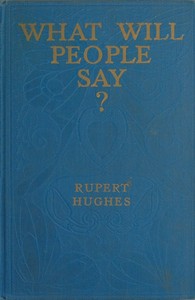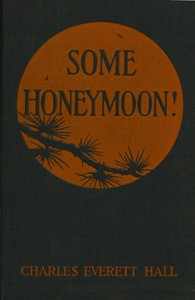
Public-domain ebook
Some honeymoon!
English461 downloads on Project GutenbergDownload EPUB
Public-domain ebook sourced from Project Gutenberg #75754.
Public-domain ebook
English461 downloads on Project GutenbergDownload EPUB
Public-domain ebook sourced from Project Gutenberg #75754.
The opening · free to read
When John Ryder put his foot upon the plank of the Minnequago on his return journey from Europe he was a bachelor of thirty-five summers--and had never counted his winters at all. He believed, with many another upholder of single blessedness, that a man did not begin to count his wintry years until he was married.
Just the same, as he walked up the incline of the runway he was walking to his fate. Indeed, he came face to face with it as he trod upon the deck of the ship and, almost bumping into it, politely lifted his hat and said:
"Pardon me!"
The lady bowed silently and turned upon him a careless shoulder. John Ryder allowed himself a second glance--and then let the steward take his hand luggage below while he did something he had not done since his early crossings. He hung about on deck to see the hawsers cast off--a mark of curiosity that usually stamps the traveler as quite new to the game.
Even then he did not know why he did this.
Business. Business with a big B. Business first, last, and all the time. That was John Ryder, and so plain was it to most people who met him that a tag on his back stating that he was a hustling American business man would have been quite unnecessary.
Ryder had been in the chase after the nimble dollar since he was breeched. He was a self-made man, and although he was proud of that fact he did not go around blowing about the quality of the product.
People could take him for what he was--or what they thought he was. He was not personally assertive, although he fully knew his own opinion upon any subject to which he had given thought. He did not consider it necessary to tell every person who interviewed him, or show them by his manner, that he was really too busy with weighty affairs to give their own little matter its proper attention. He seldom cared what people thought of him as long as he impressed them with his honesty of purpose, and that he was in earnest.
That is, he had seldom cared until now. But he confessed to himself, in the secrecy of his inner thoughts and the privacy of his stateroom, that he was desirous of having at least one person aboard the Minnequago think of him as being every whit as good as he really was, if not a little better.
When a man's hard hit, that is about his first thought. He wants the woman to think of him as the finest and best who has ever crossed her path. And before bumping into Miss Mont as he boarded the ship, he had actually never looked twice at a woman.
She was a good sailor, and he had crossed back and forth so many times that he was only seasick when the Old Salt in the story was ill--on the occasion "that the ship went down and all hands were lost."
Ryder accepted his fate manfully on that very first time that they paced the deck together. It was not easy for Ryder to admit that he had met and fallen in love with a woman at first sight. It was opposed to all his well-established theories. At his age he considered himself case-proof.
Yet never had a woman impressed him as did Miss Mont. When they became so quickly such very good friends and she showed plainly that she enjoyed his society, and even took him into her confidence with little urging on his part, Ryder began to see that he would be tempting Providence if he went ashore at New York without letting her know just how he felt toward her.
He had nobody to consider in this matter but himself; he had no family. Miss Mont, she said, was in a similar situation.
She had been adopted by people in Manchester when she was a small child and had lived with them as their daughter until these foster parents died.
Other children had come into the family after her adoption, and they did not look kindly upon the alien. So Miss Mont had come away.
"I do not know much about my own people," she told Ryder. "Only that my mother and father are both dead. There were several of us children. We were parceled out like a brood of puppies. I know nothing now about my brothers and sisters."
So she had nobody to consider; there was no living soul to say her nay, no matter what course she took in life. To John Ryder's disappointment he found that she was on the verge of choosing a profession for which he had a strongly rooted, if narrow, dislike. Miss Mont had met some theatrical people in London. There was, indeed, a certain agent, or manager, aboard the Minnequago to whom she had been introduced.
This man had told her that he could put her on the stage. She had the presence for it, and if her ability proved anywhere equal--well, his talk had inspired her with the fever for a stage career. She had done a little in a semi-professional way in London as an entertainer, and this man, Sam Marks, had chanced to see her work.
"And you know I need to work," she told John Ryder. "My bit of money won't last forever. I should dislike teaching, and I couldn't work in a shop, I know. I have a retentive memory, and I believe I should 'make good' as you Americans say, as an imitator. I really have some talent."
"You do not know what you contemplate," cried Ryder, and he was a little angry. "The theater is no place for a domestic, home-loving woman like you."
"But it will bring me more money than other work."
"It brings you a lot besides the money. It spoils a woman. It spoils a man, too, for that matter. And it is the hardest work a woman can tackle."
"Some actresses draw large salaries."
"And what do they pay for the pedestals they gain? You don't know the mire they have to drag their skirts through. And some of it always sticks."
"I think you are prejudiced," she said softly.
"Oh, I know there are exceptions. But there are no exceptions when it comes to the hard work. When an actress achieves a lasting place in her profession, it means that she has worked harder for years than any governess, or seamstress--yes, or washwoman!"
"I know it is kind of you to advise me," she said.
"No, it isn't. It's selfish on my part. I'll tell you why. I love you!" blurted out this man of business, who was noted for his silky and diplomatic tongue when it came to a business proposition. This situation was, however, almost too much for John Ryder.
She gazed at him in utter astonishment.
"Mr. Ryder!" she gasped.
"Don't be surprised," said he, mopping his brow and glad the words were out at last. "I'm no kid. I've been bucking the world for a good many years, if my head isn't bald! I'm not likely to say a thing I don't mean, or to try to fool a woman like you. I love you, and I'll marry you the first minute we can after getting ashore, if you'll agree.
"And I'm not doing it through any foolish desire to keep you out of a business that you'll be sorry you ever got into. I want you for a strictly selfish reason. I want you because I love you--have loved you ever since I first laid eyes on you on this boat."
"But--but we know so little of each other!" she faltered.
"What more have you got to tell me? It won't take you long," said Ryder with a chuckle. He knew his drawing powers as an interviewer, and could figure on Miss Mont's having told him about everything of importance in her life.
"As for me, I'm plain John Ryder. I'm just what I appear to be, nothing more and nothing less." The sly villain, however, was hoping she would think him a deal better than he was. "I've got some money. I can make more. I'll keep you in comfort, and when I die leave you enough to live on.
"That may not sound very sentimental, but don't let it cloud your eyes to the fact that I love you just as hard as any Romeo of the lot. I'm not much on playing the lute under a lady's window; but I'll be great on hustling out and, as we Americans say, 'bringing home the bacon.'"
"Oh, dear, Mr. Ryder! You make me laugh in spite of myself." But she was actually wiping tears from her eyes.
"That's right. I'd rather you'd take it laughing than crying. And as far as in me lies," he added, solemnly, "I'll never bring tears to your eyes, but always laughter to your heart," which was a wonderfully pretty observation for John Ryder to make.
Nor was he at first disturbed in the least when Miss Mont told him she dared not answer on such short notice. She must think it over.
The book keeps going
Reading is free forever. Sign up and watch scenes appear while you read.



Scenes Storieta drew for other classics.
New illustrated classics
Once or twice a month: the latest books to get full character casts, scene art, and free comic editions. No account needed.