Public-domain ebook
Herman Melville
Language: en5,957 downloads on Project Gutenberg
Subjects
Public-domain ebook sourced from Project Gutenberg #78016.
Public-domain ebook
Language: en5,957 downloads on Project Gutenberg
Subjects
Public-domain ebook sourced from Project Gutenberg #78016.
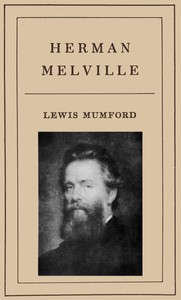
Lewis Mumford’s work is a scholarly biography that seeks to illuminate Herman Melville’s inner life through the writer’s own letters, notebooks and unpublished manuscripts. From the opening, Mumford explains that he has built his narrative on Melville’s primary sources, thanking family members and fellow scholars who supplied material and insight. The book promises a tightly documented portrait, noting the “blank spaces” in Melville’s history while emphasizing the completeness of his ideas, feelings and vision. By interweaving Melville’s language with careful paraphrase, Mumford aims to bring the author “to life” rather than merely to “embalm” him, offering readers a blend of factual detail and interpretive depth.
The voice is that of a mid‑20th‑century intellectual historian, articulate and reverent yet unafraid of criticism. Mumford’s style combines rigorous citation with lyrical passages drawn from Melville’s own prose, reflecting the era’s scholarly optimism and its fascination with the American literary canon. Readers who enjoy a measured, source‑driven exploration of a 19th‑century novelist, especially those interested in the interplay of biography, literary criticism and cultural history, will find this study both rewarding and thought‑provoking.
The opening · free to read
This is a study of Herman Melville’s life and thought. In interpreting Melville’s life I have relied primarily on his own writings, including his letters, some of which are still unpublished, and his notebooks. There are occasional blank spaces in Melville’s history, but the record is singularly complete in that part of Melville which most matters: his ideas, his feelings, his urges, his vision of life. I have verified and corrected these data by the use of every available piece of independent evidence; and I must express my hearty thanks to Mrs. Frances Thomas, Melville’s surviving daughter, for answering my written questions, and to his granddaughter, Mrs. Eleanor Melville Metcalf, for giving me the benefit of her own memories and family tradition, as well as her courtesy and hospitality in placing at my disposal Melville’s manuscripts. I am likewise indebted to Miss Caroline W. Stewart, an old friend of the Melville family, for her impressions of the Melville household during the later period of his life.
These pages could not have been written without Mr. Raymond Weaver’s pioneer work on Melville. Mr. Weaver not merely brought to light much important data and cleared up relationships that concerned Melville’s objective life: he also, through Mrs. Metcalf, discovered Melville’s unpublished manuscripts and included them in a definitive edition of his work. For this, he has placed every admirer of Melville in his debt. In addition to acknowledging this great service, I must thank him for the scholarly generosity with which he gave me the benefit of his intimate knowledge of Melville’s remains, and his copies of Melville’s notebooks. Mr. Weaver’s generosity is equalled only by that of Dr. Henry A. Murray, Jr., who shared with me his knowledge of certain Melville letters otherwise inaccessible--an act of pure chivalry, since Dr. Murray is himself at work on a biography of Herman Melville. Such deeds sweeten one’s notions of human conduct: they give one not so much a feeling of gratitude as a renewed sense of human dignity, and I warmly place them on record.
In describing Melville’s experience and his state of mind, I have taken the liberty of using his own language wherever possible; and I have done this so freely that, except where I have quoted whole passages, I have omitted quotation marks. In condensing and paraphrasing the notebooks of Melville’s travels, I have usually employed Melville’s own words; for it would be a vain biographer who did not make full use of Melville’s sharp descriptions and striking epithets. If I have been frank and unreserved in dealing with the difficult parts of Melville’s life, I have been no more so than I think he would have wished, nor more candid than he himself was in treating Pierre. “In reserves,” he wrote, “men build imposing characters.” Melville’s worth, as a man and a poet, has no need for a reputation so created. My purpose has not been to embalm Melville but to bring him to life; and one cannot know or sympathize with the man unless one shares his vicissitudes as well as his triumphs.
Certain portions of this book have appeared, with slight changes and abbreviations, in The New Republic, The American Mercury, and The Saturday Review of Literature.
Lewis Mumford.
The book keeps going
Reading is free forever. Sign up and watch scenes appear while you read.



Scenes Storieta drew for other classics.
New illustrated classics
Once or twice a month: the latest books to get full character casts, scene art, and free comic editions. No account needed.